By Crystal Cassandra · Updated August 3, 2026
Crystal Healing Expert
What is a pyramid crystal?
A crystal pyramid is a stone carved with a square base and four triangular faces that rise to meet at a single apex. In traditional crystal-healing practice, pyramids are placed on altars and desks to amplify and stabilize an intention; the four-sided base traditionally represents the four elements or four directions, the apex the focused intent.
Key Takeaways
- Crystal pyramids have a square base and four triangular faces meeting at a single apex.
- The classical proportion is the Egyptian (Giza-style) ratio: a base width roughly 1.57 times the height.
- Judy Hall associates pyramids with amplification of intention; the four-sided base traditionally represents earth, the apex the manifestation.
- Best for desk and altar work where focus and stability are wanted at the same time.
- Clear quartz, amethyst, rose quartz, and black obsidian are the classical pyramid stones.
What is a pyramid crystal?
A crystal pyramid is a stone shaped into a square base with four equal triangular faces rising to meet at a single point overhead. The classical proportion mimics the Great Pyramid of Giza: a base width to height ratio of roughly 1.57 to 1, which produces a slightly wider-than-tall silhouette. Modern lapidaries also produce taller, more slender pyramids closer to a ratio of 1 to 1, which have a different felt-quality (more rising, less rooted).
The form is carved by hand from rough that is large enough to yield a solid block with a square cross-section, then shaped on a flat lap until the four faces meet cleanly at the apex. A premium pyramid has a sharp apex with no visible flat (the apex is a true point, not a small plateau), and four faces of equal size and angle. Look at the pyramid from directly above; the four edges should meet the apex in a true X with no offset.
Pyramids are one of the oldest carved crystal forms in human practice; the form has been used in Egyptian, Mesoamerican, and South Asian sacred geometry for thousands of years. The modern crystal pyramid is a continuation of that lineage, scaled to desk or altar size. You will most commonly find them in 40mm to 80mm base widths, which fits both as a meditation object in cupped hands and as an altar piece.
Traditional energetic use
Judy Hall in The Crystal Bible (2003) writes that the pyramid is the form most associated with amplifying and stabilising an intention at the same time. The square base gives the working a foundation in the material plane (the four elements, the four directions, the four chambers of the heart in some traditions), while the apex draws the intention upward into focused manifestation. This combination of stability and aim is the pyramid's signature.
Robert Simmons in The Book of Stones (2015) describes pyramids as resonant cavities; the geometric proportions of the Giza-style pyramid in particular have been studied for their acoustic and energetic properties. In classical crystal practice, a pyramid placed over a written intention is said to focus and amplify that intention over time. Many people leave a clear-quartz pyramid on the desk above a written goal for the working month.
In my practice with clients, I recommend pyramids most often for steady, long-term intentions rather than quick activations. A career intention, a relationship intention, a creative project: place the pyramid over a written phrase and leave it. The pyramid does not rush. Where a tower aims for sharp focus and a sphere broadcasts gently, the pyramid holds. Many people describe the felt-sense of a pyramid as patient.
How to use a pyramid crystal
The ritual below is the one Cassandra uses in her own practice and recommends to clients new to working with this form. It takes about ten minutes and can be repeated as a weekly or monthly working.
- 1
Write the intention first
On a small piece of paper, write your intention as a clear single phrase in present tense (`I move with confidence in my work`, `I welcome the right partner`, `I rest deeply each night`). Fold the paper once. The intention is the work; the pyramid is the amplifier. Without the intention, the pyramid is decorative.
- 2
Place the pyramid on the folded paper
Set the pyramid square on top of the folded paper, on a desk, altar, or bedside table. The base sits on the paper, the apex points to the ceiling. Make sure the surface is flat so the pyramid sits true; a leaning pyramid is harder for the eye and the body to settle into.
- 3
Activate by touching the apex
Touch the apex of the pyramid with one finger. Speak the intention aloud once. The combination of finger contact and spoken word is the classical activation. Some practitioners trace the four edges from base to apex as well, naming each direction (east, south, west, north) or each element (earth, water, fire, air) as they go.
- 4
Leave it in place for a working cycle
Unlike a meditation object you pick up and put down, the pyramid does its work by staying in place. Leave it on the intention paper for at least a week, and often for a full moon cycle. Re-touch the apex once a day, briefly. Many people find the intention starts to show up in unexpected ways during the second week.
- 5
Cleanse and reset between cycles
When the cycle ends or the intention resolves, lift the pyramid, cleanse it (sound, breath, or a selenite plate; avoid water for selenite, calcite, malachite, and fluorite pyramids), and either burn the intention paper as a closing or keep it as a record. Rest the pyramid for a day before starting a new working.
The best crystals to choose in pyramid form
Not every crystal shines in every form. The stones below are traditionally chosen as pyramids because the form amplifies the stone's qualities.
Shop crystal pyramids
Pyramid Bundle
Pyramid Starter Trio
A curated trio of the stones Cassandra most often recommends in pyramid form. Clear Quartz, Amethyst, and Rose Quartz each suit this form for a distinct reason, so the set covers the most-loved uses of the pyramid at once.
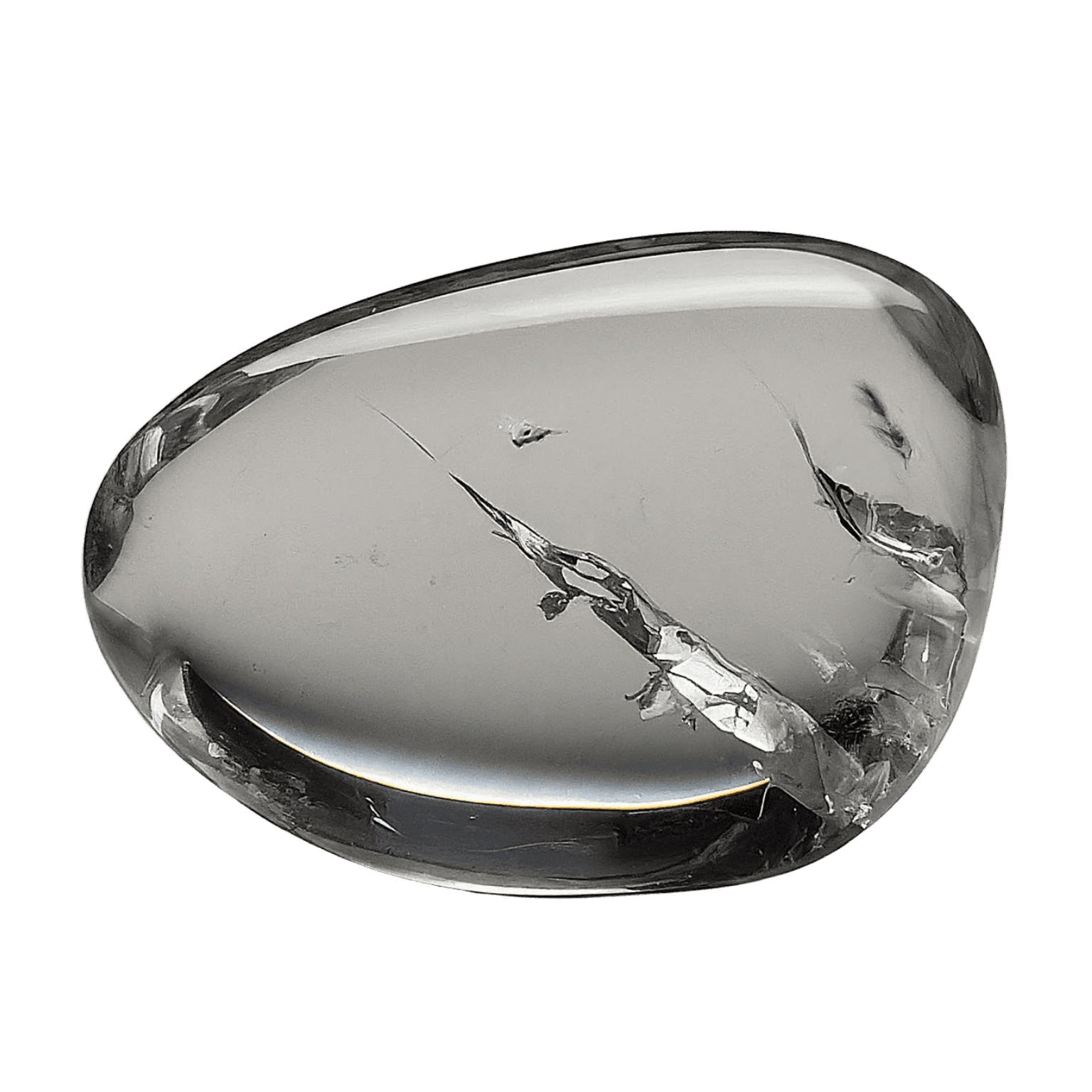
Clear Quartz
Primary stone
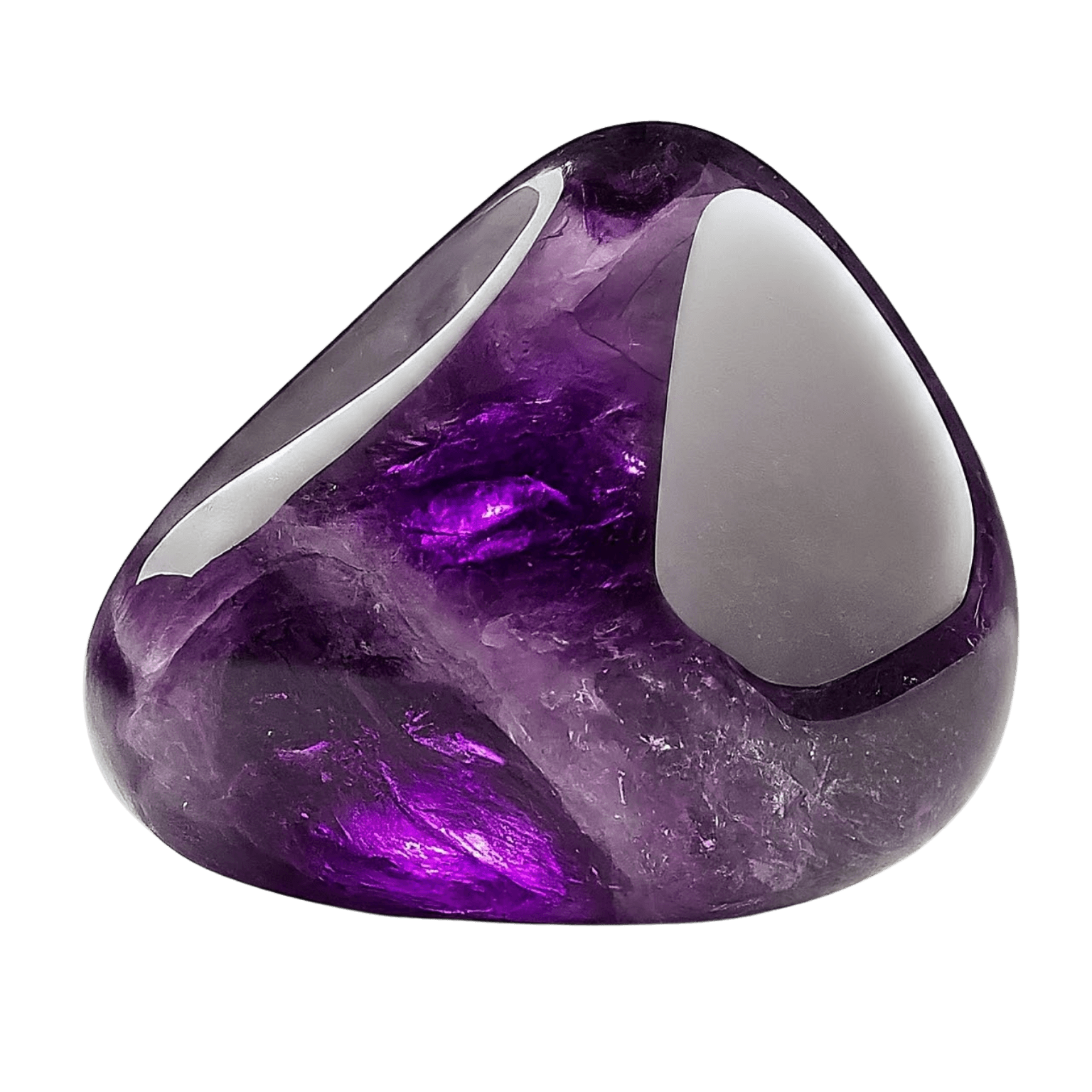
Amethyst
Supporting stone
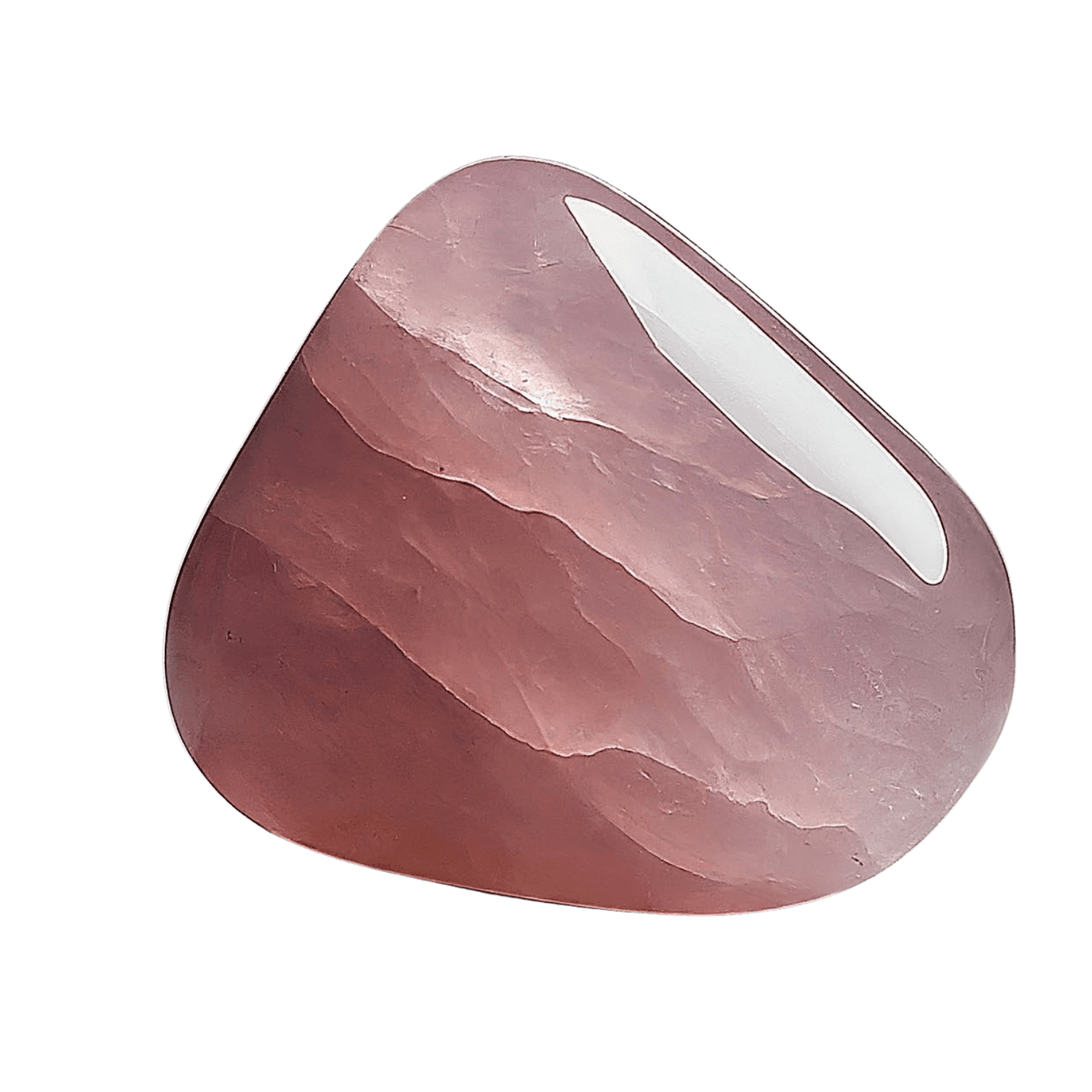
Rose Quartz
Anchoring stone
This kit is being assembled. Join the waitlist and Cassandra will email you the moment it ships.
Pair crystal pyramids with these intentions
In traditional crystal-healing practice, the form of the stone shapes how the energy moves. Crystal Pyramids are most commonly paired with the following intentions.
Explore other crystal forms
Frequently asked questions
What is the difference between a pyramid and an obelisk?
A pyramid has a square base and four triangular faces meeting at an apex; the height-to-base ratio is usually less than 1 to 1 for Giza-style pyramids. An obelisk has a square or rectangular base and four trapezoidal faces meeting at a small pyramid at the top, with a much taller height-to-base ratio (often 4 to 1 or 5 to 1). Pyramids stabilise and amplify; obelisks direct and aim upward. Different geometries, different intentions.
Does a pyramid need to be Giza-proportioned to work?
It does not need to be, but the Giza proportion (base width 1.57 times the height) is the classical reference and is the one studied for resonance properties in Robert Simmons's tradition. Taller pyramids feel more aiming, lower pyramids feel more rooting. If you are unsure which to choose, start with Giza-proportioned; it is the most-recommended in the classical literature and balances stability and focus most reliably.
Should I place anything under my crystal pyramid?
Almost always, yes. The pyramid is an amplifier; without an intention object beneath, it is a decorative form. The classical practice is to write the intention on paper, fold it once, and place the pyramid on top. Some people place a small photograph, a piece of jewellery, or a personal symbol beneath instead. The pyramid amplifies whatever it covers, so be intentional about what sits under it.
Can pyramids be made from any crystal?
Yes, but the most-loved pyramid materials are clear quartz, amethyst, rose quartz, fluorite, selenite, and black obsidian. These either amplify cleanly (the quartz family) or carry a strong intention-aligned colour (the others). Avoid pyramids made from very soft stones (selenite is the exception because it is the classical cleansing material despite its softness) or stones with toxic mineralogy in raw form; choose pieces with a smooth, even finish on all four faces.
How do I know if a crystal pyramid is well-cut?
Look from directly above. The four edges should meet the apex in a clean X with no offset. The four faces should be the same width at the base. Run a finger along each edge from base to apex; the line should feel continuous, not interrupted. The apex should be a true point (sharp enough to feel against a fingertip), not a small flat plateau. Premium pyramids satisfy all four checks; budget pyramids may compromise on the apex sharpness.
Can I sleep with a pyramid near my bed?
Yes, with the same caution as towers and generators. Choose a stone whose energy you find calming at night: amethyst, lepidolite, rose quartz, smoky quartz, and selenite are the classical bedroom pyramids. Save citrine and clear quartz for daytime workspaces. Place the pyramid on the bedside table over a written intention; many people find sleep deepens after a few nights, particularly with amethyst.
Share Your Result
Vertical 9:16 format, perfect for Instagram Stories or TikTok. Opens in a new tab; long-press or right-click to save.
The Crystal Starter Library, free
Crystal Cassandra on choosing your first stones, keeping them safe, and building a practice around one intention rather than a shelf of good intentions.
We respect your inbox. Unsubscribe anytime.
Explore More Tools
Crystal Quiz
Find the right crystal for your energy.
Open →Crystal Care
How to cleanse and charge each crystal.
Open →Crystal Grid Designer
Build a sacred-geometry crystal grid.
Open →Crystals by Intention
Match crystals to what you need.
Open →Crystal Cleansing Guide
Every cleansing method explained.
Open →