By Crystal Cassandra · Updated August 3, 2026
Crystal Healing Expert
What is a palm stone crystal?
A palm stone is a flat, oval-shaped crystal carved and polished to nest comfortably in a cupped hand. In traditional crystal-healing practice, palm stones are used for meditation, stress relief, and pocket-carry. The smooth shape invites a thumb to circle the surface, which is why they are sometimes called soothing stones or thumb stones.
Key Takeaways
- Palm stones are flat oval forms, traditionally about 50mm to 70mm long, shaped to sit comfortably in a closed hand.
- Melody describes the palm stone as the most personal form because the body shapes its own micro-warmth into the surface over time.
- Best used for meditation, anxious-hand soothing, breath-work, and discreet pocket-carry through a workday.
- Rose quartz, amethyst, labradorite, and rhodonite are the classical palm stones for emotional steadying.
- Unlike a worry stone (which has a thumb dimple), a palm stone is a smooth oval; the user creates their own grip.
What is a palm stone crystal?
A palm stone is a stone shaped into a smooth, flattened oval, somewhere between a river pebble and a soap bar. The classical size is 50mm to 70mm on the long axis and around 20mm to 30mm thick, sized to nest in a closed hand. They are made by tumbling rough into rounded blanks and then hand-finishing on a flat lap to give the oval a slight dome on each face. The surface is polished to a soft sheen rather than a glassy gloss, so the stone reads warm in the hand rather than slick.
Almost any opaque or semi-transparent crystal can be made into a palm stone, which is one reason the form is so popular. You will find palm stones in every colour the catalog offers: rose-quartz pink, amethyst violet, sodalite blue, malachite green, labradorite flash, jasper red, smoky-quartz grey, even rarer specimens like sugilite and charoite. Look for a piece with no sharp edges, a comfortable weight (around 80g to 150g is the most-loved range), and an even sheen across both faces.
Because the palm stone is shaped for the hand rather than for display, it has a long history in many cultures of contemplative practice. Komboloi worry beads in Greece, mala beads in India, and the smooth river-pebbles carried by Japanese tea masters all share the same idea: a small object the hand returns to during quiet moments. The modern crystal palm stone is the carved, mineral version of that ancient impulse.
Traditional energetic use
Judy Hall writes in The Crystal Bible (2003) that the palm stone is the form most associated with personal, portable healing because the body warms it into a private object. After a few weeks of carry, a palm stone takes on the felt-quality of your own hand temperature within seconds of being lifted from a pocket; many people describe this as the stone learning their body.
Robert Simmons in The Book of Stones (2015) recommends palm stones for stress, transition, and breath-work. The shape gives the thumb something to do, which is why anxious or restless hands take so naturally to one. Holding a rose-quartz palm stone during a difficult phone call, or a smoky-quartz palm stone before a public-speaking engagement, gives you a small physical anchor without anyone in the room noticing.
In my practice with clients, I most often recommend a palm stone as a first crystal. The form is forgiving (no apex to chip, no balance issues, no fragile cluster points), it fits in any pocket, and it builds the daily habit of returning to a stone. Many people find that after a month of carry, they reach for their palm stone before they reach for their phone in moments of small overwhelm. That is exactly the point.
How to use a palm stone crystal
The ritual below is the one Cassandra uses in her own practice and recommends to clients new to working with this form. It takes about ten minutes and can be repeated as a weekly or monthly working.
- 1
Choose by hand, not by photo
If you can shop in person, hold three palm stones in turn before choosing. Notice which one you are reluctant to put down. The right one settles into your hand; the wrong one feels fine but unmemorable. If you are shopping online, choose by intention first (anxious-hand soothing, heart-opening, focus), and let the stone do the rest.
- 2
Pocket-carry through the day
Slip the palm stone into a coat or trouser pocket in the morning. The first time you feel overwhelm, frustration, or scattered attention, reach for it. Close your hand around it until you have noticed one thing about the room you are in. That single contact, repeated through the day, is the daily practice; you do not need a ritual every time.
- 3
Use it for breath-work
Hold the palm stone in your dominant hand, thumb resting on the dome. Let the thumb circle slowly one way as you breathe in and back the other way as you breathe out, for as long as it stays comfortable. The point is not the count. Pairing a small hand motion with the breath gives the attention one plain thing to hold, which is the whole of the practice.
- 4
Place on the body lying down
For a longer reset, lie on your back and place the palm stone on the body part it matches: rose quartz on the heart, sodalite on the throat, amethyst on the forehead, smoky quartz on the lower belly. Stay for ten to twenty minutes. The dome holds the stone in place better than a tumbled piece, which is one of the quiet virtues of the form.
- 5
Cleanse weekly with the running-water test
Palm stones absorb the small charged moments of the day, so cleanse them weekly. Most palm stones tolerate brief, cool running water (avoid this for selenite, calcite, malachite, lapis lazuli, and pyrite). Otherwise, use sound, breath, or a few hours on a selenite plate. The stone often feels lighter and more responsive after cleansing.
The best crystals to choose in palm stone form
Not every crystal shines in every form. The stones below are traditionally chosen as palm stones because the form amplifies the stone's qualities.
Shop palm stones
Palm Stone Bundle
Palm Stone Starter Trio
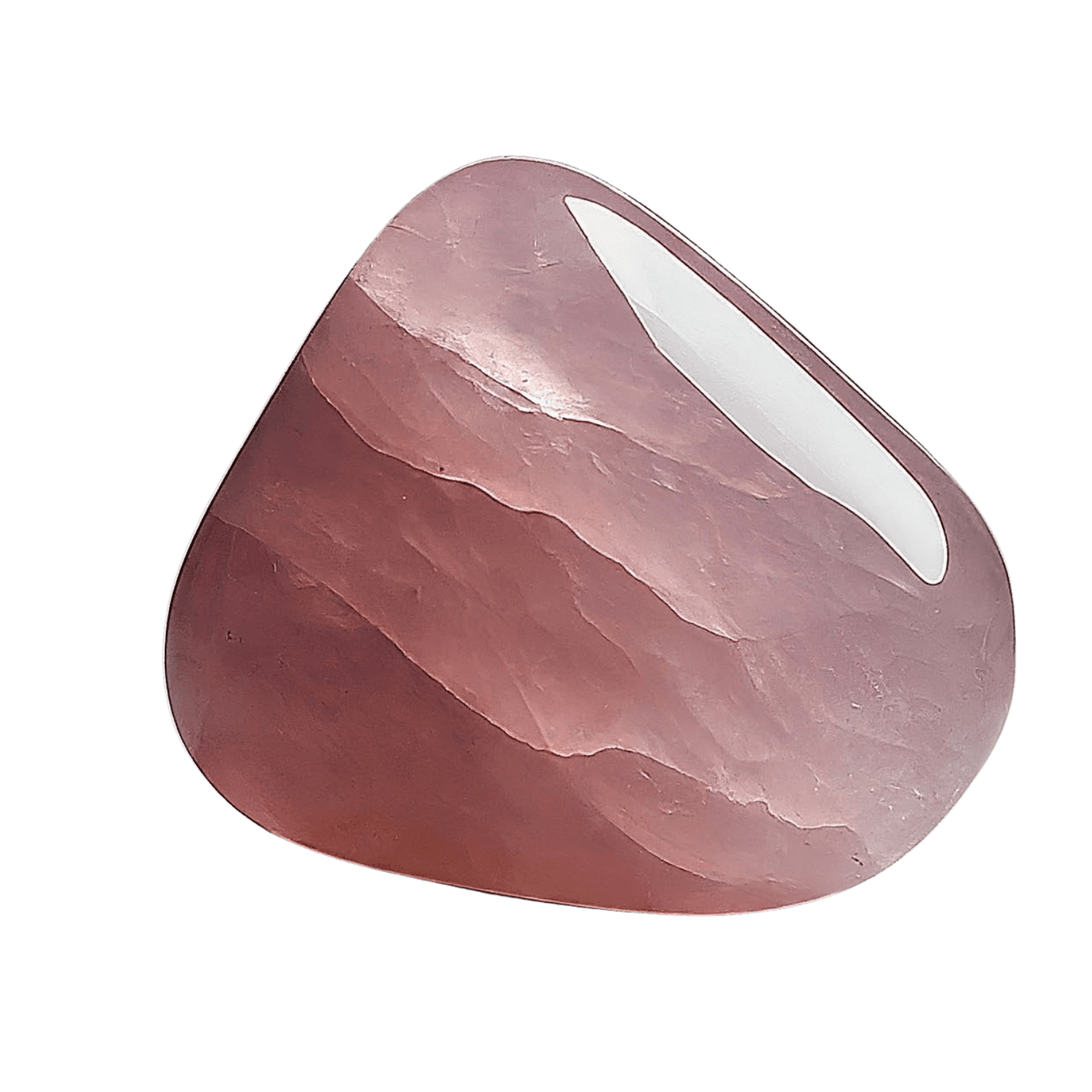
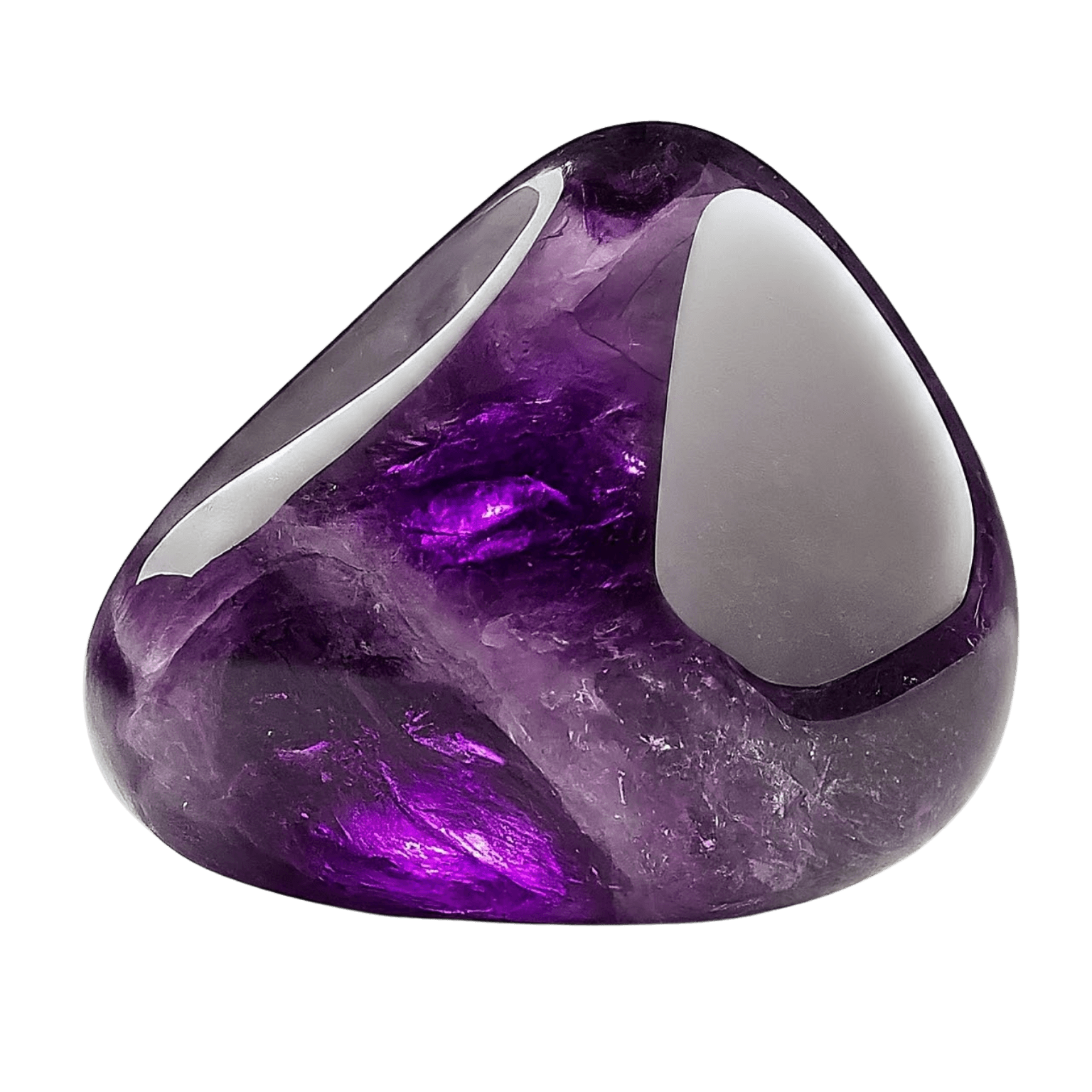
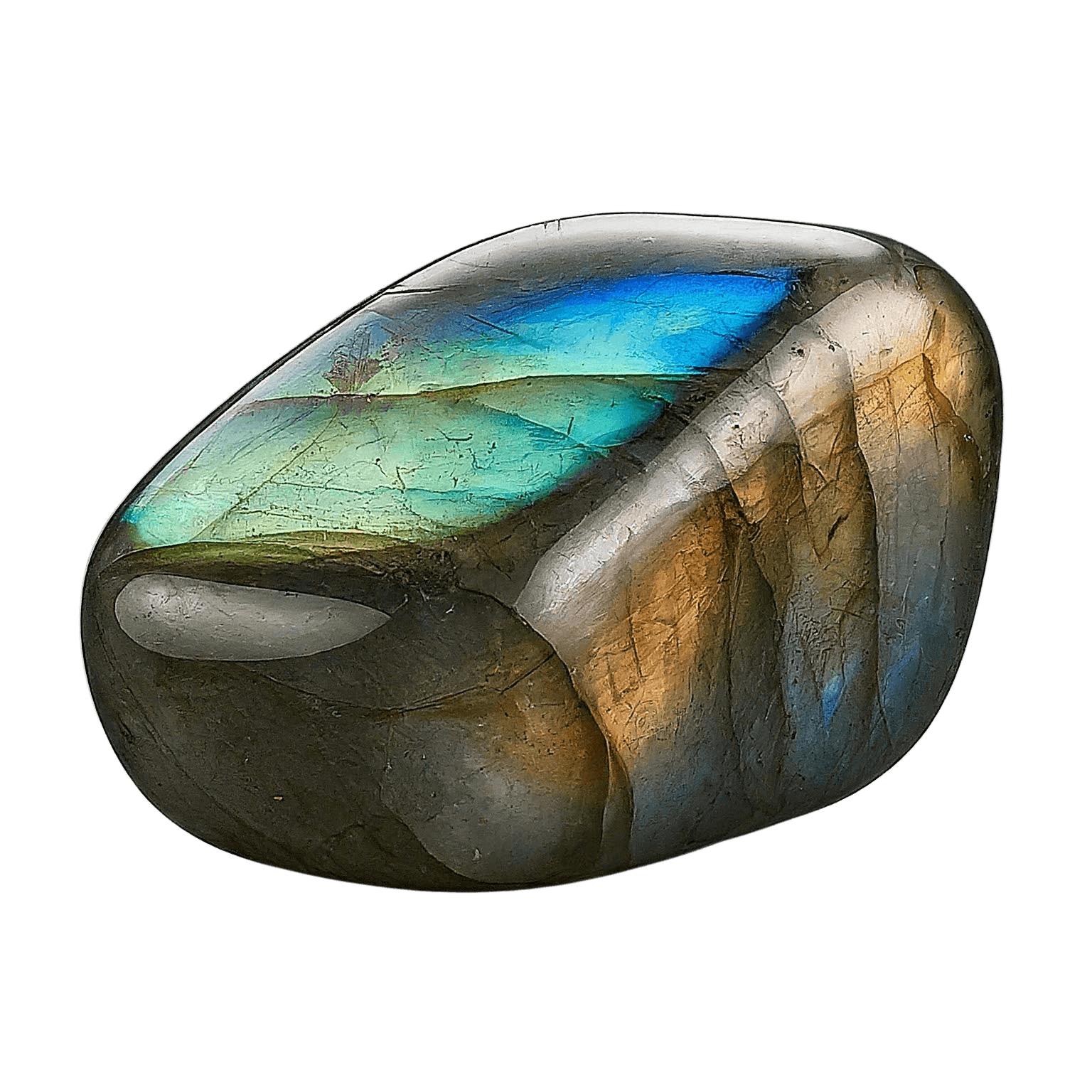
A curated trio of the stones Cassandra most often recommends in palm stone form. Rose Quartz, Amethyst, and Labradorite each suit this form for a distinct reason, so the set covers the most-loved uses of the palm stone at once.
Rose Quartz
Primary stone
Amethyst
Supporting stone
Labradorite
Anchoring stone
This kit is being assembled. Join the waitlist and Cassandra will email you the moment it ships.
Pair palm stones with these intentions
In traditional crystal-healing practice, the form of the stone shapes how the energy moves. Palm Stones are most commonly paired with the following intentions.
Explore other crystal forms
Frequently asked questions
What is the difference between a palm stone and a worry stone?
A palm stone is a smooth oval, while a worry stone has a thumb-shaped dimple carved into one face for rubbing. Palm stones are larger (typically 50mm to 70mm long), worry stones smaller (about 40mm). The palm stone is for full-hand closure and breath-work; the worry stone is for fingertip and thumb-tip soothing. Both are pocket forms, but they invite slightly different gestures, and many people end up owning one of each.
Which palm stone should I start with?
If you are uncertain, a rose-quartz palm stone is the most-recommended first piece in the classical crystal-healing literature; gentle, warm, and forgiving. If you need calm focus, amethyst. If you need grounding, smoky quartz. If you need a fidget-friendly stone for restless hands, labradorite for its flash. Trust the stone you keep returning to in photos or in the shop; that choice is usually made before you have finished justifying it.
Can I carry more than one palm stone at a time?
Yes, and many people do, although there is a thoughtful version of this. Two stones with similar intent (rose quartz and rhodonite for heart work, for example) layer well; two stones with opposing intent (citrine for activation, lepidolite for calming) can feel busy in the same pocket. In my practice I recommend starting with one, learning its voice, and adding a second only when a clear second need shows up.
How do I cleanse a palm stone?
Brief, cool running water works for most palm stones, but never for selenite, calcite, malachite, lapis lazuli, pyrite, halite, or hematite (which can rust). Universal safe methods are sound (a tingsha bell, a tuning fork), focused breath across the surface, or a few hours on a selenite plate. Robert Simmons recommends moonlight for emotional softening. Cleanse weekly with regular pocket-carry.
Why does my palm stone feel warmer over time?
Two reasons. First, regular hand-carry transfers your body heat into the stone faster each time, so it warms up more quickly on subsequent contacts. Second, in classical crystal-healing terms, the stone learns the body; Melody writes of palm stones as developing a felt-resonance with the carrier after weeks of use. Whether you read this as physics or as relationship, the experience is real and is part of what makes the palm stone so well-loved.
Are palm stones safe for children?
Palm stones are usually safe for children old enough not to put a stone in the mouth (typically age four and up). Choose a soft, opaque stone like rose quartz, sodalite, or moss agate. Avoid sharper-edged stones, malachite (which can flake), and anything with toxic mineralogy in raw form. Many parents find a palm stone is a gentle introduction to mindfulness for children, and it tucks easily into a backpack pocket.
Share Your Result
Vertical 9:16 format, perfect for Instagram Stories or TikTok. Opens in a new tab; long-press or right-click to save.
The Crystal Starter Library, free
Crystal Cassandra on choosing your first stones, keeping them safe, and building a practice around one intention rather than a shelf of good intentions.
We respect your inbox. Unsubscribe anytime.
Explore More Tools
Crystal Quiz
Find the right crystal for your energy.
Open →Crystal Care
How to cleanse and charge each crystal.
Open →Crystal Grid Designer
Build a sacred-geometry crystal grid.
Open →Crystals by Intention
Match crystals to what you need.
Open →Crystal Cleansing Guide
Every cleansing method explained.
Open →