By Crystal Cassandra · Updated August 3, 2026
Crystal Healing Expert
What is a pendulum crystal?
A crystal pendulum is a pointed or faceted stone suspended on a fine chain, used in traditional dowsing practice to amplify subtle muscle movements into visible swings. In classical crystal-healing practice, pendulums are used for inner-knowing work and reflective questions, never for predictions; the swing is read as the body's own already-held knowing made visible.
Key Takeaways
- Pendulums are pointed crystals (typically 25mm to 40mm long) on a 150mm to 200mm chain.
- Used for dowsing: yes/no questions, chakra-balance scans, and reflective inner-knowing work.
- The pendulum amplifies tiny involuntary muscle movements (ideomotor response) into visible swings.
- In Cassandra's lineage, used for reflection and inner-listening, never for prediction or fortune-telling.
- Clear quartz, amethyst, rose quartz, and rose-quartz-with-clear-quartz-tip are the classical pendulum stones.
What is a pendulum crystal?
A crystal pendulum is a small pointed stone (usually a faceted six-sided point, sometimes a smooth teardrop or sphere) suspended on a fine chain about 150mm to 200mm long. At the top of the chain is a small bead or holding piece for the fingers. The classical pendulum design has a sharp single point at the bottom of the stone, which makes the swing direction easy to read; many pendulums also have a small faceted bead at the top of the stone where the chain attaches.
Pendulums are made by drilling a small hole through the top of a pointed crystal, threading a chain through, and finishing the chain with a holding bead. The stone is usually a quartz family member (clear, amethyst, rose, smoky, citrine) because the six-sided crystal habit lends itself to a faceted, symmetrical pendulum point. You will also find pendulums in metals (brass, copper, silver), in carved stones from species like sodalite and tigers-eye, and in combinations (a clear-quartz point with a rose-quartz bead at the top, for example).
Pendulum-dowsing has a long cross-cultural history; metal pendulums and weighted strings have been used in European, Middle Eastern, and Asian traditions for water-witching, decision-making, and contemplative practice for many centuries. The modern crystal pendulum is part of that lineage, scaled and refined for the hand and chain practice common in Western crystal-healing today.
Traditional energetic use
Judy Hall in The Crystal Bible (2003) is careful about pendulum practice; she writes that pendulums are best used for reflective questions about inner state (`is this the direction my body is pulling toward?`) rather than predictive questions about the future. The swing is the visible amplification of small involuntary muscle movements (the ideomotor response, well-studied in psychology), which means the pendulum is showing you what your body already knows, not predicting an external outcome.
Robert Simmons and Naisha Ahsian in The Book of Stones (2015) recommend pendulums for chakra-scan work: holding the pendulum over each chakra in turn and observing the swing pattern, which traditionally indicates the energetic state of that chakra. They are clear that this is reflective practice, not diagnostic; the pendulum is a feedback tool for inner-listening, not a medical instrument.
In my practice with clients, I treat the pendulum as a reflection tool only. The classical Cassandra reading: the pendulum shows you what you already know about your own state, in a way the rational mind can see and accept. It is not a crystal ball, not a fortune-teller, and never a substitute for thinking through difficult decisions. Used in this spirit, the pendulum is a small, useful practice for reflective questioning.
How to use a pendulum crystal
The ritual below is the one Cassandra uses in her own practice and recommends to clients new to working with this form. It takes about ten minutes and can be repeated as a weekly or monthly working.
- 1
Calibrate yes, no, and unclear
Before any pendulum work, calibrate the swing directions with your own pendulum. Hold the chain about 100mm from the pendulum stone; let it hang still. Ask `show me yes` and watch which direction it swings (clockwise, counter-clockwise, side-to-side, front-to-back). Repeat for `show me no` and `show me unclear`. Note the three patterns. Recalibrate any time you use a new pendulum.
- 2
Steady the hand and the chain length
Hold the chain at the holding bead between thumb and forefinger. Rest your elbow on a table for stability; the wrist and hand should be still, not actively swinging the pendulum. The chain should be 100mm to 150mm from your fingers to the top of the pendulum stone; longer chains amplify movement, shorter chains are more precise but slower to read.
- 3
Ask reflective questions only
The classical use of a pendulum in Cassandra's lineage is for reflective inner-state questions: `is my body pulling toward option A?`, `is this the right time to rest?`, `am I avoiding this conversation?`. Never use a pendulum for predictive questions (`will I get the job?`, `will they call me back?`), because the future is not what the pendulum reads. The pendulum reads what you already know.
- 4
Use for chakra-scan work
Lie someone down (or yourself in a reclined seat) and hold the pendulum about 100mm above each chakra in turn (root, sacral, solar plexus, heart, throat, third eye, crown). Stay over each chakra for thirty seconds and observe the swing. In Robert Simmons's tradition, a clockwise swing reads as open and energised, counter-clockwise as releasing or working through, side-to-side as in flux, and stillness as quiet or closed.
- 5
Cleanse before and after every session
Pendulums absorb the felt-quality of every session they participate in; cleanse before and after each use. Universal safe methods are sound, focused breath across the stone, or a few minutes on a selenite plate. Brief cool water works for clear, smoky, and rose quartz pendulums; avoid water for selenite, calcite, and any pendulum with metal findings that can rust. Store the pendulum coiled on a small cloth between sessions.
The best crystals to choose in pendulum form
Not every crystal shines in every form. The stones below are traditionally chosen as pendulums because the form amplifies the stone's qualities.
Shop crystal pendulums
Pendulum Bundle
Pendulum Starter Trio
A curated trio of the stones Cassandra most often recommends in pendulum form. Clear Quartz, Amethyst, and Rose Quartz each suit this form for a distinct reason, so the set covers the most-loved uses of the pendulum at once.
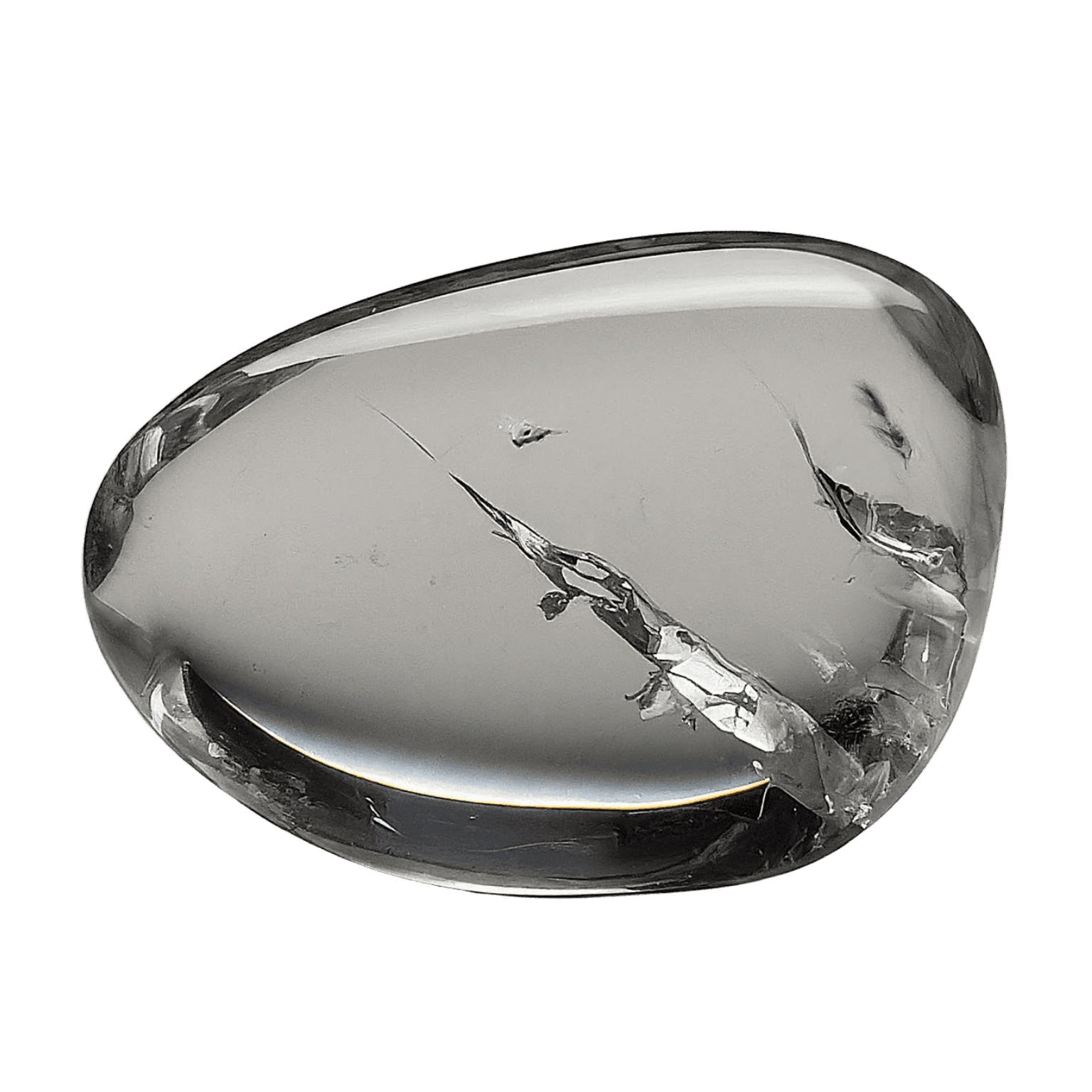
Clear Quartz
Primary stone
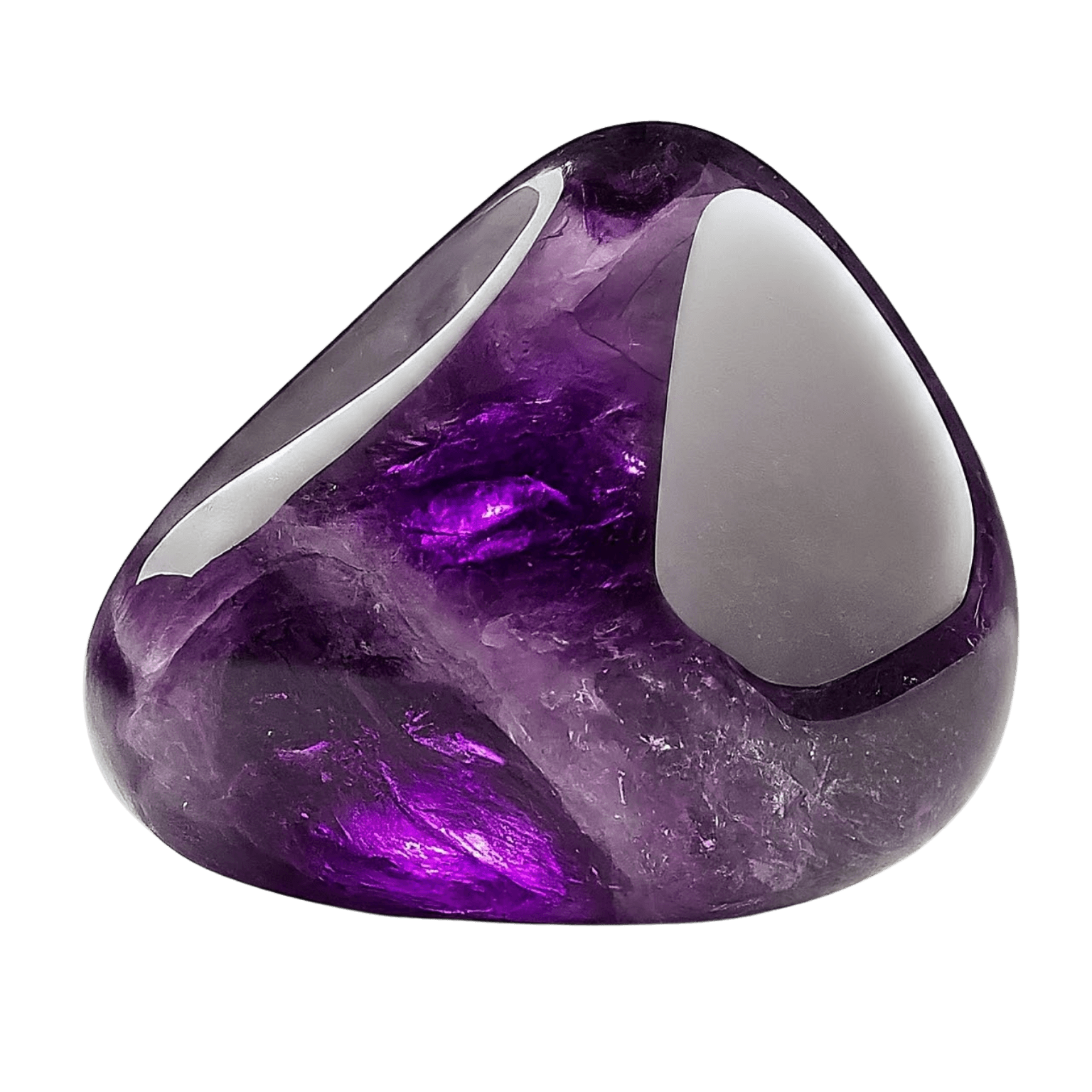
Amethyst
Supporting stone
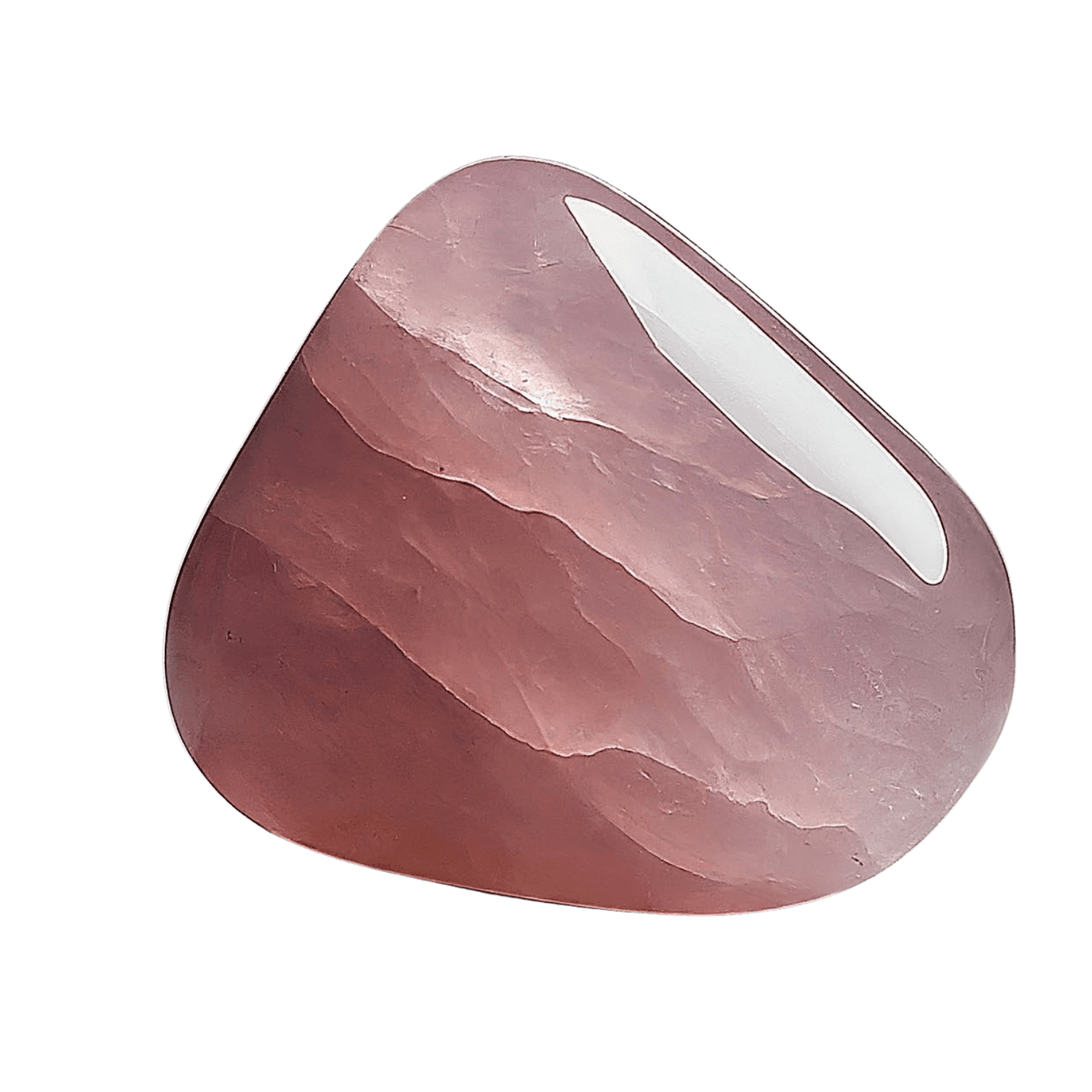
Rose Quartz
Anchoring stone
This kit is being assembled. Join the waitlist and Cassandra will email you the moment it ships.
Pair crystal pendulums with these intentions
In traditional crystal-healing practice, the form of the stone shapes how the energy moves. Crystal Pendulums are most commonly paired with the following intentions.
Explore other crystal forms
Frequently asked questions
How does a pendulum actually work?
Modern psychology explains the pendulum swing through the ideomotor response: tiny, involuntary muscle movements in the hand and arm, amplified by the long lever-arm of the chain, become visible swings. The pendulum is therefore a feedback tool that shows you what your body already knows below conscious awareness. In Cassandra's lineage this is honored as a real and useful practice; the pendulum is not magic, and it is also not nothing. It is a way to see what you already know.
Can pendulums predict the future?
No, and any responsible source in the classical crystal-healing literature is clear about this. The pendulum reads your body's current state and held knowing; it does not predict external outcomes. Asking `will I get the job?` is asking a question the pendulum cannot answer; asking `is my body pulling toward applying for this job?` is asking a question the pendulum can reflect back. Frame all pendulum questions as inner-state questions and you will find the practice steady and useful.
Why does my pendulum sometimes refuse to swing?
A stillness or unclear pattern is a valid answer; it usually means the question is not the right one to ask, the answer is not yet known, or you are in a state where reflection is not possible (very tired, very stressed, very distracted). Take a breath, set the pendulum down until the question has stopped mattering so much, and either rephrase it or accept that this is not the time. Forcing a swing by physical movement defeats the practice.
Which pendulum stone should I start with?
Clear quartz is the most-recommended first pendulum in Cassandra's lineage because it does not colour the reading with its own attribution. After you have used a clear-quartz pendulum for a few weeks and learned its swing patterns, consider adding a specialised pendulum (amethyst for decision-making, rose quartz for relationship questions, smoky quartz for boundary work). The classical practice is one pendulum at a time; switching pendulums between questions tends to confuse the readings.
How do I cleanse a crystal pendulum?
Pendulums need cleansing before and after every session because they absorb the felt-quality of the questions you ask. Universal safe methods are sound (a tingsha bell, a tuning fork), focused breath across the stone, or a few minutes on a selenite plate. Brief cool water works for clear, smoky, rose, and citrine quartz pendulums; avoid water for pendulums with metal chains that can rust, and for selenite or calcite stones. Robert Simmons recommends moonlight for overnight pendulum cleansing.
Is using a pendulum the same as fortune-telling?
No; treated responsibly, pendulum-dowsing is a reflective inner-listening practice, not a predictive one. The pendulum shows your body's current knowing, made visible through ideomotor amplification. Fortune-telling claims to read external future outcomes, which the pendulum cannot do. In Cassandra's lineage, the pendulum is a tool for self-inquiry alongside journaling, meditation, and other reflective practices. Used this way it is a valuable companion; used as a fortune-telling device it disappoints.
Share Your Result
Vertical 9:16 format, perfect for Instagram Stories or TikTok. Opens in a new tab; long-press or right-click to save.
The Crystal Starter Library, free
Crystal Cassandra on choosing your first stones, keeping them safe, and building a practice around one intention rather than a shelf of good intentions.
We respect your inbox. Unsubscribe anytime.
Explore More Tools
Crystal Quiz
Find the right crystal for your energy.
Open →Crystal Care
How to cleanse and charge each crystal.
Open →Crystal Grid Designer
Build a sacred-geometry crystal grid.
Open →Crystals by Intention
Match crystals to what you need.
Open →Crystal Cleansing Guide
Every cleansing method explained.
Open →