Multi-Crystal Comparison

Meditation Crystals Compared: 5 Best Stones (Ranked and Reviewed)

5 best meditation stones, ranked and reviewed

5 stones ranked · Traditional sources · Reviewed by Crystal Cassandra

Crystal Cassandra

By Crystal Cassandra · Updated August 3, 2026

Crystal Healing Expert

Best Crystals for Meditation

For meditation, the 5 crystals most often reached for in traditional crystal healing are Amethyst, Clear Quartz, Selenite, Labradorite, and Lepidolite. Amethyst quiets the mind, Selenite raises the meditation's vibration, Lepidolite settles a restless start. Below: which to choose for your meditation style.

Key Takeaways

Overview

The 5 Crystals Compared at a Glance

Here is the quick visual comparison. Each of these stones earns a place in traditional crystal healing for meditation, the differences lie in how they meet you, what kind of meditation they suit best, and how they fit your practice.

Amethyst
Best For
Best overall, the universal meditation stone
Primary Color
purple, violet
Chakra
Crown, Third Eye
Key Property
Third-eye + crown chakra stone explicitly called 'the stone of meditation' in traditional crystal healing.
Price Range
$8-$20
Clear Quartz
Best For
Best amplifier for meditation intention
Primary Color
clear, white
Chakra
Crown
Key Property
The master amplifier in traditional crystal healing.
Price Range
$6-$15
Selenite
Best For
Best for advanced crown-chakra meditation
Primary Color
white, translucent
Chakra
Crown
Key Property
High-vibration crown-chakra stone for advanced meditation and spiritual development practice.
Price Range
$8-$20
Labradorite
Best For
Best for visionary and shamanic meditation
Primary Color
grey, iridescent blue
Chakra
Third Eye, Throat
Key Property
Third-eye stone for visionary, shamanic, and inner-journey meditation practice.
Price Range
$15-$35
Lepidolite
Best For
Best for restless meditators who cannot settle
Primary Color
lavender, purple
Chakra
Heart, Third Eye
Key Property
The traditional settling stone for restless meditators who struggle to arrive at the start of a session.
Price Range
$10-$22
Stone by stone

In-Depth Reviews

In my practice, choosing between these five is rarely about which is "best" in an absolute sense, it is about which one meets the specific shape of your meditation. Below, I walk through each stone in detail, in order of how often I recommend them.

Amethyst crystal
1

Amethyst

Best overall, the universal meditation stone

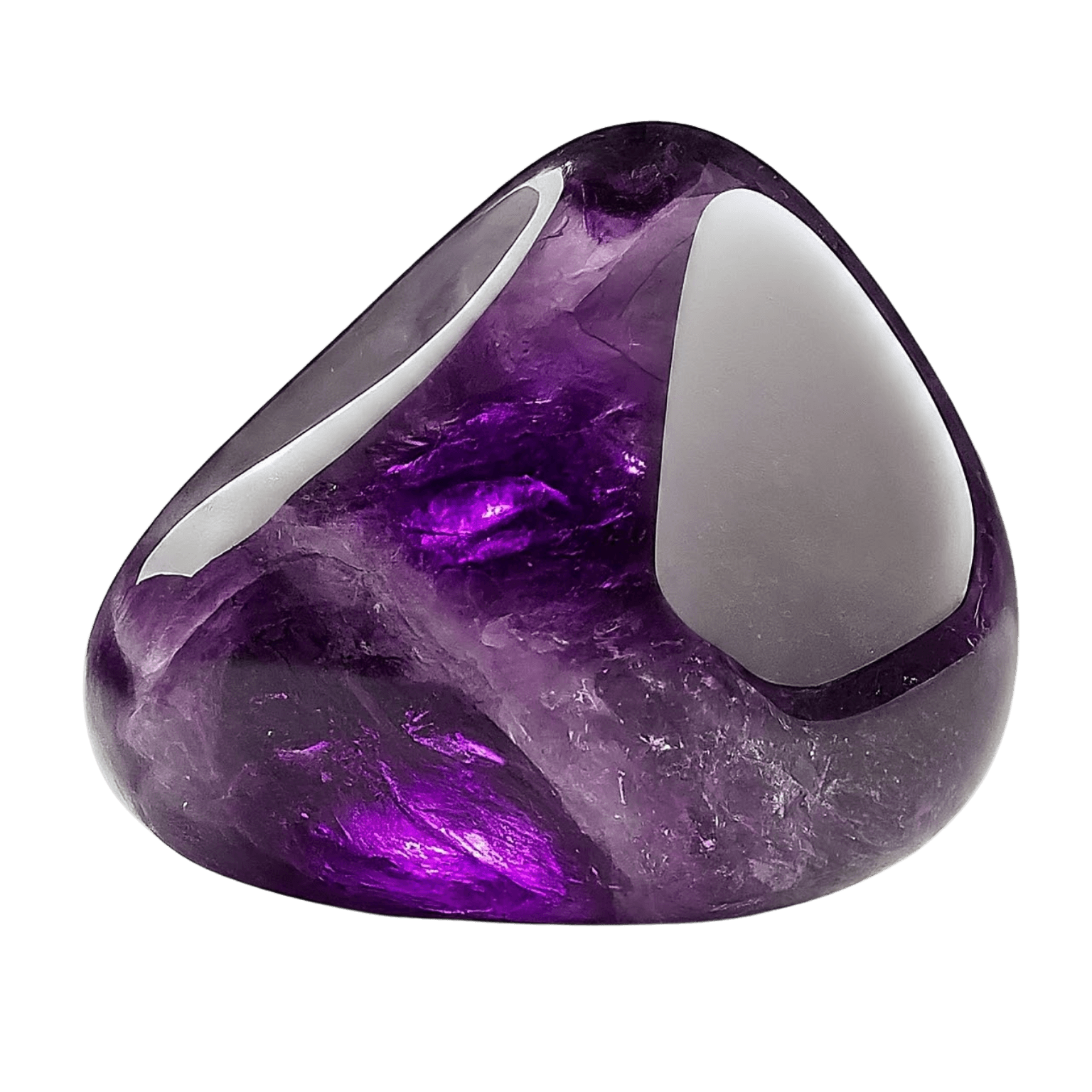
Amethyst is the foundational meditation stone of the Western crystal tradition, and Crystal Bible author Judy Hall explicitly calls it 'the stone of meditation.' When you cup it in your palm at the start of a session, the cool, hard violet meets you with a quieting authority. In traditional crystal healing, Amethyst works on the third-eye and crown chakras, which are the chakras most associated with meditative awareness. According to metaphysical tradition, Amethyst quiets the rational mind enough for deeper awareness to surface, this is the function meditation is trying to cultivate. In my practice, this is the stone I recommend to every client beginning a meditation practice, and to long-time meditators returning after a lapse. Author Melody (Love Is in the Earth) describes its energy as 'enhancing meditation.' The way this stone meets you in seated practice is unmistakable, a gentle dimmer switch on mental chatter. Place a cluster on the meditation altar; hold a tumbled stone in the receiving hand (typically left) during seated practice. Affordable, widely available, beginner-friendly.

Why this stone for meditation

Third-eye + crown chakra stone explicitly called 'the stone of meditation' in traditional crystal healing.

How to use it

Place a cluster on the meditation altar. Hold a tumbled stone in the receiving (typically left) hand during seated practice.

Pros

  • Most accessible meditation stone
  • Universally effective
  • Affordable ($5-$15)
  • Beginner-friendly

Cons

  • Fades in prolonged sun
  • Less powerful for advanced crown-chakra work (use Selenite)
  • Generic energy may feel unfocused for specific practices
Clear Quartz crystal
2

Clear Quartz

Best amplifier for meditation intention

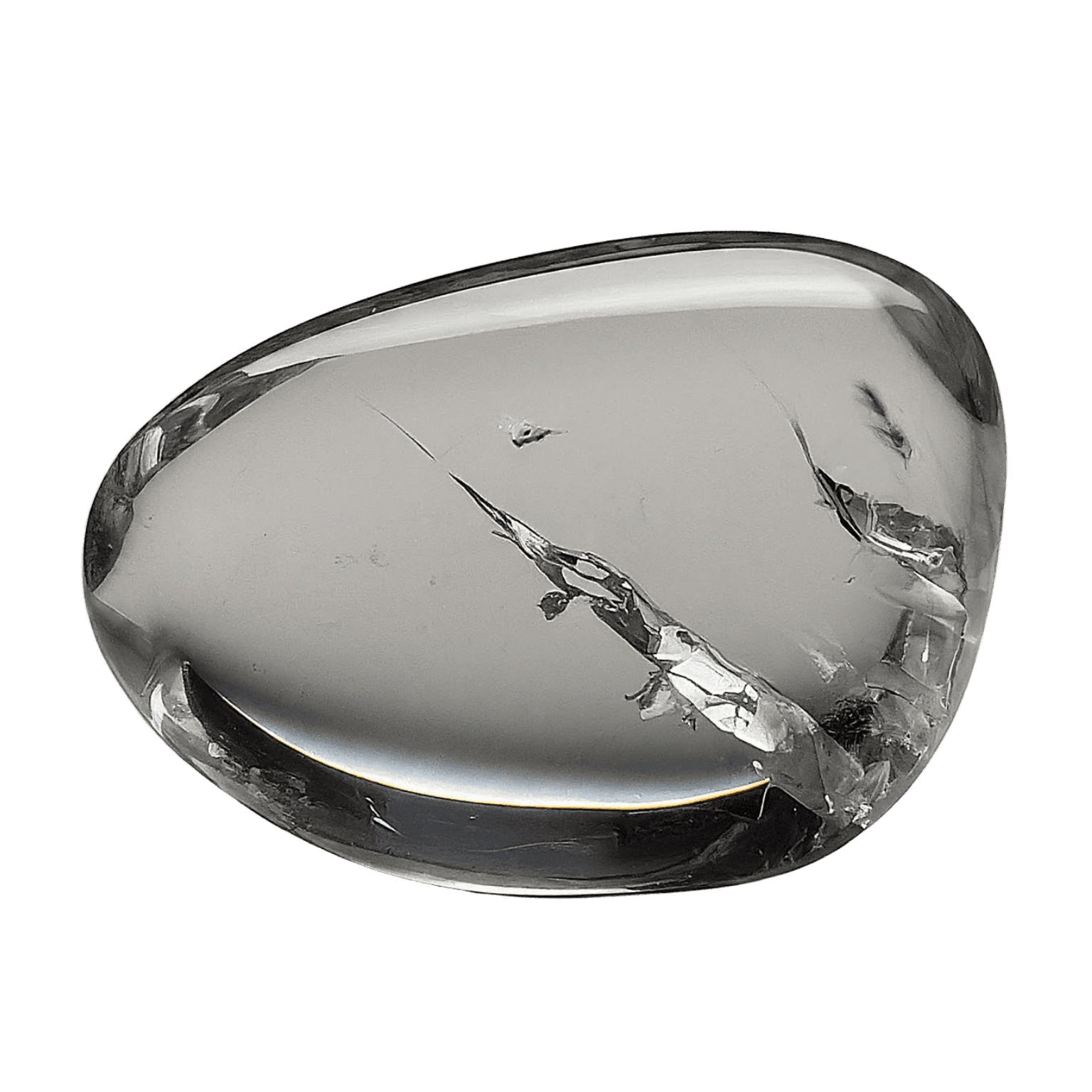
Clear Quartz earns its place on the meditation list as the universal amplifier, the stone that intensifies whatever meditative intention is being cultivated. Hold a Clear Quartz point in your palm and notice the immediate sense of clarity. Crystal Bible author Judy Hall calls Clear Quartz 'the most powerful healing and energy amplifier on the planet,' and in meditation specifically, it amplifies the meditation-intention you set with it. According to metaphysical tradition, Clear Quartz is the master amplifier, it does not bring its own specific meditative energy, but it intensifies whatever meditation stone or practice it is paired with. In my practice, Clear Quartz is the second stone I recommend after Amethyst for meditation, and I almost always pair them. Author Melody (Love Is in the Earth) calls Clear Quartz 'the universal crystal.' The way this stone meets you depends on how you meet it, its blank-slate quality is part of why it pairs so well with intention-based meditation. Program by holding the Clear Quartz and stating your meditation-intention before each session. Place at the corner of the meditation space.

Why this stone for meditation

The master amplifier in traditional crystal healing. Intensifies meditation-intention and pairs with other meditation stones.

How to use it

Hold and program with a meditation-intention before each session. Place at the corner of the meditation space.

Pros

  • Pairs with any other meditation stone
  • Universal mental clarity
  • Affordable ($5-$25)
  • Durable and water-safe

Cons

  • Less specific than Amethyst alone
  • Requires intention-setting to work optimally
  • Beginners may not feel its effect immediately
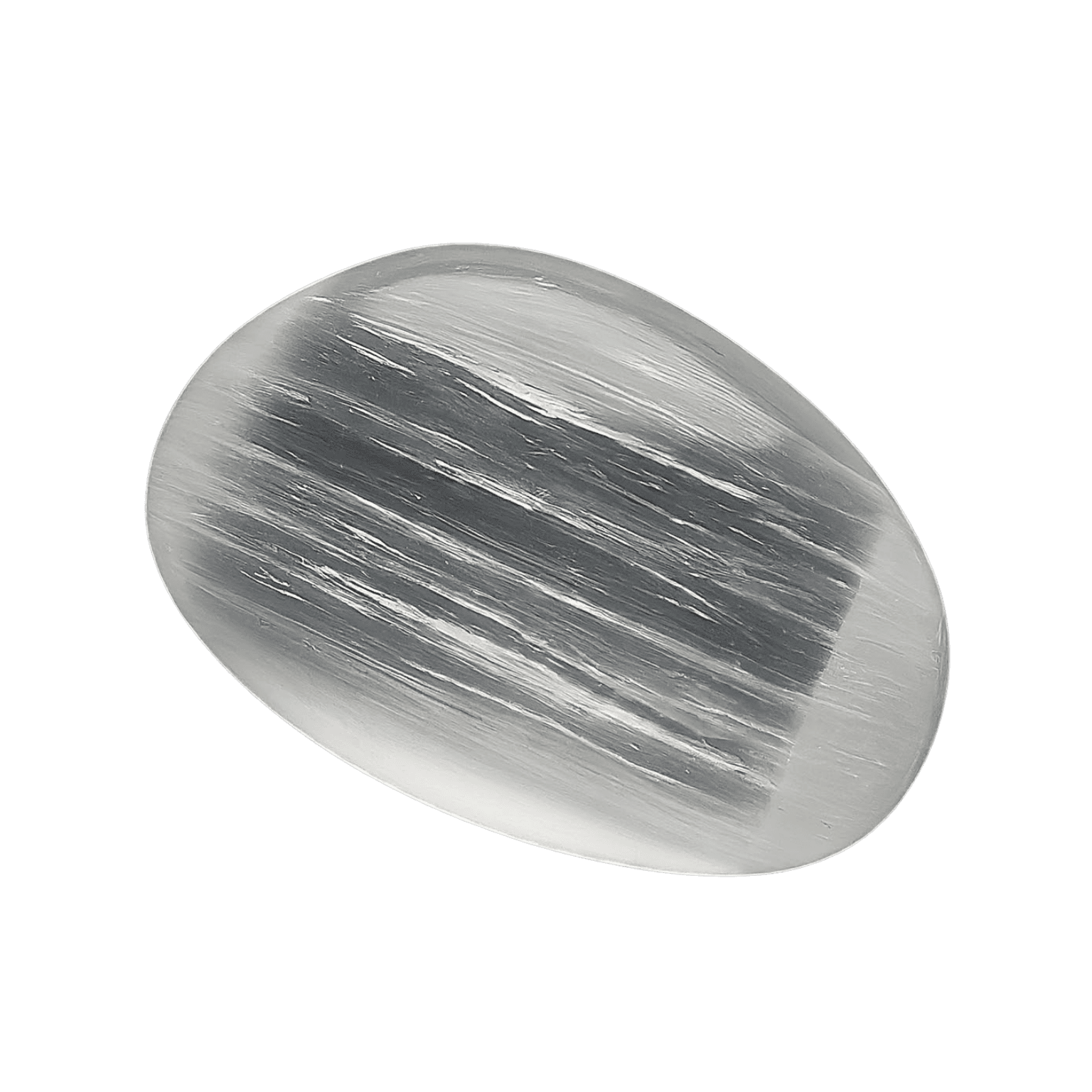
Selenite crystal
3

Selenite

Best for advanced crown-chakra meditation

Selenite is the meditation stone for advanced practice, particularly for crown-chakra meditation and high-vibration spiritual work. Hold a Selenite wand in low light and notice the way it almost glows from within; there is a luminous, high-vibration quality to this stone that feels different from any of the others on this list. Crystal Bible author Judy Hall describes Selenite as 'a powerful, high-vibration crystal that brings clarity of mind' and specifically recommends it for 'spiritual development' and 'reaching higher meditative states.' In traditional crystal healing, Selenite is associated with the crown chakra and is believed to clear stagnant or chaotic energy from the auric field, perfect preparation for deep meditation. According to metaphysical tradition, Selenite raises the vibrational quality of the meditation space itself. In my practice, this is the stone I recommend to long-time meditators ready to deepen their practice and to anyone working with crown-chakra opening. Author Melody (Love Is in the Earth) describes its energy as 'liquid light.' Place a Selenite wand on the meditation altar; it also self-cleanses and can cleanse other crystals overnight.

Why this stone for meditation

High-vibration crown-chakra stone for advanced meditation and spiritual development practice.

How to use it

Place a wand on the meditation altar. Run other meditation crystals along it to cleanse them.

Pros

  • Self-cleansing (cleanses other stones)
  • Unique high-vibration energy
  • Beautiful luminous appearance
  • Affordable ($5-$15 for wands)

Cons

  • NEVER expose to water (it dissolves)
  • Very soft (Mohs 2)
  • Can flake or break easily
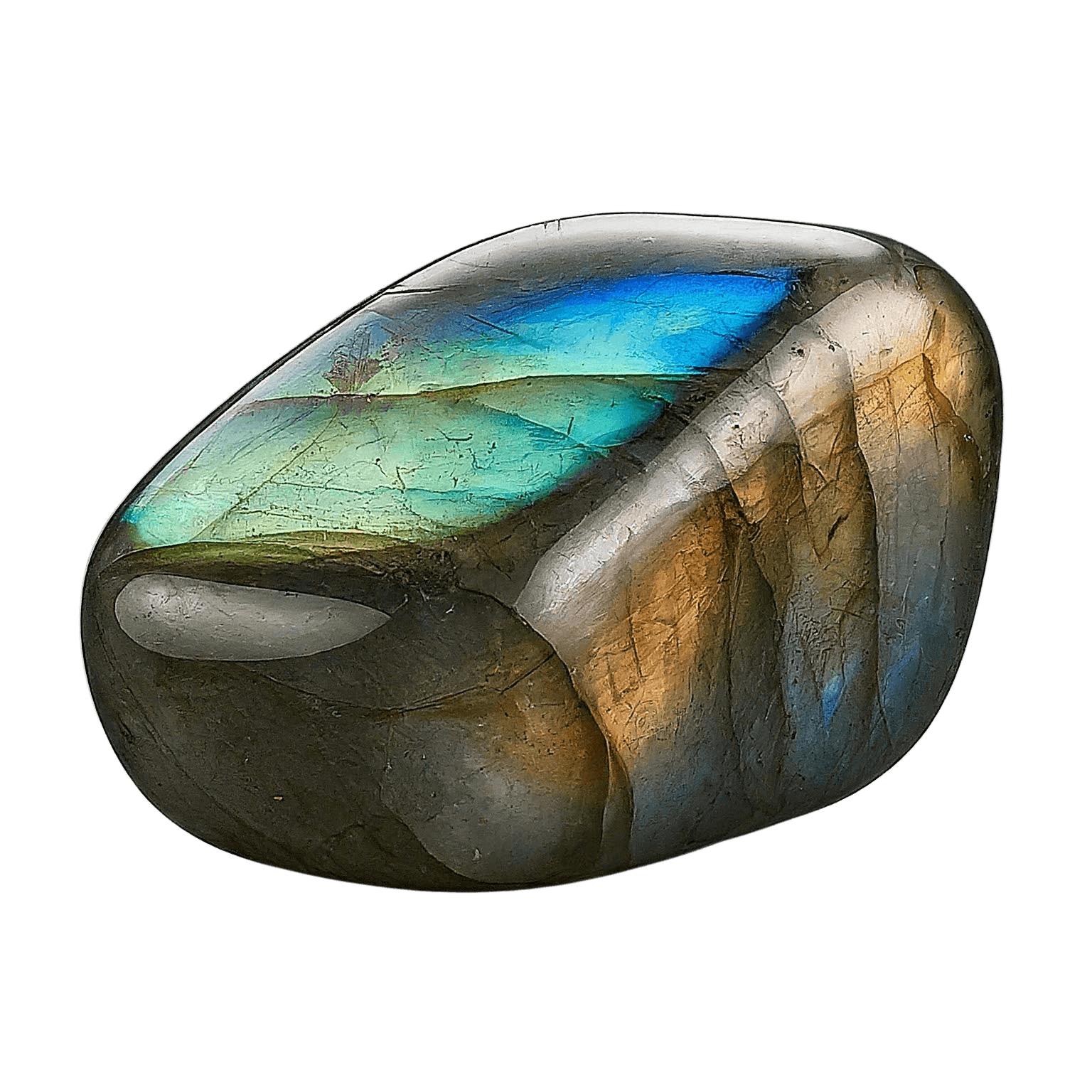
Labradorite crystal
4

Labradorite

Best for visionary and shamanic meditation

Labradorite is the meditation stone for the visionary, intuitive, or shamanic strands of meditation practice, the practice that intentionally cultivates inner imagery, journey-work, or expanded perception. Hold a polished Labradorite in your palm and tilt it under the light to see the labradorescence, the unique iridescent flash that gives this stone its name. Crystal Bible author Judy Hall calls Labradorite 'a stone of magic' and specifically recommends it for 'awakening latent psychic abilities.' In traditional crystal healing, Labradorite supports the third-eye and crown chakras together, and is the stone for the meditator ready to move past quieting-the-mind practice into deeper inner work. According to metaphysical tradition, Labradorite is the stone of the visionary meditator, the practitioner who treats meditation as inner exploration rather than just stress reduction. In my practice, I recommend Labradorite to clients in shamanic training, dream-work practice, or any tradition that uses imagery and inner-journey methods. Author Melody (Love Is in the Earth) calls Labradorite 'the temple of the stars.' The way this stone meets you is unmistakably otherworldly.

Why this stone for meditation

Third-eye stone for visionary, shamanic, and inner-journey meditation practice.

How to use it

Hold during visionary or shamanic meditation. Place on the altar during journey-work.

Pros

  • Excellent for visionary meditation
  • Beautiful labradorescence
  • Pairs with serious spiritual practice
  • Mid-range price ($10-$40)

Cons

  • Less effective for stillness practice (use Amethyst)
  • Energy can feel intense for beginners
  • Softer than Amethyst (Mohs 6)
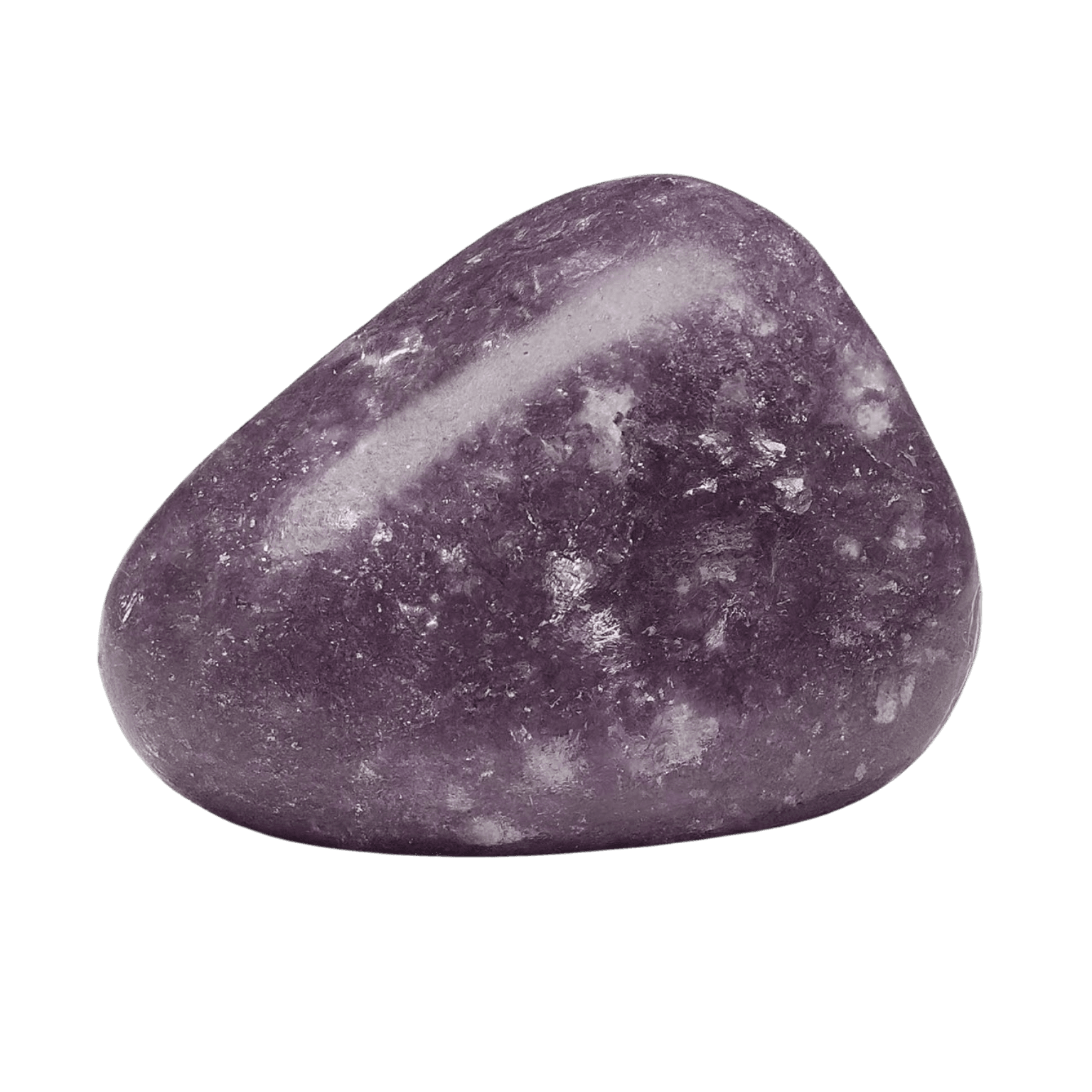
Lepidolite crystal
5

Lepidolite

Best for restless meditators who cannot settle

Lepidolite is the meditation stone for the restless meditator, the person whose practice keeps being undermined by a body that will not settle. Hold this stone and notice the weight; there is a density to it that feels reassuring at the start of a session. In traditional crystal healing, Lepidolite is the settling stone, the one held first so that the rest of the practice has somewhere to land. Crystal Bible author Judy Hall calls Lepidolite 'the grandmother stone' for its quiet, steady presence. According to metaphysical tradition, much difficulty in meditation is not lack of technique but simple restlessness, and Lepidolite is the stone traditionally named for it. In my practice, this is the stone I reach for whenever a session gets abandoned with 'my mind is too busy' or 'it only made me more agitated.' Author Melody (Love Is in the Earth) writes that Lepidolite 'releases stress and tension.' Being asked to do nothing but hold it is, in the tradition, the whole of the opening move. Hold it for the first few minutes before beginning the formal session.

Why this stone for meditation

The traditional settling stone for restless meditators who struggle to arrive at the start of a session.

How to use it

Hold it for the first few minutes before beginning the formal session. Continue holding during practice if helpful.

Pros

  • Excellent for restless meditators
  • The traditional settling stone
  • Pairs perfectly with Amethyst
  • Affordable ($10-$25)

Cons

  • Flaky surface, handle gently
  • Avoid water cleansing
  • Less universal than Amethyst
Decision matrix

Side-by-Side: Which Is Best for What?

If you are choosing between these five for a specific situation, here is the quick decision matrix. According to metaphysical tradition, the right stone is the one that matches your particular need.

If you want…Choose
Best for severe meditationLabradorite
Best for beginnersAmethyst
Best on a budgetAmethyst
Best aestheticallyLabradorite
Best to combine with othersSelenite
Practice

How to Combine These Crystals

The most powerful meditation-stack in my practice is what I call the four-corner meditation grid: Amethyst at the north of the meditation cushion, Clear Quartz at the south, Selenite at the east, and Lepidolite at the west. Sit at the center. According to metaphysical tradition, this layout creates a contained energetic field that supports deep meditation without external interference. Many advanced practitioners use this configuration for retreat practice.

For everyday seated meditation, pair Amethyst (mind-quieting) with Lepidolite (settling). Hold Lepidolite for the first few minutes to settle, then transition to Amethyst for the depth practice. Many people find this two-stone approach suits them better than either stone alone.

For visionary or shamanic practice, pair Labradorite (visionary opening) with Selenite (high-vibration container). Place Selenite on the altar; hold Labradorite during the journey. Always end with grounding work, hold Hematite or Smoky Quartz for several minutes after returning from the visionary practice.

Many people working with these stones also explore the Crown Chakra page for traditional pairings and balancing practices.

Safety

What to Avoid

Good to know

Frequently Asked Questions

What is the single best crystal for meditation if I can only have one?

Amethyst is the universal first pick, it is the traditional meditation stone, accessible, affordable, and effective for nearly every meditation style.

Should I hold the crystal during meditation or place it nearby?

Both work, holding provides direct physical contact and intention-anchoring; placing nearby creates an ambient energetic field. Many practitioners hold the smaller stone (Lepidolite, tumbled Amethyst) and place the larger cluster nearby.

Can meditation crystals help me start a meditation practice?

Yes, many people find that a designated meditation stone creates ritual anchor for beginning practice. The physical object signals to the body that meditation time is starting.

Should I use different crystals for different meditation styles?

Yes if helpful. Amethyst suits stillness practice; Labradorite suits visionary practice; Lepidolite suits restless or unsettled practice. Many practitioners rotate based on the day's need.

Can I meditate with multiple crystals at once?

Yes, multi-stone grids are traditional. Start with two stones (Amethyst + Lepidolite is a common pairing) and add others as you understand your practice.

Do meditation crystals need to be programmed?

Clear Quartz benefits from programming. Most other meditation stones (Amethyst, Selenite, Labradorite) carry their own characteristic energy and do not require specific programming.

Should I cleanse meditation crystals?

Yes, meditation crystals absorb mental energy over time. Weekly moonlight or selenite contact works for most. Avoid water for Selenite and Lepidolite.

Can meditation crystals help with mindfulness practice?

Yes, many mindfulness practitioners use Amethyst or Clear Quartz as anchor objects for attention. Hold the stone; return attention to its weight, temperature, and texture whenever the mind wanders.

Keep exploring

What's Next?

Share Your Result

Vertical 9:16 format, perfect for Instagram Stories or TikTok. Opens in a new tab; long-press or right-click to save.

Free Guide

Where to start with crystals

Cassandra's free starter library covers the twelve stones that do most of the work, four cleansing methods and when each applies, and what the tradition says next to what the marketing says.

We respect your inbox. Unsubscribe anytime.