
Quick Answer
Tremolite is a white crystal used in modern crystal healing for calm, clarity, and meditation. It measures 5.5 on the Mohs hardness scale and typically costs $9 to $34 for a tumbled stone. In the chakra tradition, Tremolite is associated with the Crown and Third Eye chakras.
Worth knowing: When tremolite and actinolite grow as a dense felt of microscopic interlocking fibers, the result is nephrite, one of the world's two true jades and among the toughest natural stones ever carved.
“A pale calcium-magnesium amphibole of calm clarity, handled dry due to its fibrous habit.”
- Chakra
- Crown (Sahasrara), Third Eye (Ajna)
- Zodiac
- Aquarius ♒, Virgo ♍
- Element
- Air 💨
- Planet
- Mercury ☿
- Hardness
- 5.5 / 10 (Mohs)
- Colors
- White, Grey, Pale green, Lavender, Colorless
- Origin
- USA, Canada, Italy, Tanzania
- Price Range
- 9 to 34
Care + Safety
Tremolite at a glance
- Water: avoid, may damage or leach
- Sun: tolerates sunlight charging
- Mohs hardness: 5.5 (occasional wear only)
What is Tremolite?
Tremolite is the calcium magnesium end member of a classic amphibole series; let iron replace the magnesium and it grades into green actinolite. Named in 1789 for the Val Tremola region of the Swiss Alps, it also has a lavender manganese-bearing variety, hexagonite, best known from northern New York.
Tremolite measures 5.5 on the Mohs scale and shows white, grey, or pale green coloring. It belongs to the quieting shelf of the catalog, the stones reached for around calm, clarity, and meditation.
The stone connects primarily to the Crown (Sahasrara) and Third Eye (Ajna) chakras, carrying Air energy. Sources include USA, Canada, Italy, and Tanzania; deposit matters more than beginners expect, and collectors learn to recognize where a piece of Tremolite was mined by its color depth and pattern.
Tremolite is a calcium-magnesium amphibole that ranges from colorless and white to grey, green, or lavender, sometimes in silky, bladed sprays. Hold this stone and notice a clean, settling clarity. In the crystal-healing tradition Tremolite is used for calm thought and clear connection in meditation. An important safety note: tremolite can occur in a fibrous, asbestiform habit, so I never grind, polish, or make elixirs with it, and I handle specimens gently and dry, washing my hands afterward.
Also catalogued as Calcium Magnesium Amphibole, Tremolite earns its place in a working collection by being usable: start with calm, the job it is best known for, and let the stone widen its own brief from there.
History and Mythology
There is no credible ancient chapter to tell about Tremolite. The species was described by modern science, and its associations with calm were assigned by contemporary practitioners reading its color, structure, and feel. What the stone lacks in legend it makes up in geology, which asks for no embellishment; deposits worked today lie in USA, Canada, and Italy.
In modern astrological correspondence Tremolite is linked with Aquarius and Virgo, with Mercury ☿ named as its planetary ruler. Practitioners who keep these tables often work the stone hardest during those sun-sign seasons, especially for calm.
Hold the two timescales side by side, centuries of human use at most against epochs of formation behind every Mohs 5.5 specimen of Tremolite; the deep time is the one part no marketing can inflate.
Tremolite Meaning and Metaphysical Properties
What the Hand Learns First
In the hand Tremolite reads as gentle before you know anything else about it. Mohs 5.5 hardness means it gives up its coolness quickly, and the white polish carries a waxy, candle-like glow. Watch the breath for the first half minute, before any thought about the stone has formed; the quieting stones are traditionally met at the breath rather than in the hand.
Primary Properties
The core associations of Tremolite are quieting ones: calm, clarity, meditation, and spiritual awakening. This family does downshift work, the hour before bed, the pause between tasks, the long exhale after a hard conversation. Expect subtlety; the calming stones whisper rather than announce.
How Crystal Energy Works
In traditional practice Tremolite belongs to the Crown, the gate where personal energy meets the larger field, and calm is what practitioners ask of it there. Crown stones are used lightly, brief sessions and soft attention, with calm, clarity, and meditation as the long arc rather than the day's demand. In Hall's catalog the calming family gets a modest write-up, more about where to set the stones, the bedside, the quiet corner, the pocket, than about what to expect from them, and that restraint is worth copying.
Amplification Through Intention
Elementally this is Air. The traditional pairing for Tremolite is breathwork: hold the stone, lengthen the exhale, and bring the calm intention back to mind on each in-breath.
Healing Benefits
Emotional Support
Soothing is the emotional job of Tremolite: calm, clarity, and meditation. Many people keep it for the jagged stretches, the overwhelm that builds by late afternoon, the thoughts that race after lights-out, letting the stone's heft offer the spiral a landing place. As with all crystal healing, calm support from a stone is reflective practice rather than medicine; significant emotional concerns deserve qualified human help.
Spiritual Connection
Tremolite serves the contemplative end of rest: the review before sleep, the body scan, the unclenching that lets quieter knowing surface. Tradition treats the stillness itself as the spiritual practice here, and the stone as its paperweight.
Physical Presence
Physically, Tremolite suits the desk-bound body: a cool object for the hand during screen hours, a cue to unclench the jaw and drop the shoulders on the way to calm. Awareness, not treatment, is the honest claim.
Chakra Connection
Tremolite resonates most strongly with the Crown (Sahasrara), the energy center traditionally drawn in violet / white and the traditional seat of this stone's calm work. When this center runs clear, the classical markers are spiritual connection, divine wisdom, and unity; calm, clarity, and meditation are what Tremolite is most often asked to bring to it.
Lying down, keep Tremolite clear of the head altogether, near hair rather than against skin; crown placements sit at the body's edge, and soft attention rather than any measured stretch of it is the traditional calm session.
Tremolite also keeps a working line to the Third Eye (Ajna), which widens its range in layouts; let the primary placement lead, and add the second position once the first feels familiar.
Zodiac and Astrological Connection
In the modern correspondence tables Tremolite is assigned to Aquarius ♒ (Jan 20 to Feb 18) and Virgo ♍ (Aug 23 to Sep 22); a Sun, Moon, or rising placement there is read as a head start with this stone, nothing more.
None of this is exclusionary. If Tremolite keeps catching your eye, that interest counts for more than whether Aquarius appears anywhere in your chart.
The assigned ruler is Mercury ☿; in practice that means Tremolite comes out when that planet is prominent in the sky or in your chart, and calm is the work it is handed.
How to Use Tremolite
These are the five ways of working with Tremolite I suggest most often. Begin wherever your attention goes first; the sequence matters far less than starting.
- 1
Meditation Hold
Take up Tremolite as you settle in; at Mohs 5.5 it takes on your warmth within a minute or two, and that slow merge is a useful anchor whenever the mind wanders.
- 2
Body Placement
Above the head, not on it, is where Tremolite belongs in a crown session: lie down, position the stone just clear of the crown of the head, and keep the attention gentle. Nothing about this station rewards effort. The old charts assign it to calm.
- 3
Sleep Companion
At night, park Tremolite on the nightstand rather than working it; its job is the day's calm, and ending the day cleanly is how tomorrow's session starts well.
- 4
Carry With You
On the days that will not let up, give Tremolite a spot within arm's reach and touch it slowly once an hour or so; each contact is a thirty-second stand-in for the break that is not coming, and that is how calm travels.
- 5
Crystal Grid Anchor
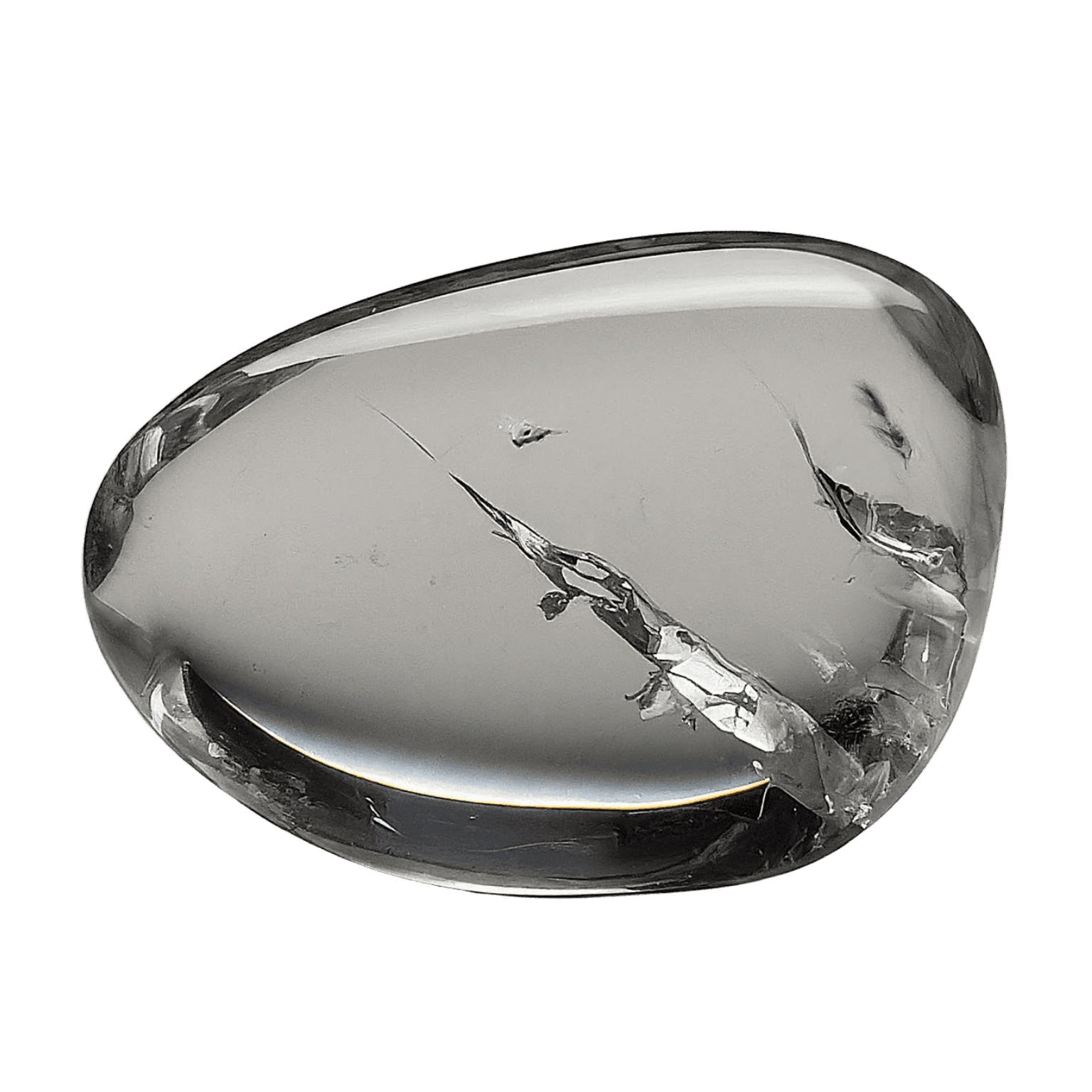
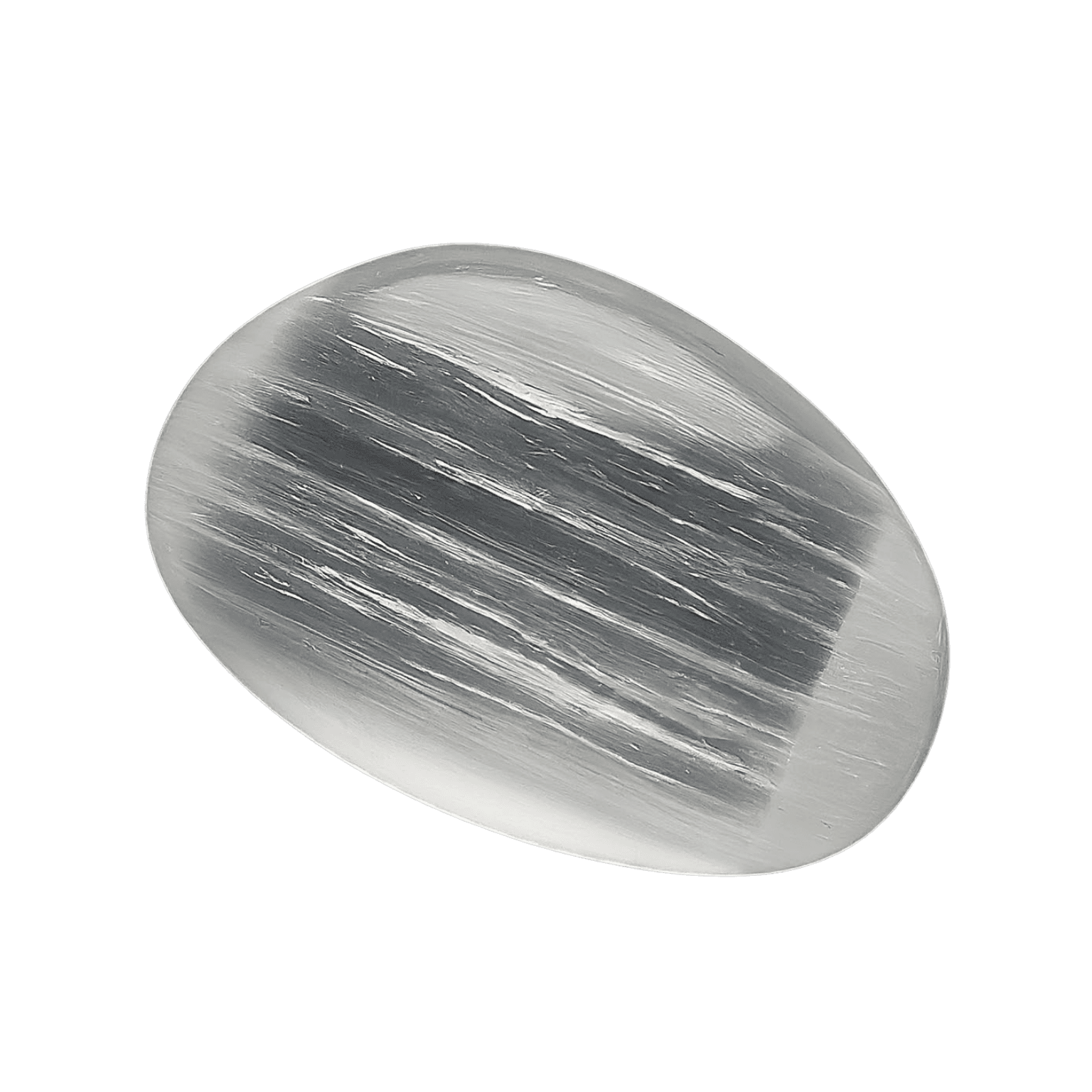
Use Tremolite as the heart of a small grid for calm, with Clear Quartz and Selenite alternating on the spokes. Place the stones slowly and set the last one down with the calm intention named out loud.
How to Cleanse and Charge
Tremolite works best when it is cleansed on a rhythm; tradition pictures a stone absorbing what it meets, and a saturated stone has nothing left to give. The complete water, sun, and salt safety profile, plus the storage instructions I give my clients, lives in the dedicated Tremolite care guide.
- 1
Sage
Smoke-cleanse Tremolite: light the sage, let it settle to a smolder, and move the stone through the rising smoke until your sense of it lightens, usually under a minute.
- 2
Sound
Sound-cleanse Tremolite by striking a bowl or bell, letting each tone fade completely before the next; the vibration does the clearing, and no contact is needed.
- 3
Moonlight
Give Tremolite a night outdoors or at the glass under a bright moon; the tradition holds moonlight to be the universal reset, slow, cool, and risk-free.
- 4
Selenite
Keep a selenite dish where you empty your pockets and drop Tremolite there at day's end; the resting place does the cleansing while you sleep.
How often to cleanse
Monthly is the floor for Tremolite; step the cadence up whenever the stone is in daily rotation or the season is emotionally loud. With practice you will feel the tell yourself, a worked stone reads heavier and flatter in the palm.
Charging after cleansing
Follow every cleansing with a charge: for Tremolite that means placing it in morning sunlight for 30 minutes. A cleared stone is neutral, a charged one is ready.
Crystal Pairings
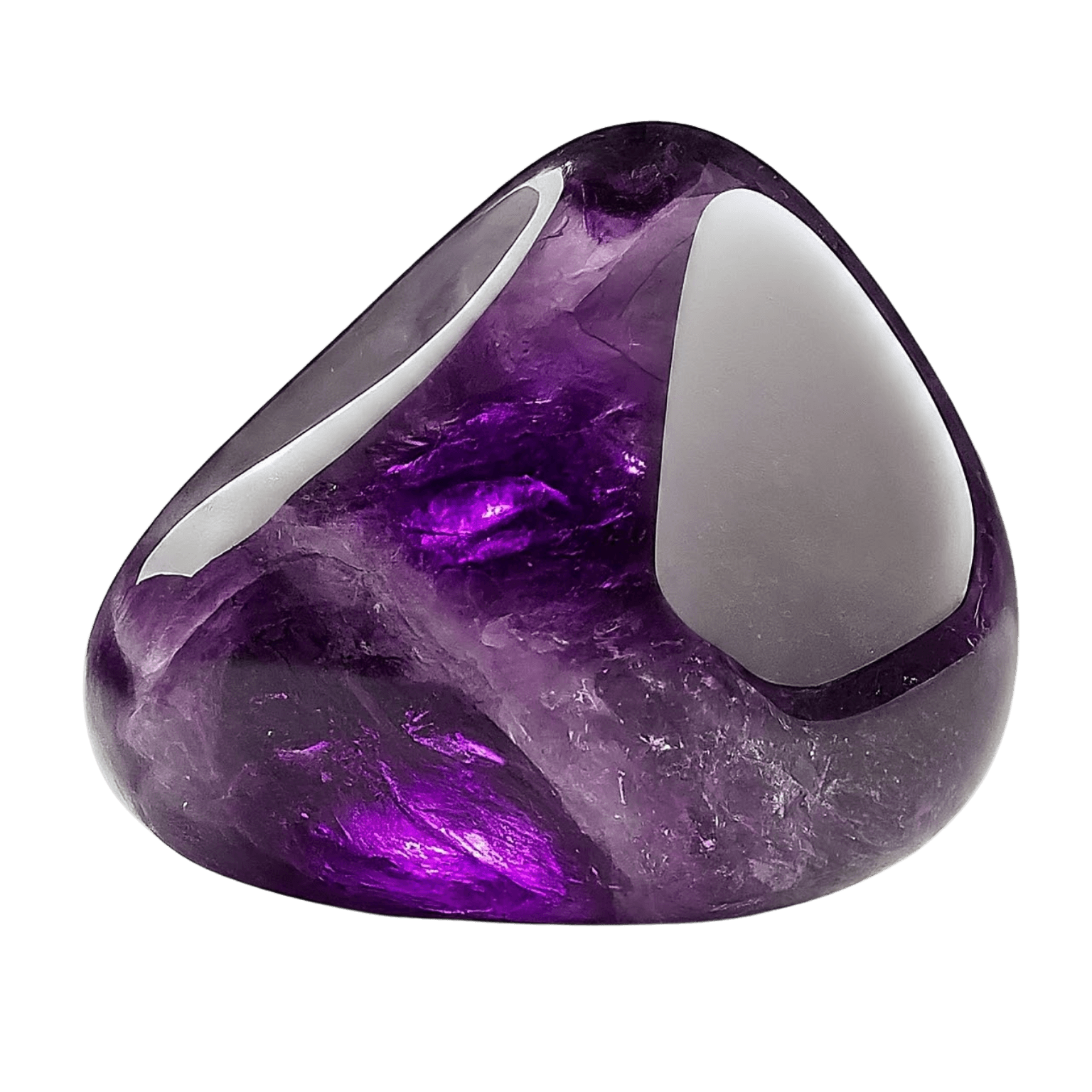
Tremolite pairs best with stones that respect its quiet; loud amplifiers defeat the point. The traditional combinations keep the register low and slow, which is where this stone does its calm work. If a pairing feels busy rather than restful, trust that and separate them.
How to Spot Real vs Fake Tremolite
The market in Tremolite has grown faster than its honesty, and white pieces are easy to imitate on a screen. Here is how to check one before you pay for it:
Temperature: at Mohs 5.5, genuine Tremolite warms in the hand noticeably faster than glass; an imitation in glass stays cold and slick well past the first minute.
Weight: real Tremolite should feel like stone rather than plastic pretending; if a palm-sized piece feels nearly weightless, walk away from it.
Color: expect white, grey, or pale green with honest variation, banding, zoning, the odd inclusion; a batch where every stone matches exactly came out of a factory, not the ground.
Price reality: quality Tremolite runs roughly $9 to $34 for palm-sized pieces from reputable sellers; a price far below that range is usually answering a question you should have asked.
Trust your source: buy Tremolite from sellers who can name the mine or region behind their white stock and disclose treatments without being chased. At CrystalStones.com every piece is ethically sourced with full provenance.
Bring it home
Shop Tremolite
Ethically sourced, hand-selected Tremolite starting from $9.
Shop TremoliteFrequently Asked Questions
What is Tremolite good for?
Tremolite is traditionally associated with calm, clarity, meditation, and spiritual awakening. Many people find it supportive for calm and for working with the Crown and Third Eye chakras.
Can Tremolite go in water?
Avoid it. Water can damage Tremolite, so stay with the dry methods its care profile lists, Sage, Sound, and Moonlight, which cover everything this stone needs. Can have a fibrous (asbestiform) habit. Never grind, soak, or make elixirs; handle dry, wash hands after, dry-cleanse only.
Can Tremolite be in the sun?
Sun is fine for Tremolite. A half hour of direct morning light both cleanses and charges it, and the white tones are stable enough to take it.
What chakra is Tremolite?
Tremolite is primarily associated with the Crown (Sahasrara) and Third Eye (Ajna) chakras. Edge placement is the rule here: the stone stays off the body rather than on it, whether seated or lying down, in keeping with crown-center calm practice.
What zodiac sign is Tremolite for?
Tremolite is traditionally connected to Aquarius and Virgo. If your signs differ, work with Tremolite anyway; resonance in the hand outranks resonance on paper in every practical tradition.
How do I cleanse Tremolite?
The best methods for Tremolite are Sage, Sound, and Moonlight. Can have a fibrous (asbestiform) habit. Never grind, soak, or make elixirs; handle dry, wash hands after, dry-cleanse only.
Is Tremolite real or fake, how can I tell?
Genuine Tremolite warms quickly in the hand at Mohs 5.5, while glass imitations stay cold longer and feel slick rather than satiny. Expect natural variation in its white coloring and a price near $9 to $34 for tumbled pieces; uniform color at a bargain price is the classic warning sign.
What’s Next?
A few thoughtful next steps if Tremolite is calling to you.
The Crystal Starter Library
A free guide from Crystal Cassandra: the twelve stones that cover almost everything, a one page care matrix for water, sun and salt, and how to build a first intention practice.
We respect your inbox. Unsubscribe anytime.
Explore More Tools
Crystal Quiz
Discover which crystal matches your energy right now.
Open →Chakra Test
Find which chakras need attention and the crystals to balance them.
Open →Crystal Cleansing Guide
Learn how to safely cleanse and charge your crystals.
Open →Crystals by Intention
Find the perfect crystal for what you need right now.
Open →