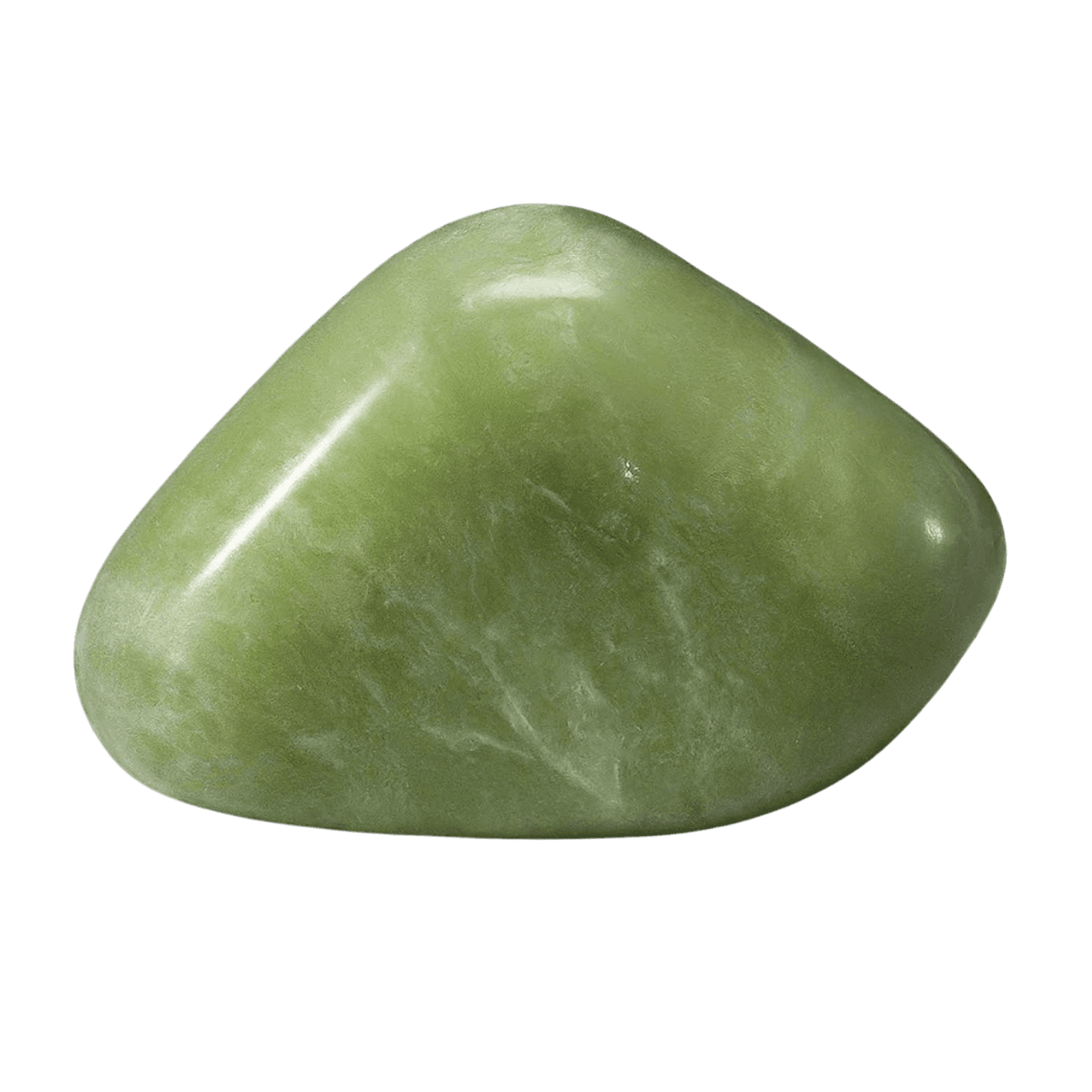
Quick Answer
Lizardite is a green crystal used in modern crystal healing for calm, stress relief, and grounding. It measures 2.75 on the Mohs hardness scale and typically costs $8 to $22 for a tumbled stone. In the chakra tradition, Lizardite is associated with the Heart and Root chakras.
Worth knowing: After Queen Victoria ordered serpentine pieces following her 1846 visit to Cornwall, a Victorian industry of turning Lizard Peninsula serpentine into mantel ornaments and shopfronts flourished for decades.
“A pale green-yellow serpentine mineral of calm earth-presence; polished pieces only.”
- Chakra
- Heart (Anahata), Root (Muladhara)
- Zodiac
- Gemini ♊, Virgo ♍
- Element
- Earth 🌍
- Planet
- Saturn ♄
- Hardness
- 2.75 / 10 (Mohs)
- Colors
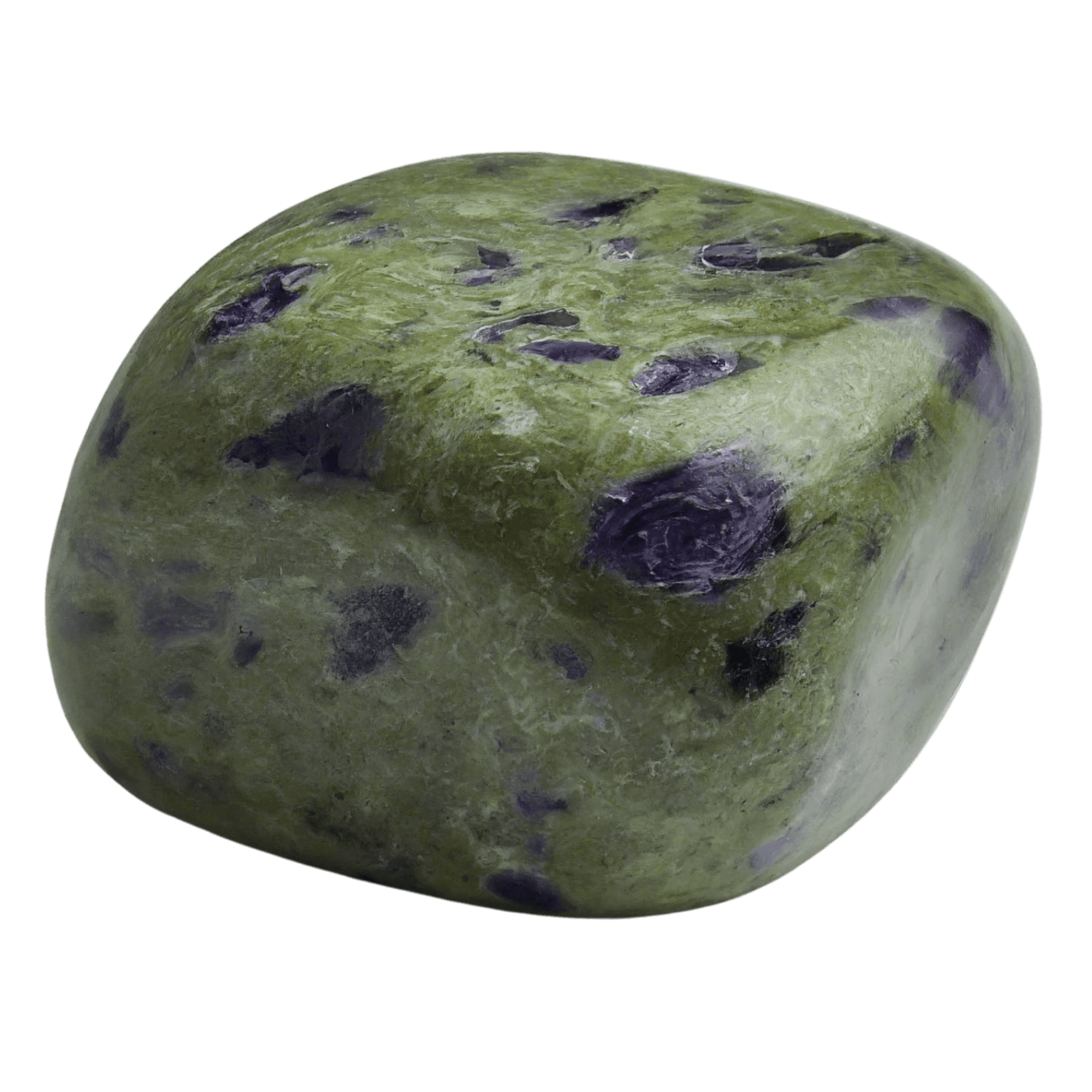
- Green, Yellow-green, Olive
- Origin
- UK (Cornwall), Italy, USA
- Price Range
- 8 to 22
Care + Safety
Lizardite at a glance
- Water: avoid, may damage or leach
- Sun: tolerates sunlight charging
- Mohs hardness: 2.75 (display + meditation only)
What is Lizardite?
Lizardite is the flat-layered member of the serpentine trio: where chrysotile rolls its magnesium silicate sheets into tubes and antigorite corrugates them, lizardite stacks them in planar layers. It forms when seawater hydrates olivine-rich mantle rock, and it is the dominant mineral in many of the world's serpentinite bodies.
Lizardite measures 2.75 on the Mohs scale and shows green, yellow-green, or olive coloring. Think of it as one of the hush stones, the corner of the collection consulted for calm, stress relief, and grounding.
The stone connects primarily to the Heart (Anahata) and Root (Muladhara) chakras, carrying Earth energy. Today the material is drawn from UK (Cornwall), Italy, and USA. Hold pieces from two different sources side by side and the differences in the green material, tone, translucency, pattern, become obvious fast.
Lizardite is the most common serpentine-group mineral, named for The Lizard peninsula in Cornwall. Hold this stone and notice a slow, vegetative steadying. The classical sources describe Lizardite as a stone of calm earth-presence; like all serpentines, handle polished pieces only because the family can include fibrous habits.
Also catalogued as Cornwall Serpentine and Common Serpentine, whether it is your first stone or your fiftieth, Lizardite tends to find its role quickly, and calm is the natural place to begin.
History and Mythology
Lizardite is a modern entry in the crystal canon. Its mineral identity was established in the scientific era, the healing vocabulary around it dates to recent decades, and any claim of ancient ritual use should be met with a raised eyebrow. The stone itself, formed in deposits now mined in UK (Cornwall), Italy, and USA, is of course older than every book ever written about it.
In modern astrological correspondence Lizardite is linked with Gemini and Virgo, with Saturn ♄ named as its planetary ruler. Practitioners who keep these tables often work the stone hardest during those sun-sign seasons, especially for calm.
Whatever the age of the name, the geology is patient: every piece of Lizardite took shape over geological timescales, arriving at its Mohs 2.75 hardness through slow heat, pressure, and chemistry long before any hand reached for it.
Lizardite Meaning and Metaphysical Properties
How It Feels in the Hand
At Mohs 2.75, Lizardite barely argues with the world. Expect a feather-light coolness that vanishes the moment skin touches the green surface, and handle it like the delicate thing it is. Give the first half minute to your breathing and to nothing else. Whatever the exhale is doing, let it do that; the noticing is the whole of the practice.
Primary Properties
Quiet runs through every association Lizardite holds: calm, stress relief, grounding, and healing. These are the properties of the slow hours, before sleep, between tasks, after difficulty, and their evidence is gentle by nature. Many people find the work almost too subtle to name at first, which is exactly the family style.
How Crystal Energy Works
Lizardite works through the Heart center in the traditional map, the middle station where the lower and upper energies cross, and calm is its assignment there. Let the breath set the tempo, stone resting over the heart, calm, stress relief, and grounding held softly in mind, with nothing pushed. Placement over promises is how Judy Hall handles the calming family; her entries point to the nightstand, the meditation corner, the hard-day pocket, and stop short of guarantees.
Amplification Through Intention
Earth stones such as Lizardite are traditionally treated as keel rather than sail; they hold a calm course. Give the assignment once, clearly, and then let routine carry it.
Healing Benefits
Emotional Support
Lizardite speaks quietly on the emotional level: calm, stress relief, and grounding are its register. It suits the frayed hours best, the late-afternoon overload, the mind that will not stop at midnight, when a steady weight in the hand gives the spinning somewhere to set down. As with all crystal healing, calm support from a stone is reflective practice rather than medicine; significant emotional concerns deserve qualified human help.
Spiritual Connection
Rest is the spiritual discipline this family keeps, and Lizardite attends it: the evening review, the slow body scan, the loosening that lets the quieter knowing through. The stillness is the practice; the stone just holds the page open.
Physical Presence
Tradition reads Earth stones like Lizardite through the soles of the feet: stance, weight, the felt fact of standing somewhere while you work on calm. Try standing barefoot with the stone in hand when the day goes abstract; the practice is awareness, not medicine.
Chakra Connection
Lizardite resonates most strongly with the Heart (Anahata), the energy center traditionally drawn in green / pink and the traditional seat of this stone's calm work. When this center runs clear, the classical markers are love, compassion, and emotional openness; calm, stress relief, and grounding are what Lizardite is most often asked to bring to it.
Worn over the heart on a longer chain, or held flat to the chest before hard conversations, Lizardite keeps the heart center company through the day's calm work.
Because Lizardite is also associated with the Root (Muladhara), it moves well in multi-stone layouts: one stone, two stations, worked on different days.
Zodiac and Astrological Connection
Lizardite appears under Gemini ♊ (May 21 to Jun 20) and Virgo ♍ (Aug 23 to Sep 22) in the standard correspondence tables; if those signs are loud in your chart, expect the introduction to feel familiar.
Correspondence is a suggestion, not a bouncer; plenty of devoted Lizardite keepers have no Gemini in their chart at all, and being drawn to the stone is the credential that matters.
In the planetary layer of the system, Saturn ♄ holds the rulership, and that planet's prominent transits are the traditional windows for deeper calm work with Lizardite.
How to Use Lizardite
These are the five ways of working with Lizardite I suggest most often. Begin wherever your attention goes first; the sequence matters far less than starting.
- 1
Meditation Hold
Hold Lizardite with a light grip while you sit. At Mohs 2.75 it reaches body temperature almost instantly, so let the boundary between hand and stone blur and keep your attention on the breath.
- 2
Body Placement
Heart-center layouts hand the pacing to the breath: Lizardite rides the rise and fall while you lie still. Watch the stone rise and settle, and let the watching be the entire practice. In my own sessions the noticing is what stays with me long after the stone has gone back on the shelf. The request the old charts attach here is calm.
- 3
Sleep Companion
Lizardite can still earn the nightstand even though its brief is calm rather than rest: setting the stone down as you set the day down marks the switch from doing to sleeping.
- 4
Carry With You
Keep Lizardite within reach on overloaded days, coat pocket, desk edge, bag corner, and let one slow touch stand in for the break you cannot take; small contact, repeated, is how calm gets carried.
- 5
Crystal Grid Anchor
Use Lizardite as the heart of a small grid for calm, with Serpentine and Infinite Stone alternating on the spokes. Place the stones slowly and set the last one down with the calm intention named out loud.
How to Cleanse and Charge
Keeping Lizardite energetically clear is essential, a crystal that's holding too much absorbed energy becomes less effective, like a sponge that's full. For the full water-safe / sun-safe / salt-safe profile, the recommended cleansing cadence, and the hands-on storage instructions I give my clients, see the dedicated Lizardite care guide.
- 1
Moonlight
Give Lizardite a night outdoors or at the glass under a bright moon; the tradition holds moonlight to be the universal reset, slow, cool, and risk-free.
- 2
Selenite
Overnight on selenite is the lowest-maintenance cleanse Lizardite can get: set it down at bedtime, pick it up cleared in the morning.
- 3
Sage
Pass Lizardite through the smoke of white sage or rosemary for about thirty seconds, turning it so the smoke wraps every face, while you hold a clear intention of release.
- 4
Sound
Hold Lizardite near a singing bowl, bell, or tuning fork and let a full minute of tone wash over it; sound reaches stones that water, salt, and sun cannot safely touch.
How often to cleanse
I recommend cleansing Lizardite at least once a month, more frequently if you're using it daily or during emotionally intense periods. You'll also learn to feel when a stone needs cleansing; it may feel heavier, duller, or simply “off.”
Charging after cleansing
Follow every cleansing with a charge: for Lizardite that means placing it in morning sunlight for 30 minutes. A cleared stone is neutral, a charged one is ready.
Crystal Pairings
Lizardite pairs best with stones that respect its quiet; loud amplifiers defeat the point. The traditional combinations keep the register low and slow, which is where this stone does its calm work. If a pairing feels busy rather than restful, trust that and separate them.
How to Spot Real vs Fake Lizardite
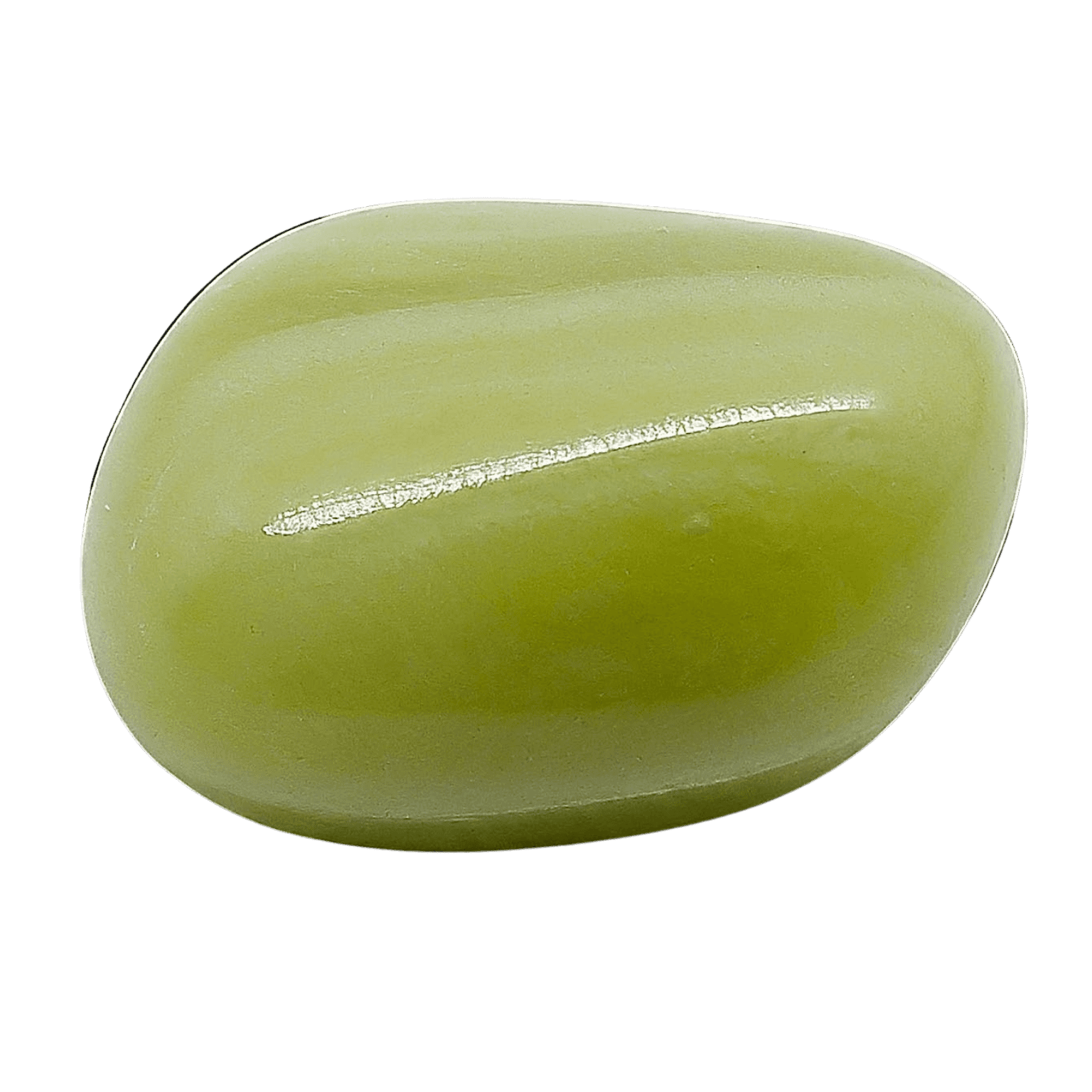
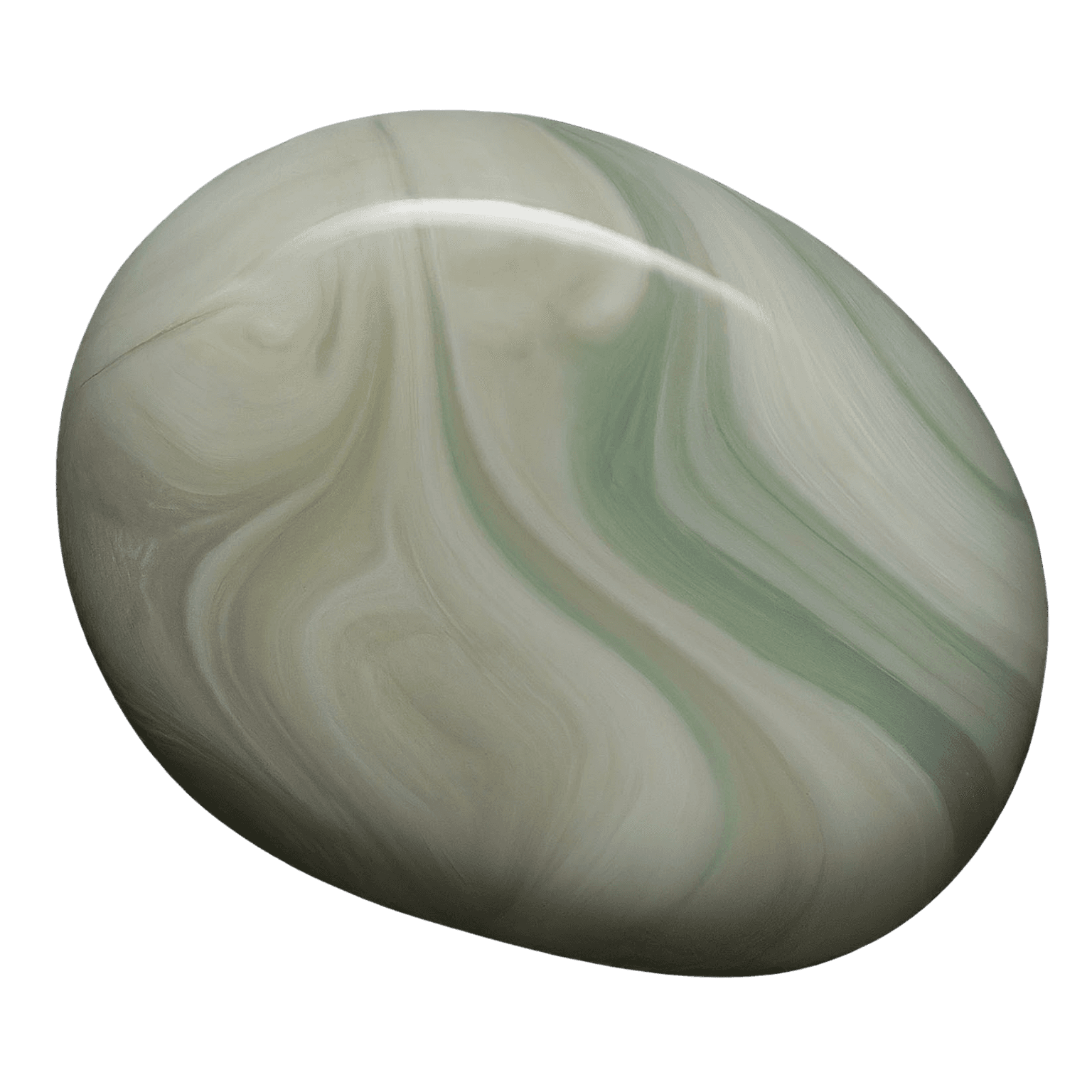
Imitations of Lizardite exist because demand does. A few hands-on checks separate genuine green material from glass, resin, and dye:
Touch and surface: real Lizardite is genuinely soft, Mohs 2.75, so tumbled pieces show gentle rounding and tiny natural imperfections, while molded resin looks suspiciously flawless and feels faintly plastic under a fingernail.
Weight and density: resin fakes run light for their size, while genuine Lizardite at Mohs 2.75 carries honest mineral density; weigh it in the palm against any real tumbled stone you own.
Color and pattern: natural Lizardite runs green, yellow-green, or olive, with variation from piece to piece; perfectly uniform color across a whole tray is the classic mark of dye or synthetics.
Price reality: quality Lizardite runs roughly $8 to $22 for palm-sized pieces from reputable sellers; a price far below that range is usually answering a question you should have asked.
Trust your source: provenance beats any hands-on check; ask where the Lizardite was mined, whether the green material is treated, and expect straight answers. That standard is why CrystalStones.com ships every piece with its provenance.
Bring it home
Shop Lizardite
Ethically sourced, hand-selected Lizardite starting from $8.
Shop LizarditeFrequently Asked Questions
What is Lizardite good for?
Lizardite is traditionally associated with calm, stress relief, grounding, and healing. Many people find it supportive for calm and for working with the Heart and Root chakras.
Can Lizardite go in water?
No, water and Lizardite do not mix; moisture can compromise the surface or the structure itself. Lizardite is fine-grained serpentine; keep to polished pieces, never grind or break it, and wash hands afterward.
Can Lizardite be in the sun?
Sun is fine for Lizardite. A half hour of direct morning light both cleanses and charges it, and the green tones are stable enough to take it.
What chakra is Lizardite?
Lizardite is primarily associated with the Heart (Anahata) and Root (Muladhara) chakras. Let it ride at the heart center during lying-down practice, moved by the breath; that station is the traditional seat of its calm work.
What zodiac sign is Lizardite for?
Lizardite is traditionally connected to Gemini and Virgo. That said, the zodiac correspondence is an invitation rather than a requirement; any chart can work with Lizardite, and attraction to the stone matters more than the calendar.
How do I cleanse Lizardite?
Stick to Moonlight, Selenite, and Sage for Lizardite; those are the methods its care profile recommends. Notice that the whole list runs dry; for this stone's chemistry, that is a feature rather than a limitation.
Is Lizardite real or fake, how can I tell?
Genuine Lizardite is genuinely soft at Mohs 2.75, so real pieces show gentle wear and tiny imperfections while molded resin looks suspiciously perfect. Expect natural variation in its green coloring and a price near $8 to $22 for tumbled pieces; uniform color at a bargain price is the classic warning sign.
What’s Next?
A few thoughtful next steps if Lizardite is calling to you.
The Crystal Starter Library
A free guide from Crystal Cassandra: the twelve stones that cover almost everything, a one page care matrix for water, sun and salt, and how to build a first intention practice.
We respect your inbox. Unsubscribe anytime.
Explore More Tools
Crystal Quiz
Discover which crystal matches your energy right now.
Open →Chakra Test
Find which chakras need attention and the crystals to balance them.
Open →Crystal Cleansing Guide
Learn how to safely cleanse and charge your crystals.
Open →Crystals by Intention
Find the perfect crystal for what you need right now.
Open →