Quick Answer
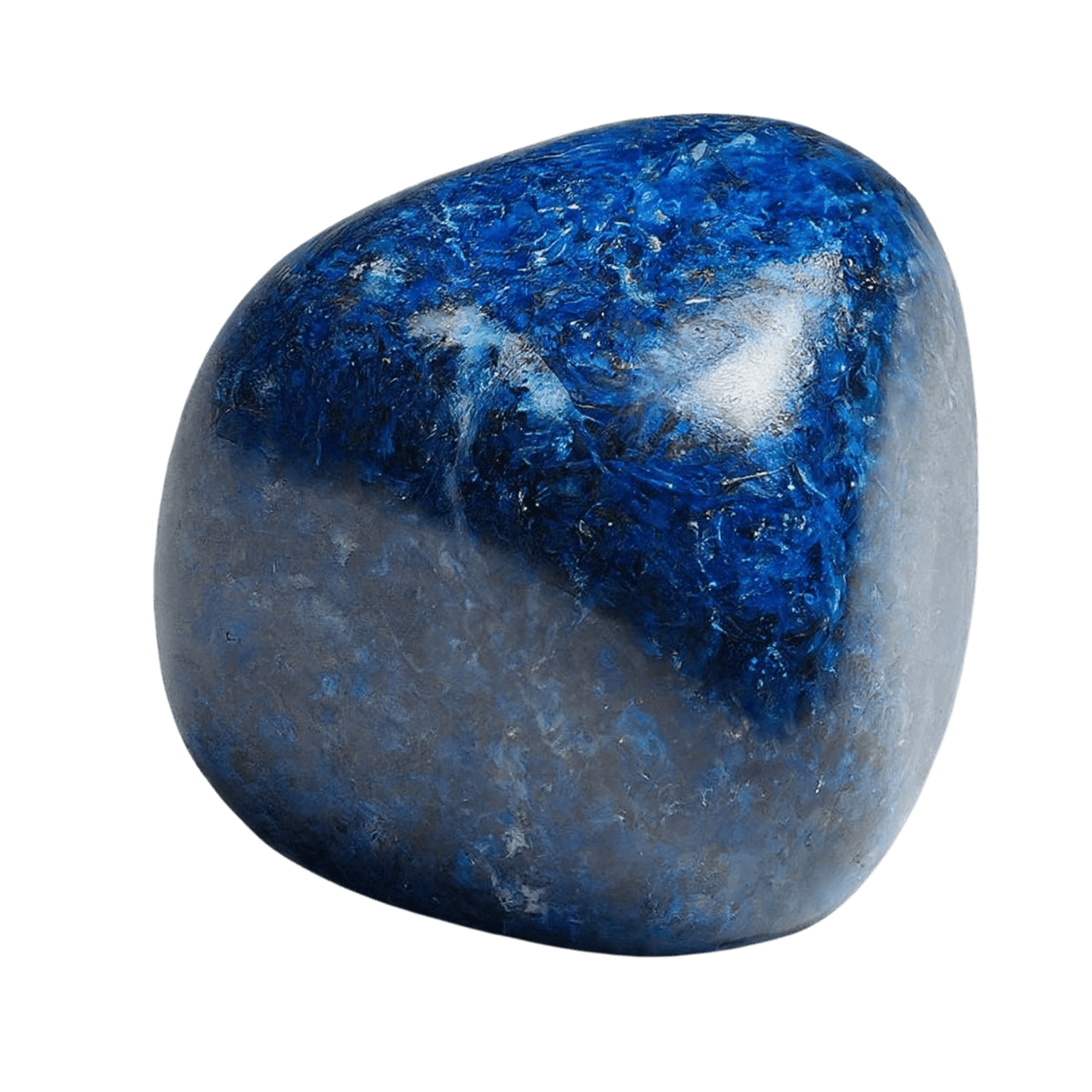
Lazurite is a deep blue crystal used in modern crystal healing for truth speaking, intuition, and communication. It measures 5.5 on the Mohs hardness scale and typically costs $14 to $45 for a tumbled stone. In the chakra tradition, Lazurite is associated with the Third Eye and Throat chakras.
Worth knowing: Ground and purified lazurite-rich lapis became ultramarine, the pigment that cost Renaissance patrons more than gold by weight and was often contractually reserved for painting the robes of the Virgin Mary.
“The principal deep-blue mineral inside lapis lazuli, a sulfur-bearing feldspathoid of inner truth.”
- Chakra
- Third Eye (Ajna), Throat (Vishuddha)
- Zodiac
- Sagittarius ♐, Capricorn ♑
- Element
- Air 💨, Water 💧
- Planet
- Jupiter ♃
- Hardness
- 5.5 / 10 (Mohs)
- Colors
- Deep blue, Azure, Indigo
- Origin
- Afghanistan, Russia, Chile
- Price Range
- 14 to 45
Care + Safety
Lazurite at a glance
- Water: avoid, may damage or leach
- Sun: tolerates sunlight charging
- Mohs hardness: 5.5 (occasional wear only)
What is Lazurite?
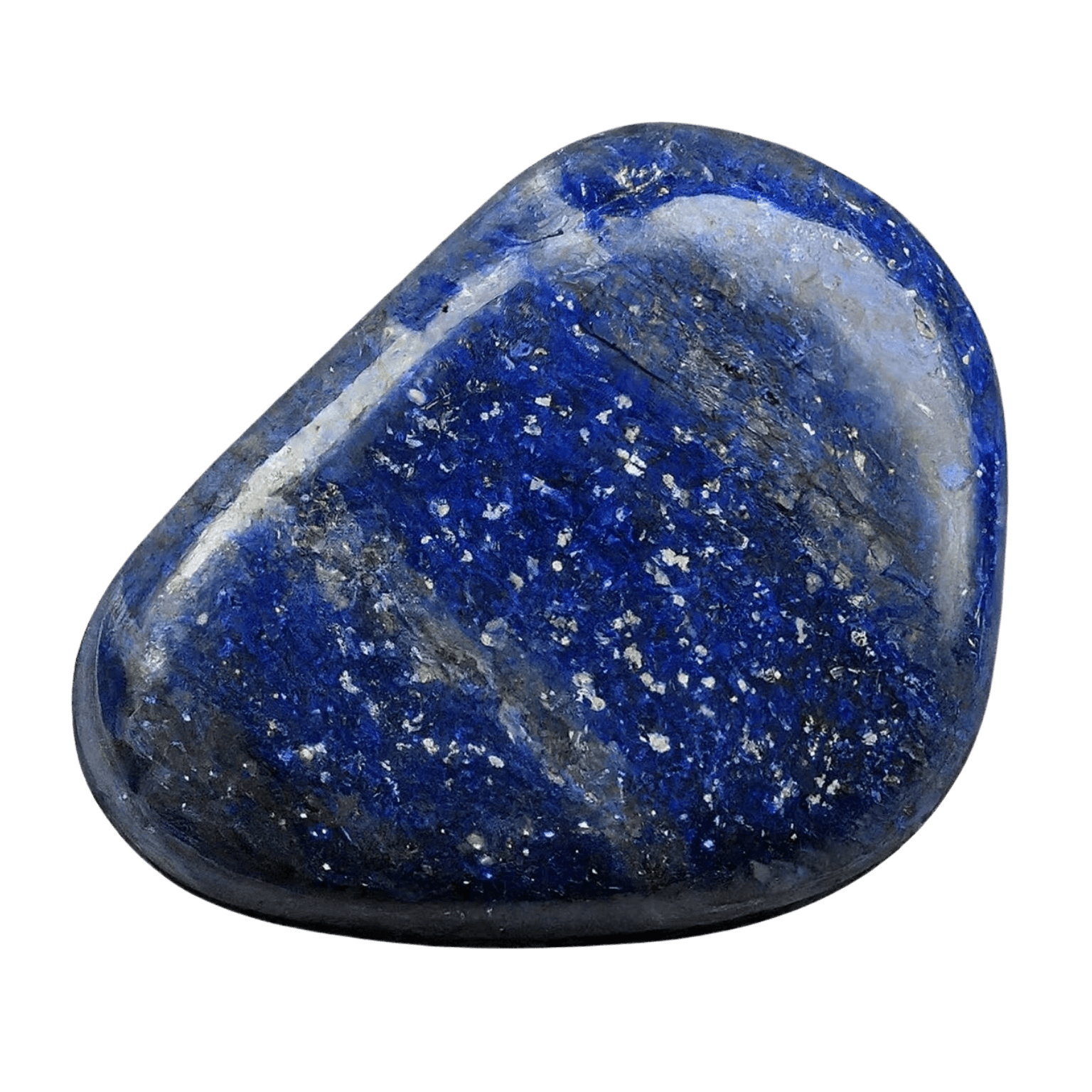
Lazurite is a feldspathoid of the sodalite group whose ultramarine color comes from trisulfur radical anions, charged sulfur groups trapped in cages of its aluminosilicate framework. The classic source is the Sar-e-Sang valley of Badakhshan, Afghanistan, where lapis lazuli rich in lazurite has been mined for some six thousand years.
Lazurite measures 5.5 on the Mohs scale and shows deep blue, azure, or indigo coloring. It is a desk-and-conversation stone, catalogued for truth speaking, intuition, and communication wherever fog needs to lift.
The stone connects primarily to the Third Eye (Ajna) and Throat (Vishuddha) chakras, carrying Air and Water energy. Sources include Afghanistan, Russia, and Chile; deposit matters more than beginners expect, and collectors learn to recognize where a piece of Lazurite was mined by its color depth and pattern.
Lazurite is the mineral that gives lapis lazuli its deep blue, a sulfur-bearing sodium calcium aluminum silicate of the sodalite group. Hold this stone and notice a deep, almost royal stillness. The classical sources describe Lazurite as a stone of inner truth and stately calm; because it contains sulfur, handle dry and wash hands after.
Also catalogued as Lazurite Component of Lapis, Lazurite earns its place in a working collection by being usable: start with truth speaking, the job it is best known for, and let the stone widen its own brief from there.
History and Mythology
Lazurite is a modern entry in the crystal canon. Its mineral identity was established in the scientific era, the healing vocabulary around it dates to recent decades, and any claim of ancient ritual use should be met with a raised eyebrow. The stone itself, formed in deposits now mined in Afghanistan, Russia, and Chile, is of course older than every book ever written about it.
Astrologically minded practitioners file Lazurite under Sagittarius and Capricorn and give Jupiter ♃ the rulership. The pairing is a 20th century convention rather than an ancient decree, and it is read as favoring truth speaking work.
Whatever the age of the name, the geology is patient: every piece of Lazurite took shape over geological timescales, arriving at its Mohs 5.5 hardness through slow heat, pressure, and chemistry long before any hand reached for it.
Lazurite Meaning and Metaphysical Properties
What the Hand Learns First
In the hand Lazurite reads as gentle before you know anything else about it. Mohs 5.5 hardness means it gives up its coolness quickly, and the deep blue polish carries a waxy, candle-like glow. A sharpening of the visual field is the classic first report with clarity stones, the room coming into slightly better focus, so watch what your eyes do.
Primary Properties
The property list for Lazurite is a thinking list: truth speaking, intuition, communication, and spiritual awakening. This is the family for desk work and hard conversations, anywhere fog needs to lift before words can land. Use the stone as a session marker, same place, same task, and let repetition build the association.
How Crystal Energy Works
Lazurite is filed under the Third Eye in the traditional system, the still observatory at the brow, and truth speaking is what practitioners ask of it there. Brow work stays brief and unforced, eyes soft, with truth speaking, intuition, and communication allowed to arrive instead of being called. Throat and brow are where Hall places the clarity stones, and her entries for the family stay practical, reading less like mysticism than like study notes on focus, articulation, and plain honest speech.
Amplification Through Intention
As an Air-element stone, Lazurite is worked where thinking happens, the desk, the journal, the conversation where truth speaking is on the line. Keep it in view rather than in a drawer, and let each glance quietly reset the truth speaking intention.
Healing Benefits
Emotional Support
Lazurite steadies the emotional weather around truth speaking, intuition, and communication. It suits the days when the thread keeps knotting, when what you feel is perfectly real and what to call it keeps escaping. As with all crystal healing, truth speaking support from a stone is reflective practice rather than medicine; significant emotional concerns deserve qualified human help.
Spiritual Connection
Truth-telling is the spiritual lane Lazurite runs in: the unflinching journal, the conversation that finally happens. Tradition assigns it to the practices of honest seeing and honest saying, worked at the Third Eye center.
Physical Presence
Tradition reads Air stones like Lazurite through the breath: hold it whenever the pace of truth speaking work gets ahead of you, and let a few long exhales go by uncounted. The stone's role is to make you notice breathing at all; the noticing is the benefit, and no mineral substitutes for medical care.
Chakra Connection
Lazurite resonates most strongly with the Third Eye (Ajna), the energy center traditionally drawn in indigo and the traditional seat of this stone's truth speaking work. When this center runs clear, the classical markers are intuition, clarity, and inner vision; truth speaking, intuition, and communication are what Lazurite is most often asked to bring to it.
Keep sessions with Lazurite brief and unforced: stone at the brow, eyes closed, attention loose. The third eye responds to invitation rather than pressure, and that is the posture truth speaking asks for too.
Because Lazurite is also associated with the Throat (Vishuddha), it moves well in multi-stone layouts: one stone, two stations, worked on different days.
Zodiac and Astrological Connection
Astrological tradition links Lazurite with Sagittarius ♐ (Nov 22 to Dec 21) and Capricorn ♑ (Dec 22 to Jan 19), and practitioners often suggest the stone meets Sagittarius placements with the least friction.
Correspondence is a suggestion, not a bouncer; plenty of devoted Lazurite keepers have no Sagittarius in their chart at all, and being drawn to the stone is the credential that matters.
The assigned ruler is Jupiter ♃; in practice that means Lazurite comes out when that planet is prominent in the sky or in your chart, and truth speaking is the work it is handed.
How to Use Lazurite
Five practices suit Lazurite especially well. Pick the one that fits the day you are actually having rather than the routine you think you should have.
- 1
Meditation Hold
Hold Lazurite for the length of your sit and notice the moment it stops feeling like an object and starts feeling like part of the hand; for a Mohs 5.5 stone, that shift comes early.
- 2
Body Placement
The brow is the seat the charts give Lazurite: lie back, close the eyes, hold the focus loose. Brief and unforced is the whole rule for brow work, and no count improves it. In the old language, the aim of the station is truth speaking.
- 3
Sleep Companion
Lazurite can still earn the nightstand even though its brief is truth speaking rather than rest: setting the stone down as you set the day down marks the switch from doing to sleeping.
- 4
Carry With You
Carry Lazurite into the long meetings and the hard drafts. A deliberate touch when the thread tangles is a two-second reset, and over weeks it builds a dependable truth speaking habit.
- 5
Crystal Grid Anchor
Use Lazurite as the heart of a small grid for truth speaking, with Lapis Lazuli and Sodalite alternating on the spokes. Place the stones slowly and set the last one down with the truth speaking intention named out loud.
How to Cleanse and Charge
Lazurite works best when it is cleansed on a rhythm; tradition pictures a stone absorbing what it meets, and a saturated stone has nothing left to give. The complete water, sun, and salt safety profile, plus the storage instructions I give my clients, lives in the dedicated Lazurite care guide.
- 1
Moonlight
Once a month, let Lazurite sit overnight in moonlight, on the full moon if you can manage it. Nothing in the cabinet is harmed by this method, which is why it anchors most cleansing routines.
- 2
Sage
Smoke-cleanse Lazurite: light the sage, let it settle to a smolder, and move the stone through the rising smoke until your sense of it lightens, usually under a minute.
- 3
Sound
A minute inside strong, sustained tone, bowl, chime, even a steady hum, resets Lazurite without physical risk, which makes sound the safest deep cleanse for fragile stones.
- 4
Selenite
Overnight on selenite is the lowest-maintenance cleanse Lazurite can get: set it down at bedtime, pick it up cleared in the morning.
How often to cleanse
I recommend cleansing Lazurite at least once a month, more frequently if you're using it daily or during emotionally intense periods. You'll also learn to feel when a stone needs cleansing; it may feel heavier, duller, or simply “off.”
Charging after cleansing
Once it is cleansed, recharge Lazurite by placing it in morning sunlight for 30 minutes; cleansing empties the stone, charging refills it.
Crystal Pairings
Function picks the partners for Lazurite: a desk set rather than a jewelry box. Choose companions like tools, this one for focus, that one for voice, another for nerve, and cap any single truth speaking task at two stones, because clarity and clutter cannot share a surface.
How to Spot Real vs Fake Lazurite
The market in Lazurite has grown faster than its honesty, and deep blue pieces are easy to imitate on a screen. Here is how to check one before you pay for it:
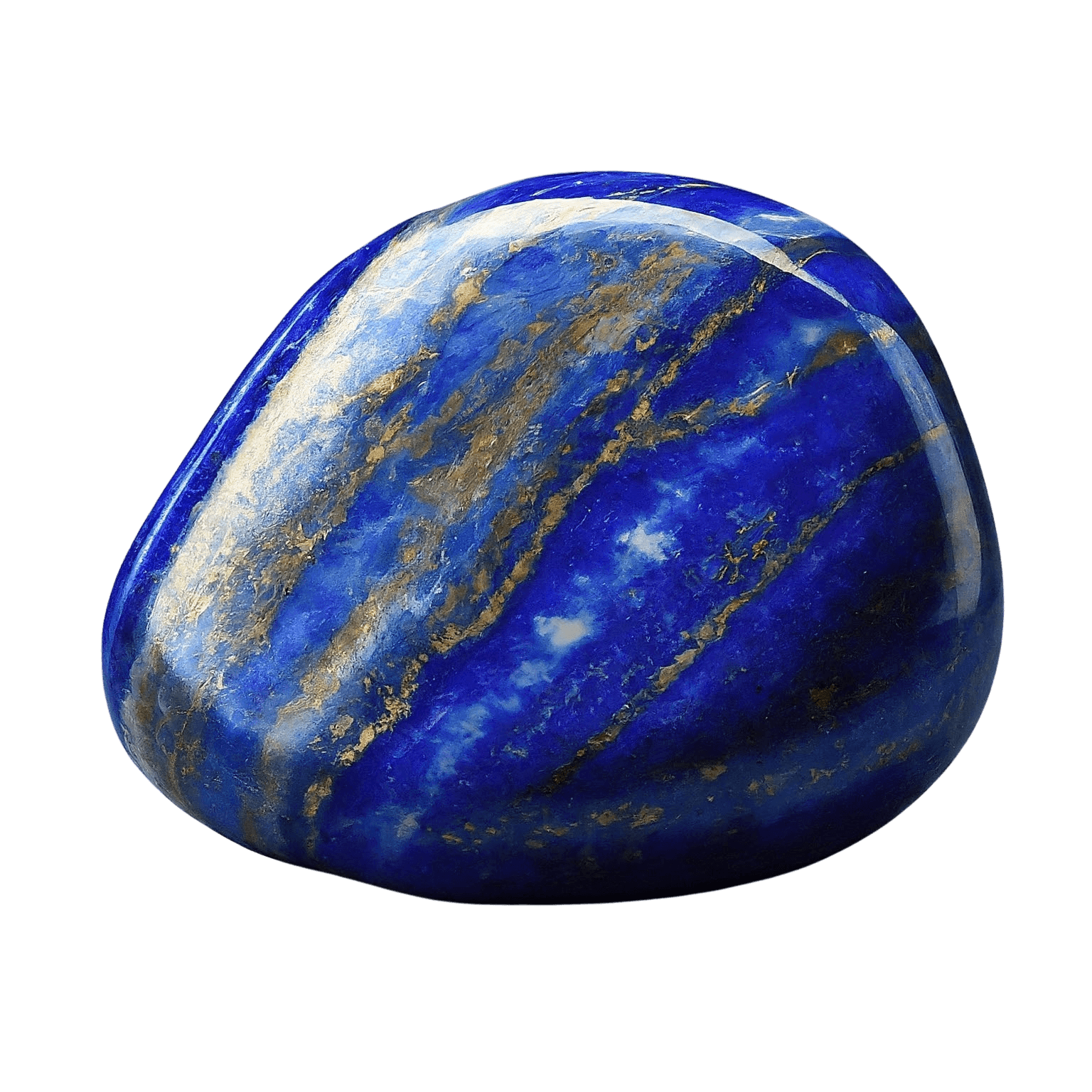
Temperature: at Mohs 5.5, genuine Lazurite warms in the hand noticeably faster than glass; an imitation in glass stays cold and slick well past the first minute.
Weight and density: resin fakes run light for their size, while genuine Lazurite at Mohs 5.5 carries honest mineral density; weigh it in the palm against any real tumbled stone you own.
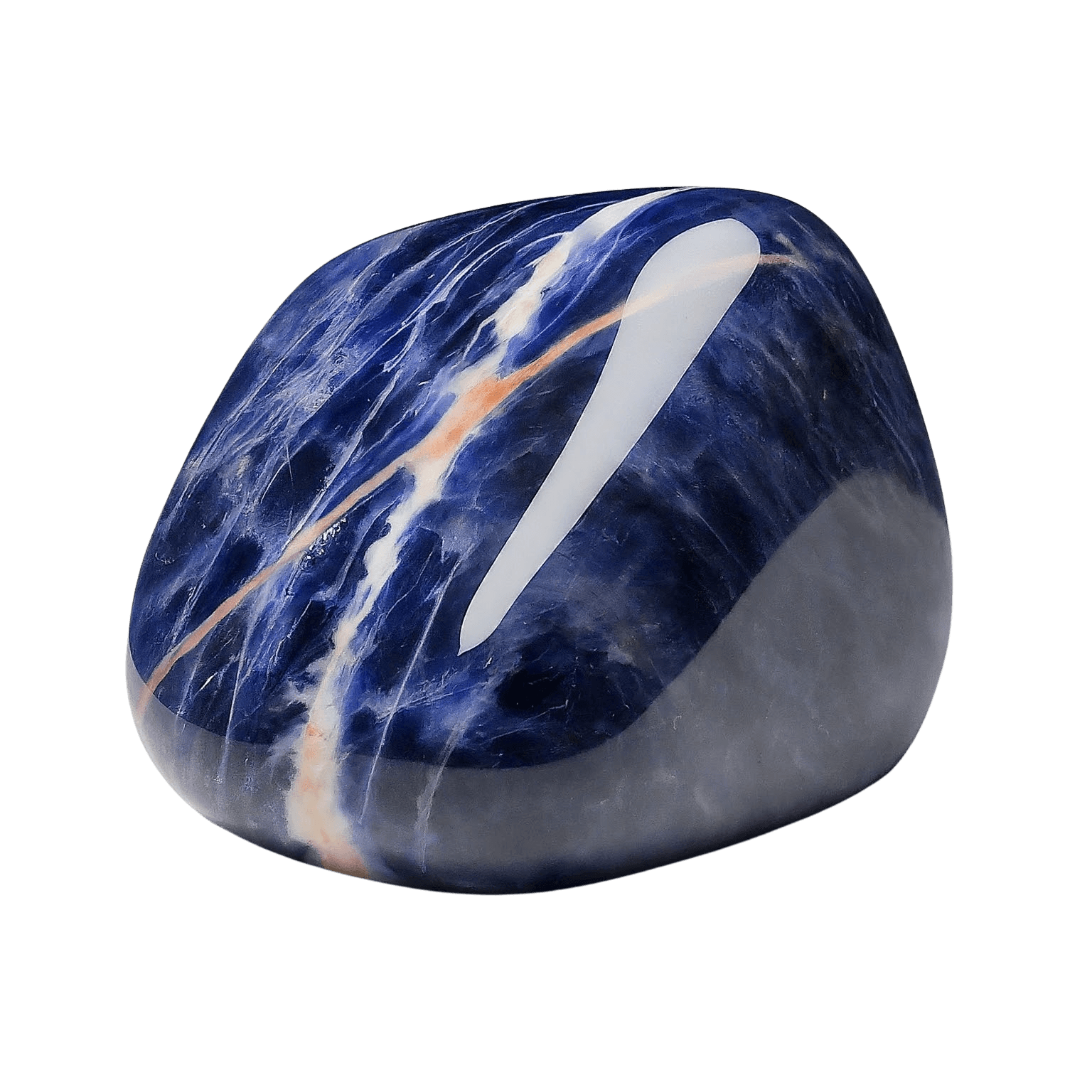
Color: expect deep blue, azure, or indigo with honest variation, banding, zoning, the odd inclusion; a batch where every stone matches exactly came out of a factory, not the ground.
Price: expect $14 to $45 for a decent tumbled or palm piece of Lazurite; dramatic discounts mean dye, resin, or mislabeling more often than they mean luck.
Trust your source: buy Lazurite from sellers who can name the mine or region behind their deep blue stock and disclose treatments without being chased. At CrystalStones.com every piece is ethically sourced with full provenance.
Frequently Asked Questions
What is Lazurite good for?
Lazurite is traditionally associated with truth speaking, intuition, communication, and spiritual awakening. Many people find it supportive for truth speaking and for working with the Third Eye and Throat chakras.
Can Lazurite go in water?
No. Lazurite should stay dry; cleanse it with Moonlight, Sage, and Sound instead, and keep every wet method off the table.
Can Lazurite be in the sun?
Yes. Lazurite is one of the sun-tolerant stones, so use morning light freely to charge the deep blue material; just bring it in rather than leaving it out for whole days at a time.
What chakra is Lazurite?
Lazurite is primarily associated with the Third Eye (Ajna) and Throat (Vishuddha) chakras. Set it at the third-eye point during short lying-down sessions, eyes closed and focus soft; tradition keeps third-eye truth speaking work brief on purpose.
What zodiac sign is Lazurite for?
Lazurite is traditionally connected to Sagittarius and Capricorn. If your signs differ, work with Lazurite anyway; resonance in the hand outranks resonance on paper in every practical tradition.
How do I cleanse Lazurite?
Stick to Moonlight, Sage, and Sound for Lazurite; those are the methods its care profile recommends. Notice that the whole list runs dry; for this stone's chemistry, that is a feature rather than a limitation.
Is Lazurite real or fake, how can I tell?
Genuine Lazurite warms quickly in the hand at Mohs 5.5, while glass imitations stay cold longer and feel slick rather than satiny. Natural deep blue material varies piece to piece and runs about $14 to $45 tumbled, so perfectly matched stones at a suspicious discount deserve a second look.
What’s Next?
A few thoughtful next steps if Lazurite is calling to you.
The Crystal Starter Library
A free guide from Crystal Cassandra: the twelve stones that cover almost everything, a one page care matrix for water, sun and salt, and how to build a first intention practice.
We respect your inbox. Unsubscribe anytime.
Explore More Tools
Crystal Quiz
Discover which crystal matches your energy right now.
Open →Chakra Test
Find which chakras need attention and the crystals to balance them.
Open →Crystal Cleansing Guide
Learn how to safely cleanse and charge your crystals.
Open →Crystals by Intention
Find the perfect crystal for what you need right now.
Open →