Quick Answer
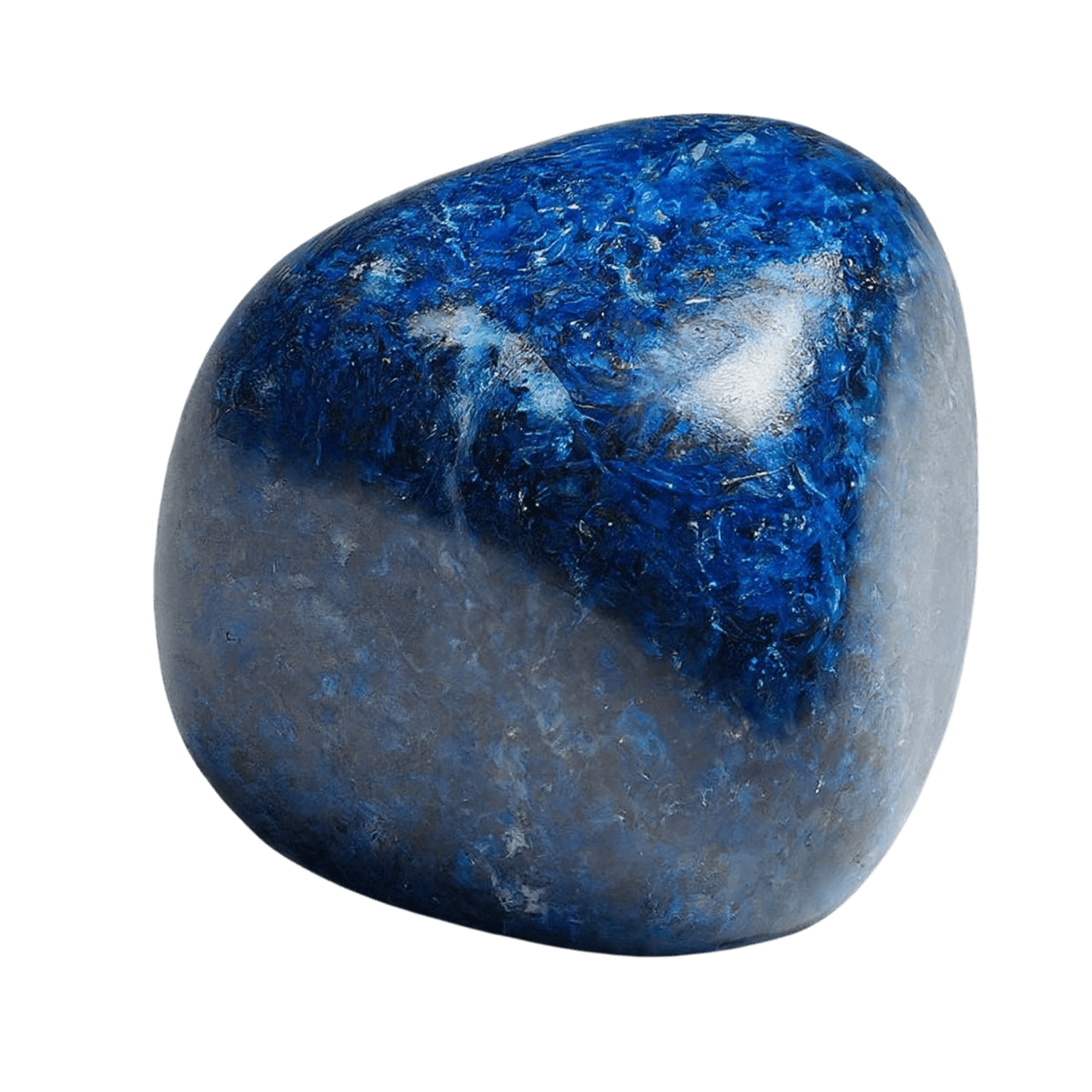
Lazulite is a deep blue crystal used in modern crystal healing for clarity, focus, and intuition. It measures 5.75 on the Mohs hardness scale and typically costs $18 to $55 for a tumbled stone. In the chakra tradition, Lazulite is associated with the Third Eye and Throat chakras.
Worth knowing: Lazulite is the official gemstone of Canada's Yukon, honoring the Rapid Creek and Big Fish River sites whose sharp azure crystals are considered the world's best for the species.
“A vivid blue magnesium-aluminum phosphate of clear thought and refined inner attention.”
- Chakra
- Third Eye (Ajna), Throat (Vishuddha)
- Zodiac
- Sagittarius ♐, Virgo ♍
- Element
- Air 💨
- Planet
- Mercury ☿
- Hardness
- 5.75 / 10 (Mohs)
- Colors
- Deep blue, Azure, Violet-blue
- Origin
- Canada, USA, Brazil
- Price Range
- 18 to 55
Care + Safety
Lazulite at a glance
- Water: brief rinse safe
- Sun: tolerates sunlight charging
- Mohs hardness: 5.75 (occasional wear only)
What is Lazulite?
Lazulite is a magnesium aluminum phosphate, part of a family of blue phosphates that owe their color to iron, and it forms in quartzites and pegmatites altered at high temperature. First described in 1795 from Styria in Austria, its finest gemmy crystals now come from the Rapid Creek area of Canada's Yukon.
Lazulite measures 5.75 on the Mohs scale and shows deep blue, azure, or violet-blue coloring. Call it a desk stone: the catalog assigns it clarity, focus, and intuition, the work of lifting fog before words or decisions land.
The stone connects primarily to the Third Eye (Ajna) and Throat (Vishuddha) chakras, carrying Air energy. Sources include Canada, USA, and Brazil; deposit matters more than beginners expect, and collectors learn to recognize where a piece of Lazulite was mined by its color depth and pattern.
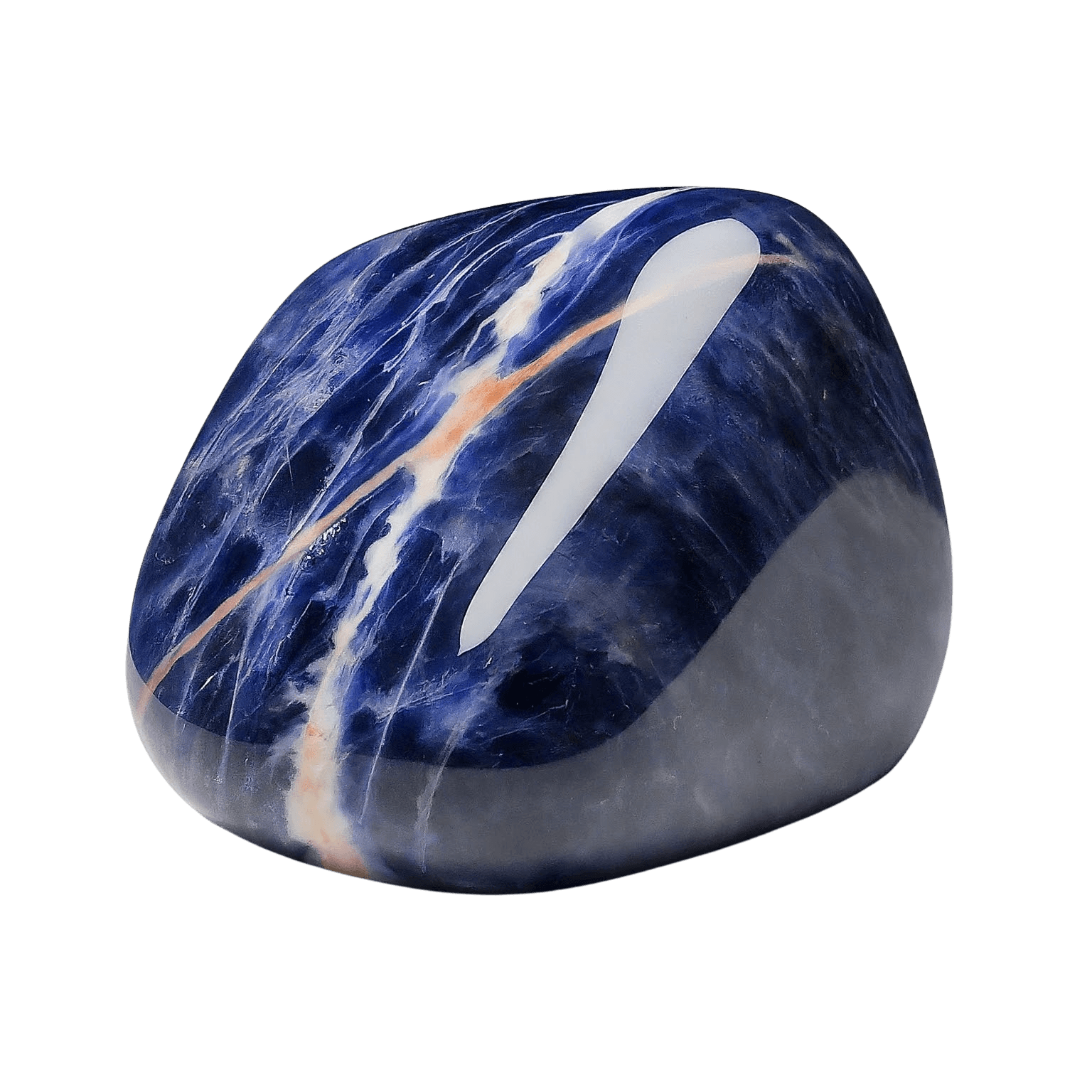
Lazulite is a deep azure-blue phosphate (not to be confused with lazurite/lapis), often found as prismatic crystals on quartz matrix. Hold this stone and notice a quick, refined clarity at the third eye. The classical sources describe Lazulite as a stone of mental discipline and refined inner attention.
Also catalogued as Berkeyite and Magnesium Aluminum Phosphate, whether it is your first stone or your fiftieth, Lazulite tends to find its role quickly, and clarity is the natural place to begin.
History and Mythology
Lazulite entered the record through mineralogy rather than mythology: the species was identified and named in the modern era, and its healing use begins with the 20th and 21st century crystal literature rather than any ancient source. That recency is worth stating plainly, because honest provenance is rarer than it should be in this field. The material itself is sourced today from Canada, USA, and Brazil.
The correspondence tables used by today's practitioners assign Lazulite to Sagittarius and Virgo under the rulership of Mercury ☿. In that system, work centered on clarity is said to land best while those signs are in season.
Hold the two timescales side by side, centuries of human use at most against epochs of formation behind every Mohs 5.75 specimen of Lazulite; the deep time is the one part no marketing can inflate.
Lazulite Meaning and Metaphysical Properties
What the Hand Learns First
In the hand Lazulite reads as gentle before you know anything else about it. Mohs 5.75 hardness means it gives up its coolness quickly, and the deep blue polish carries a waxy, candle-like glow. Notice the visual field; people working with the clarity stones often describe the room sharpening slightly, attention gathering to a point.
Primary Properties
Clear thinking is the thread tying the Lazulite properties together: clarity, focus, intuition, and communication. The family earns its keep at the desk and in the hard talk, wherever language needs a clean runway. Set the stone out at the start of each session and put it away at the end; the repetition is the method.
How Crystal Energy Works
The brow center, the Third Eye, is where the tradition seats Lazulite, and the standing request there is clarity. Short sessions serve best, soft gaze, no straining, letting clarity, focus, and intuition drift up in their own time. Judy Hall groups the clarity stones with the throat and brow centers, and her entries for the family read like study aids: focus, articulation, honest speech.
Amplification Through Intention
Air stones like Lazulite move with attention; the tradition puts them to work as study and speech companions with clarity as the brief. A short breathing pause with the stone before clarity, focus, and intuition work is the classic use.
Healing Benefits
Emotional Support
Composure is the feeling Lazulite is traditionally asked to support: clarity, focus, and intuition. Bring it to the tangled days, the ones where the emotion is unmistakable but the sentence for it will not come. As with all crystal healing, clarity support from a stone is reflective practice rather than medicine; significant emotional concerns deserve qualified human help.
Spiritual Connection
Truth-telling is the spiritual lane Lazulite runs in: the unflinching journal, the conversation that finally happens. Tradition assigns it to the practices of honest seeing and honest saying, worked at the Third Eye center.
Physical Presence
Tradition reads Air stones like Lazulite through the breath: hold it whenever the pace of clarity work gets ahead of you, and let a few long exhales go by uncounted. The stone's role is to make you notice breathing at all; the noticing is the benefit, and no mineral substitutes for medical care.
Chakra Connection
Lazulite resonates most strongly with the Third Eye (Ajna), the energy center traditionally drawn in indigo and the traditional seat of this stone's clarity work. When this center runs clear, the classical markers are intuition, clarity, and inner vision; clarity, focus, and intuition are what Lazulite is most often asked to bring to it.
Keep sessions with Lazulite brief and unforced: stone at the brow, eyes closed, attention loose. The third eye responds to invitation rather than pressure, and that is the posture clarity asks for too.
Because Lazulite is also associated with the Throat (Vishuddha), it moves well in multi-stone layouts: one stone, two stations, worked on different days.
Zodiac and Astrological Connection
In the modern correspondence tables Lazulite is assigned to Sagittarius ♐ (Nov 22 to Dec 21) and Virgo ♍ (Aug 23 to Sep 22); a Sun, Moon, or rising placement there is read as a head start with this stone, nothing more.
The gate, though, stands open: you do not need a Sagittarius Sun to work with Lazulite, and a genuine pull toward the stone outweighs its paper assignments.
Mercury ☿ rules Lazulite in this tradition, so practitioners time their longer sessions to that planet's active periods, especially for clarity.
How to Use Lazulite
Five practices suit Lazulite especially well. Pick the one that fits the day you are actually having rather than the routine you think you should have.
- 1
Meditation Hold
Hold Lazulite for the length of your sit and notice the moment it stops feeling like an object and starts feeling like part of the hand; for a Mohs 5.75 stone, that shift comes early.
- 2
Body Placement
The brow is the seat the charts give Lazulite: lie back, close the eyes, hold the focus loose. Brief and unforced is the whole rule for brow work, and no count improves it. In the old language, the aim of the station is clarity.
- 3
Sleep Companion
Lazulite can still earn the nightstand even though its brief is clarity rather than rest: setting the stone down as you set the day down marks the switch from doing to sleeping.
- 4
Carry With You
Long meetings and hard drafts are the carry occasions for Lazulite. When the line of thought tangles, one intentional touch buys a brief reset, and repetition turns that reset into a reliable clarity habit.
- 5
Crystal Grid Anchor
Set Lazulite at the center of a grid built for clarity and ring it with Lapis Lazuli and Azurite at the points. Speak the intention once as you place each stone; a grid is a sentence written in minerals, and saying the clarity aloud is the punctuation.
How to Cleanse and Charge
A worked stone needs clearing, and Lazulite is no exception; practitioners describe an uncleansed crystal as muffled, present but quieter than it should be. For the full safety profile and the cadence I recommend, see the dedicated Lazulite care guide.
- 1
Moonlight
Set Lazulite on a windowsill or ledge under the full moon and collect it in the morning. Moonlight is the gentlest cleanse in the tradition, safe for every stone in the collection and impossible to overdo.
- 2
Selenite
Lay Lazulite on a selenite plate or alongside a selenite wand overnight; selenite is the tradition's self-cleaning shelf, no effort, no risk to the stone.
- 3
Sage
Smoke-cleanse Lazulite: light the sage, let it settle to a smolder, and move the stone through the rising smoke until your sense of it lightens, usually under a minute.
- 4
Sound
Hold Lazulite near a singing bowl, bell, or tuning fork and let a full minute of tone wash over it; sound reaches stones that water, salt, and sun cannot safely touch.
How often to cleanse
Give Lazulite a clearing at least every month, and sooner after hard weeks or heavy daily use. The stone will teach you its own signal in time; most people describe it as dullness, weight, or a sense the stone has gone quiet.
Charging after cleansing
Follow every cleansing with a charge: for Lazulite that means placing it in morning sunlight for 30 minutes. A cleared stone is neutral, a charged one is ready.
Crystal Pairings
Treat pairing Lazulite as outfitting a workbench, not dressing a display. Each traditional partner is a tool with a job, focus, voice, or nerve, and the working limit is two stones per clarity task; clutter is the one enemy clarity cannot negotiate with.
How to Spot Real vs Fake Lazulite
Before buying Lazulite, run the piece through these checks; nothing here needs equipment, just your hands, the deep blue stone in question, and a healthy skepticism:
Temperature: at Mohs 5.75, genuine Lazulite warms in the hand noticeably faster than glass; an imitation in glass stays cold and slick well past the first minute.
Weight and density: resin fakes run light for their size, while genuine Lazulite at Mohs 5.75 carries honest mineral density; weigh it in the palm against any real tumbled stone you own.
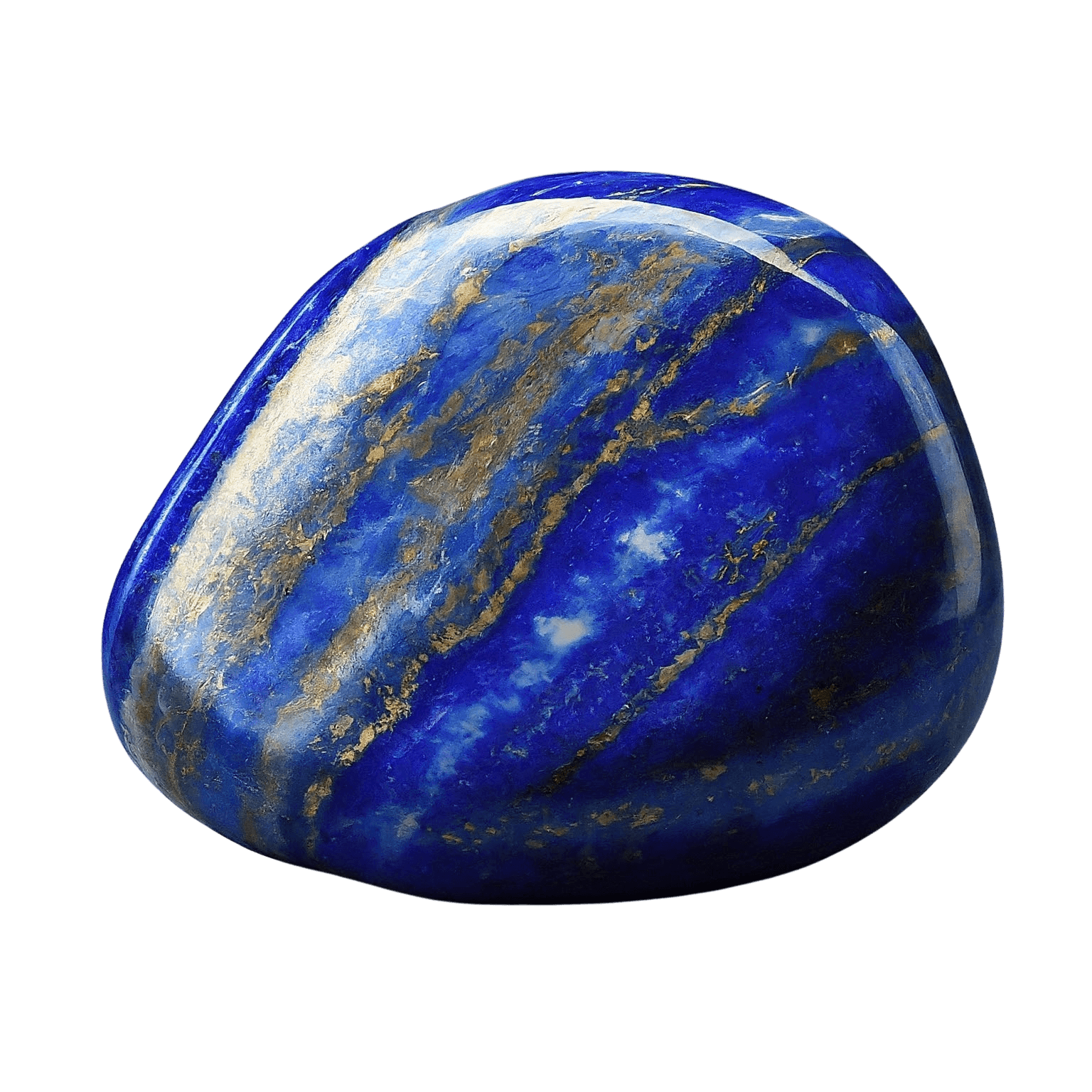
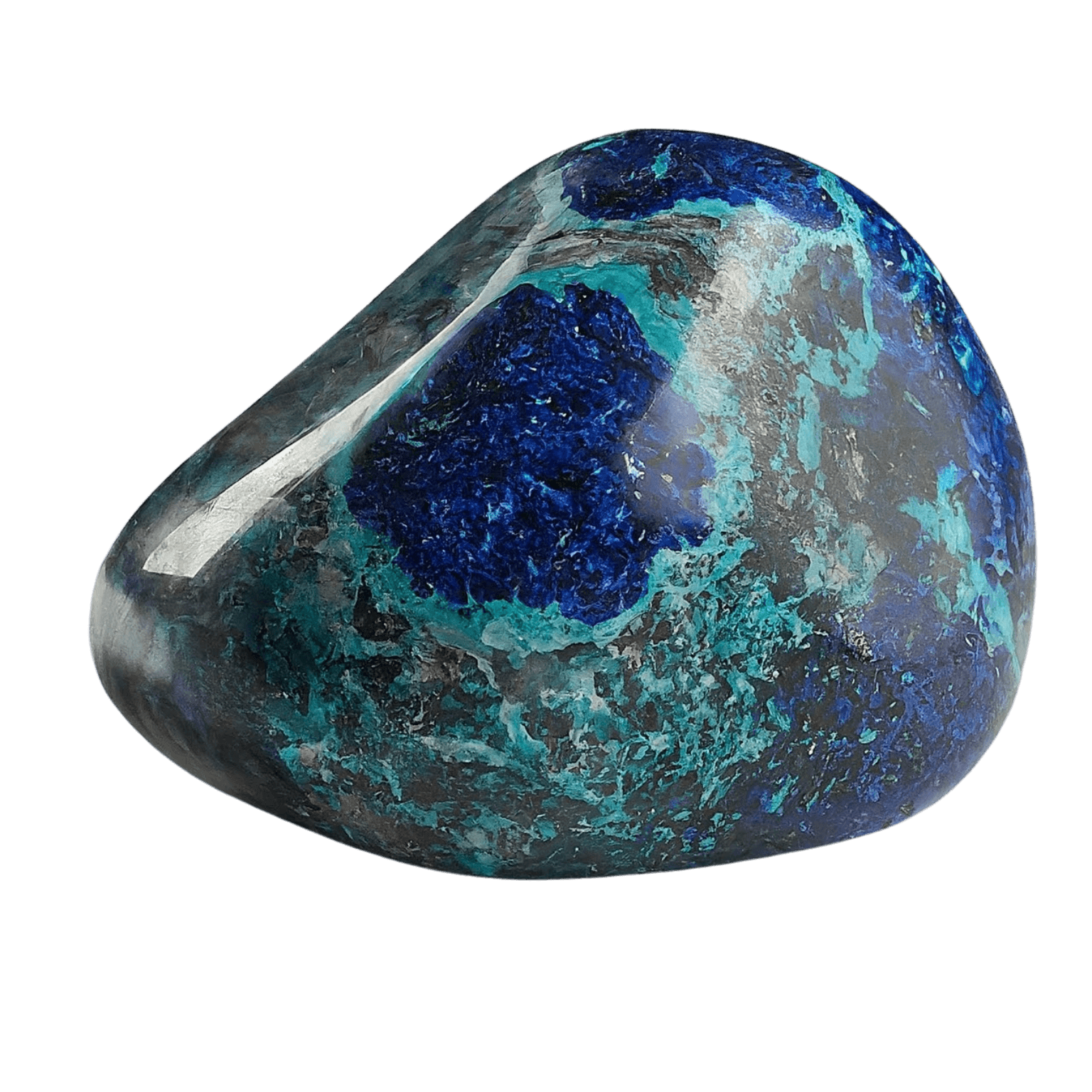
Color and pattern: natural Lazulite runs deep blue, azure, or violet-blue, with variation from piece to piece; perfectly uniform color across a whole tray is the classic mark of dye or synthetics.
Price reality: quality Lazulite runs roughly $18 to $55 for palm-sized pieces from reputable sellers; a price far below that range is usually answering a question you should have asked.
Trust your source: provenance beats any hands-on check; ask where the Lazulite was mined, whether the deep blue material is treated, and expect straight answers. That standard is why CrystalStones.com ships every piece with its provenance.
Frequently Asked Questions
What is Lazulite good for?
Lazulite is traditionally associated with clarity, focus, intuition, and communication. Many people find it supportive for clarity and for working with the Third Eye and Throat chakras.
Can Lazulite go in water?
It can. Lazulite handles brief water contact without trouble at Mohs 5.75, and a short rinse under cool water makes a sound regular cleanse. Pat it dry when you finish and avoid leaving it submerged overnight.
Can Lazulite be in the sun?
Sun is fine for Lazulite. A half hour of direct morning light both cleanses and charges it, and the deep blue tones are stable enough to take it.
What chakra is Lazulite?
Lazulite is primarily associated with the Third Eye (Ajna) and Throat (Vishuddha) chakras. Brief brow placements are the convention: soft focus at the third eye while lying back, kept short by habit rather than by clock, which is the traditional handling of clarity.
What zodiac sign is Lazulite for?
Lazulite is traditionally connected to Sagittarius and Virgo. That said, the zodiac correspondence is an invitation rather than a requirement; any chart can work with Lazulite, and attraction to the stone matters more than the calendar.
How do I cleanse Lazulite?
Stick to Moonlight, Selenite, and Sage for Lazulite; those are the methods its care profile recommends. A quick rinse remains an option at Mohs 5.75, but the listed methods are the ones that should carry the regular routine.
Is Lazulite real or fake, how can I tell?
Genuine Lazulite warms quickly in the hand at Mohs 5.75, while glass imitations stay cold longer and feel slick rather than satiny. Natural deep blue material varies piece to piece and runs about $18 to $55 tumbled, so perfectly matched stones at a suspicious discount deserve a second look.
What’s Next?
A few thoughtful next steps if Lazulite is calling to you.
The Crystal Starter Library
A free guide from Crystal Cassandra: the twelve stones that cover almost everything, a one page care matrix for water, sun and salt, and how to build a first intention practice.
We respect your inbox. Unsubscribe anytime.
Explore More Tools
Crystal Quiz
Discover which crystal matches your energy right now.
Open →Chakra Test
Find which chakras need attention and the crystals to balance them.
Open →Crystal Cleansing Guide
Learn how to safely cleanse and charge your crystals.
Open →Crystals by Intention
Find the perfect crystal for what you need right now.
Open →