Quick Answer
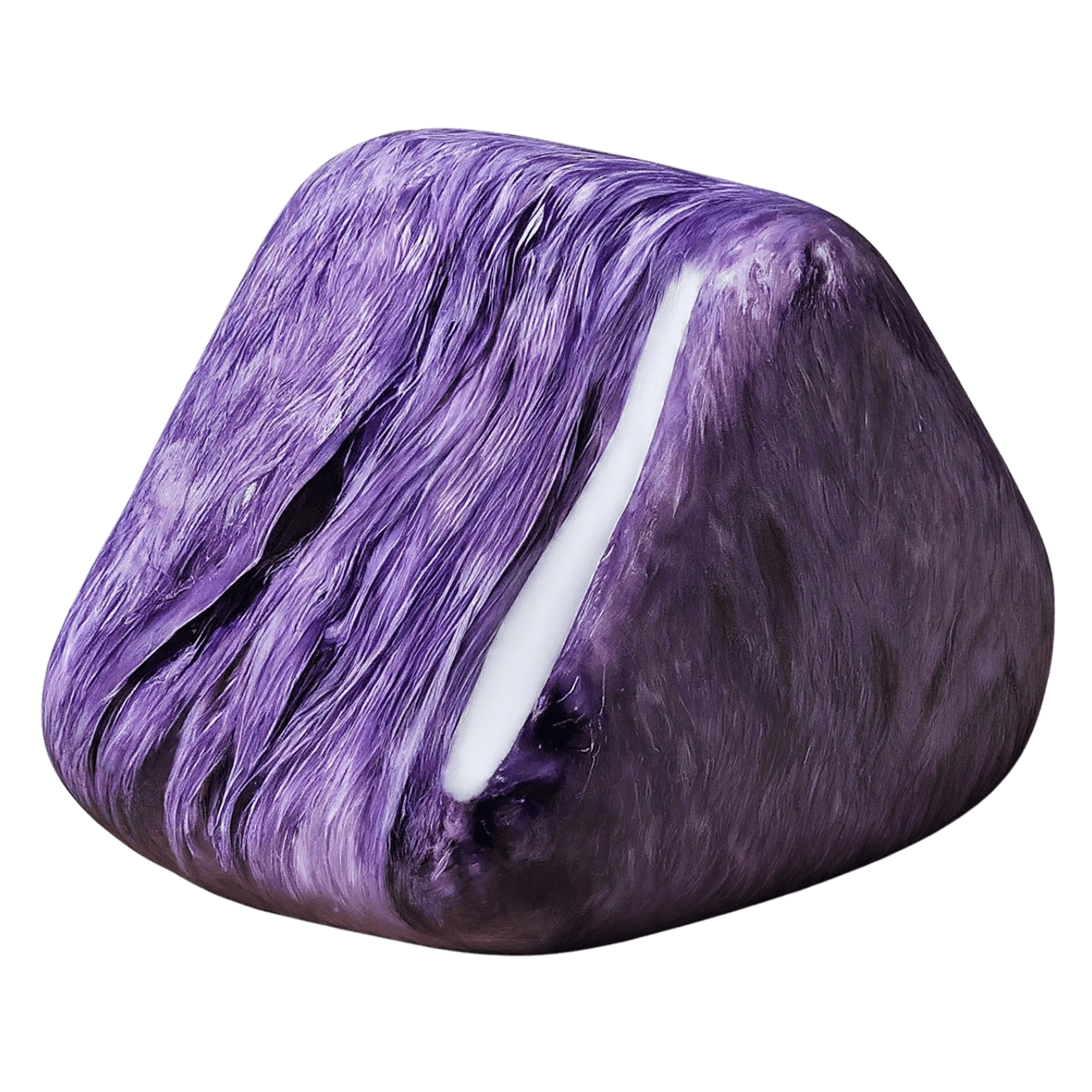
Charoite is a purple crystal used in modern crystal healing for transformation, spiritual awakening, and release. It measures 5 on the Mohs hardness scale and typically costs $25 to $55 for a tumbled stone. In the chakra tradition, Charoite is associated with the Crown and Heart chakras.
Worth knowing: Although Soviet geologists encountered the purple rock decades earlier, charoite was only accepted as a new mineral species in 1978, named for the Chara River region of Yakutia where it occurs.
“A swirling purple stone of spiritual transformation and purposeful evolution.”
- Chakra
- Crown (Sahasrara), Heart (Anahata)
- Zodiac
- Sagittarius ♐, Scorpio ♏
- Element
- Spirit ✨
- Planet
- Pluto ♇
- Hardness
- 5 / 10 (Mohs)
- Colors
- Purple, Violet with white swirls, Lavender
- Origin
- Russia (Sakha Republic)
- Price Range
- 25 to 55
Care + Safety
Charoite at a glance
- Water: brief rinse safe
- Sun: tolerates sunlight charging
- Mohs hardness: 5 (occasional wear only)
What is Charoite?
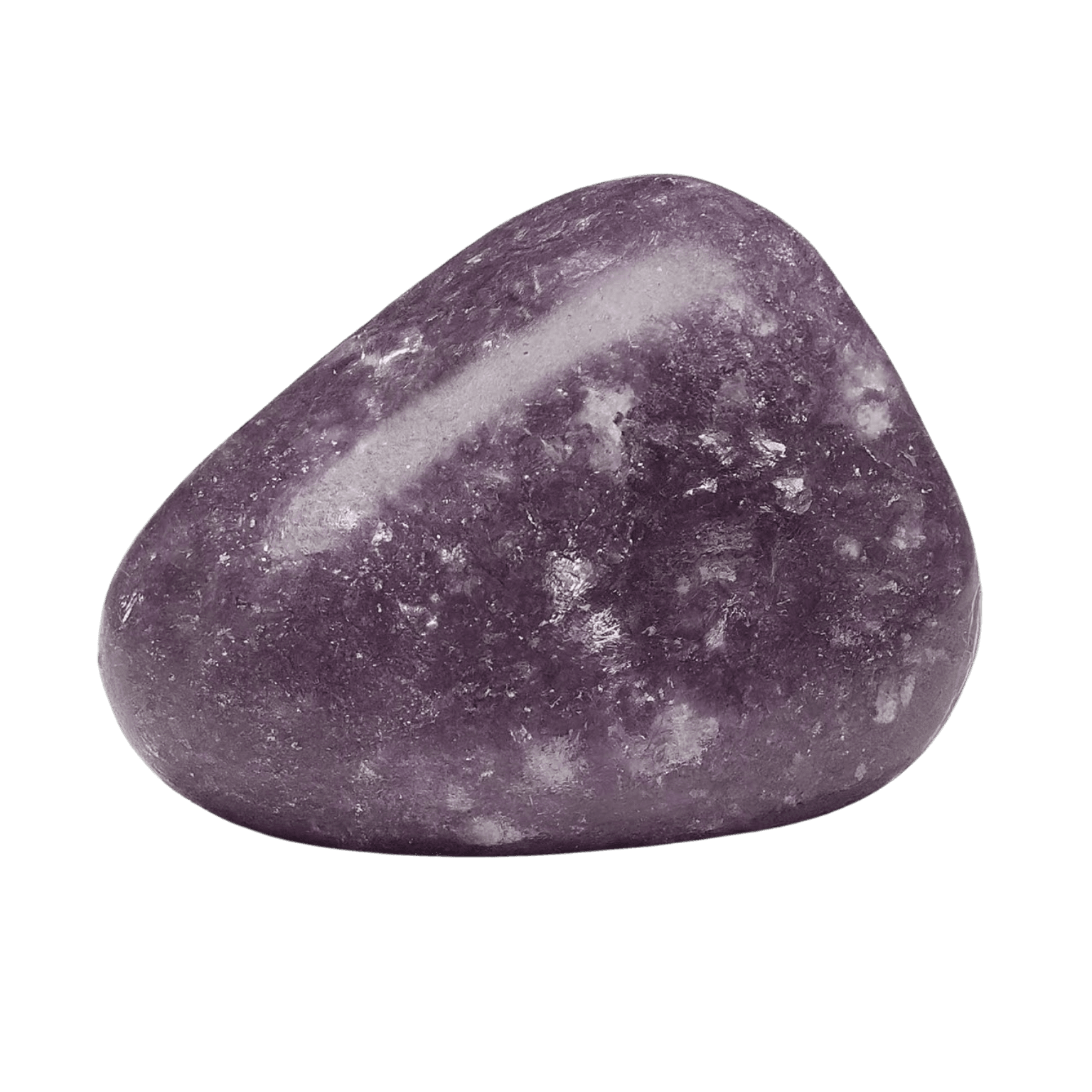
Charoite is a rare potassium calcium silicate that formed where a syenite intrusion chemically transformed surrounding limestone, a metasomatic process that produced its tightly swirled fibrous crystals. The interlocking fibers scatter light into a silky chatoyance, and no second deposit has ever been confirmed beyond the Murun massif in Siberia.
Charoite measures 5 on the Mohs scale and shows purple, violet with white swirls, or lavender coloring. It walks with the threshold stones, the companions for transformation, spiritual awakening, and release and the seasons that change us.
The stone connects primarily to the Crown (Sahasrara) and Heart (Anahata) chakras, carrying Spirit energy. Sources include Russia (Sakha Republic); deposit matters more than beginners expect, and collectors learn to recognize where a piece of Charoite was mined by its color depth and pattern.
Charoite's swirling purple and white patterns look like marble from another world, which makes sense, because this stone only comes from one river in Siberia. It supports the kind of transformation that aligns you with your life's purpose, even when that means letting go of who you thought you were.
Also catalogued as Stone of Transformation and Soul Stone, this is a stone that rewards regular handling more than display. Give Charoite a week of transformation duty in the pocket before deciding what it is for.
History and Mythology
Charoite entered the record through mineralogy rather than mythology: the species was identified and named in the modern era, and its healing use begins with the 20th and 21st century crystal literature rather than any ancient source. That recency is worth stating plainly, because honest provenance is rarer than it should be in this field. The material itself is sourced today from Russia (Sakha Republic).
The correspondence tables used by today's practitioners assign Charoite to Sagittarius and Scorpio under the rulership of Pluto ♇. In that system, work centered on transformation is said to land best while those signs are in season.
Whatever the age of the name, the geology is patient: every piece of Charoite took shape over geological timescales, arriving at its Mohs 5 hardness through slow heat, pressure, and chemistry long before any hand reached for it.
Charoite Meaning and Metaphysical Properties
What the Hand Learns First
The hand learns Charoite fast: a Mohs 5 stone whose purple face warms readily and carries a soft luster that invites the thumb to keep circling it. Notice which memory arrives first while you hold it; the threshold stones tend to surface whatever is mid-release, and that arrival is information.
Primary Properties
Every property attached to Charoite concerns passage: transformation, spiritual awakening, release, and healing. The threshold family accompanies endings into beginnings, the put-down habit, the picked-up season, and it does so as a witness rather than an engine. The stone keeps the record; the step is still yours.
How Crystal Energy Works
At the top of the map is the Crown, the gate between personal energy and the larger field, and tradition keeps Charoite there for transformation. A light touch is the whole method: brief sessions, gentle attention, and transformation, spiritual awakening, and release understood as the work of seasons rather than afternoons. In Melody's catalog the transformation stones share a single center of gravity, release, the old carried out of the system to make space for what comes next.
Amplification Through Intention
Spirit-element stones like Charoite resist scheduling; the tradition uses them as thresholds rather than tools, touched at the start of transformation practice the way a doorframe is touched on the way through.
Healing Benefits
Emotional Support
Heavy seasons are Charoite territory: transformation, spiritual awakening, and release. Tradition casts it as company for grief, endings, and the honest inventory, not a stone that cheers you up so much as one that stays in the room. These are traditional transformation associations rather than medical claims; for anything heavy or persistent, a qualified professional belongs in the picture alongside any stone.
Spiritual Connection
Spiritually, Charoite attends the rites of ending well, the released page, the closing inventory, the farewell made deliberately. What the stone marks is the difference between finishing something with attention and simply walking away from it.
Physical Presence
Physically, tradition gives Charoite the lightest touch of all the elements: presence rather than program. Hold it when you want to feel quietly accompanied through transformation work; the comfort is real, and it is not a medical claim.
Chakra Connection
Charoite resonates most strongly with the Crown (Sahasrara), the energy center traditionally drawn in violet / white and the traditional seat of this stone's transformation work. When this center runs clear, the classical markers are spiritual connection, divine wisdom, and unity; transformation, spiritual awakening, and release are what Charoite is most often asked to bring to it.
Lying down, keep Charoite clear of the head altogether, near hair rather than against skin; crown placements sit at the body's edge, and soft attention rather than any measured stretch of it is the traditional transformation session.
Charoite also keeps a working line to the Heart (Anahata), which widens its range in layouts; let the primary placement lead, and add the second position once the first feels familiar.
Zodiac and Astrological Connection
Charoite appears under Sagittarius ♐ (Nov 22 to Dec 21) and Scorpio ♏ (Oct 23 to Nov 21) in the standard correspondence tables; if those signs are loud in your chart, expect the introduction to feel familiar.
The gate, though, stands open: you do not need a Sagittarius Sun to work with Charoite, and a genuine pull toward the stone outweighs its paper assignments.
The assigned ruler is Pluto ♇; in practice that means Charoite comes out when that planet is prominent in the sky or in your chart, and transformation is the work it is handed.
How to Use Charoite
Five practices suit Charoite especially well. Pick the one that fits the day you are actually having rather than the routine you think you should have.
- 1
Meditation Hold
Take up Charoite as you settle in; at Mohs 5 it takes on your warmth within a minute or two, and that slow merge is a useful anchor whenever the mind wanders.
- 2
Body Placement
Above the head, not on it, is where Charoite belongs in a crown session: lie down, position the stone just clear of the crown of the head, and keep the attention gentle. Nothing about this station rewards effort. The old charts assign it to transformation.
- 3
Sleep Companion
At night, park Charoite on the nightstand rather than working it; its job is the day's transformation, and ending the day cleanly is how tomorrow's session starts well.
- 4
Carry With You
Carry Charoite through the seasons that are ending; touch it when the old habit calls, and let the stone mark each small refusal as part of the larger transformation.
- 5
Crystal Grid Anchor
Set Charoite at the center of a grid built for transformation and ring it with Sugilite and Amethyst at the points. Speak the intention once as you place each stone; a grid is a sentence written in minerals, and saying the transformation aloud is the punctuation.
How to Cleanse and Charge
A worked stone needs clearing, and Charoite is no exception; practitioners describe an uncleansed crystal as muffled, present but quieter than it should be. For the full safety profile and the cadence I recommend, see the dedicated Charoite care guide.
- 1
Moonlight
Give Charoite a night outdoors or at the glass under a bright moon; the tradition holds moonlight to be the universal reset, slow, cool, and risk-free.
- 2
Selenite
Overnight on selenite is the lowest-maintenance cleanse Charoite can get: set it down at bedtime, pick it up cleared in the morning.
- 3
Sage
Pass Charoite through the smoke of white sage or rosemary for about thirty seconds, turning it so the smoke wraps every face, while you hold a clear intention of release.
- 4
Sound
A minute inside strong, sustained tone, bowl, chime, even a steady hum, resets Charoite without physical risk, which makes sound the safest deep cleanse for fragile stones.
How often to cleanse
Monthly is the floor for Charoite; step the cadence up whenever the stone is in daily rotation or the season is emotionally loud. With practice you will feel the tell yourself, a worked stone reads heavier and flatter in the palm.
Charging after cleansing
Follow every cleansing with a charge: for Charoite that means placing it in morning sunlight for 30 minutes. A cleared stone is neutral, a charged one is ready.
Crystal Pairings
Anchor stones make the best company for Charoite; something has to hold still while the moving happens. Tradition supplies partners that bring ground, heart, or light to transformation, and it expects the lineup to change as the season does. Updating the pair is not a failure of loyalty; it is the practice working.
How to Spot Real vs Fake Charoite
Before buying Charoite, run the piece through these checks; nothing here needs equipment, just your hands, the purple stone in question, and a healthy skepticism:
Temperature: at Mohs 5, genuine Charoite warms in the hand noticeably faster than glass; an imitation in glass stays cold and slick well past the first minute.
Weight: real Charoite should feel like stone rather than plastic pretending; if a palm-sized piece feels nearly weightless, walk away from it.
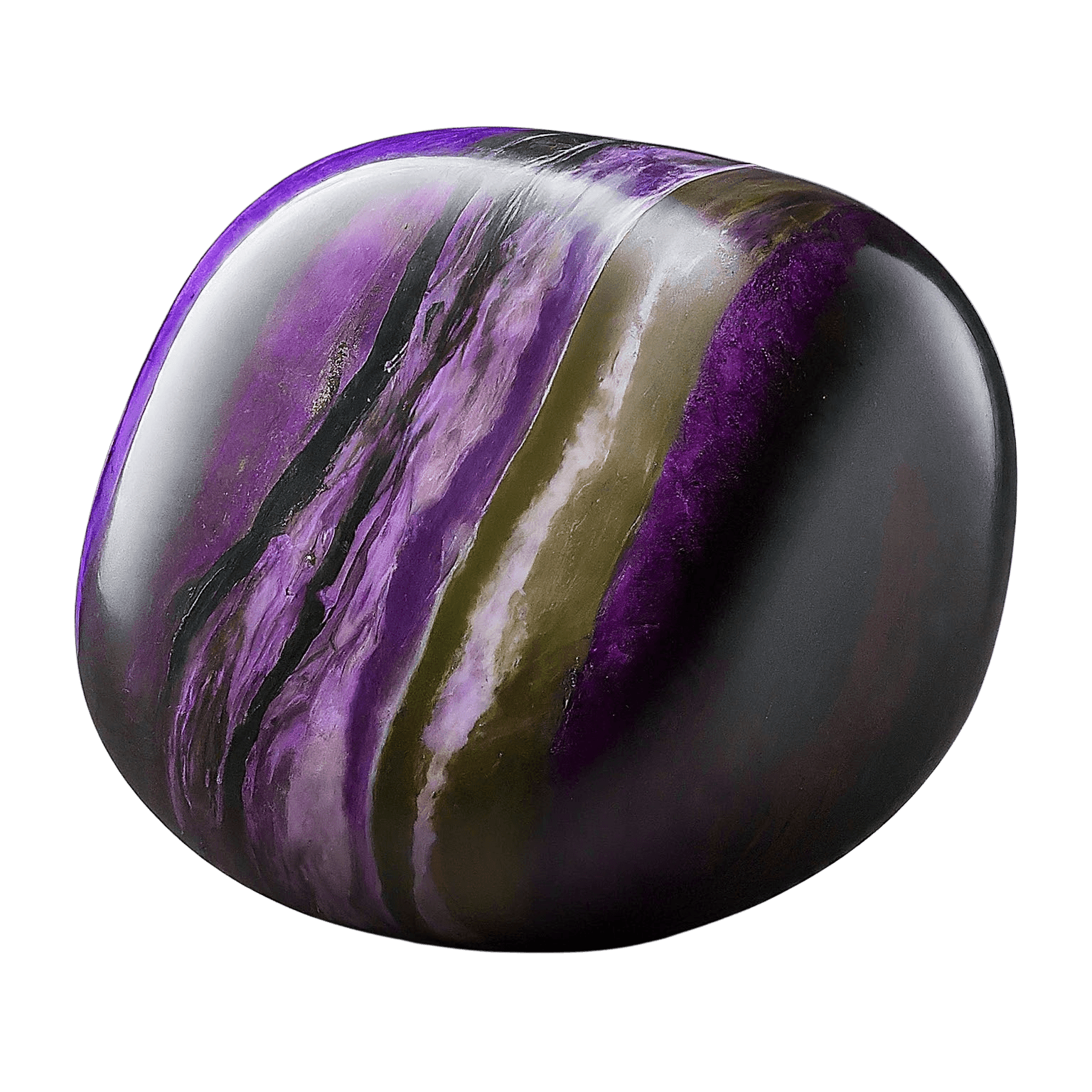
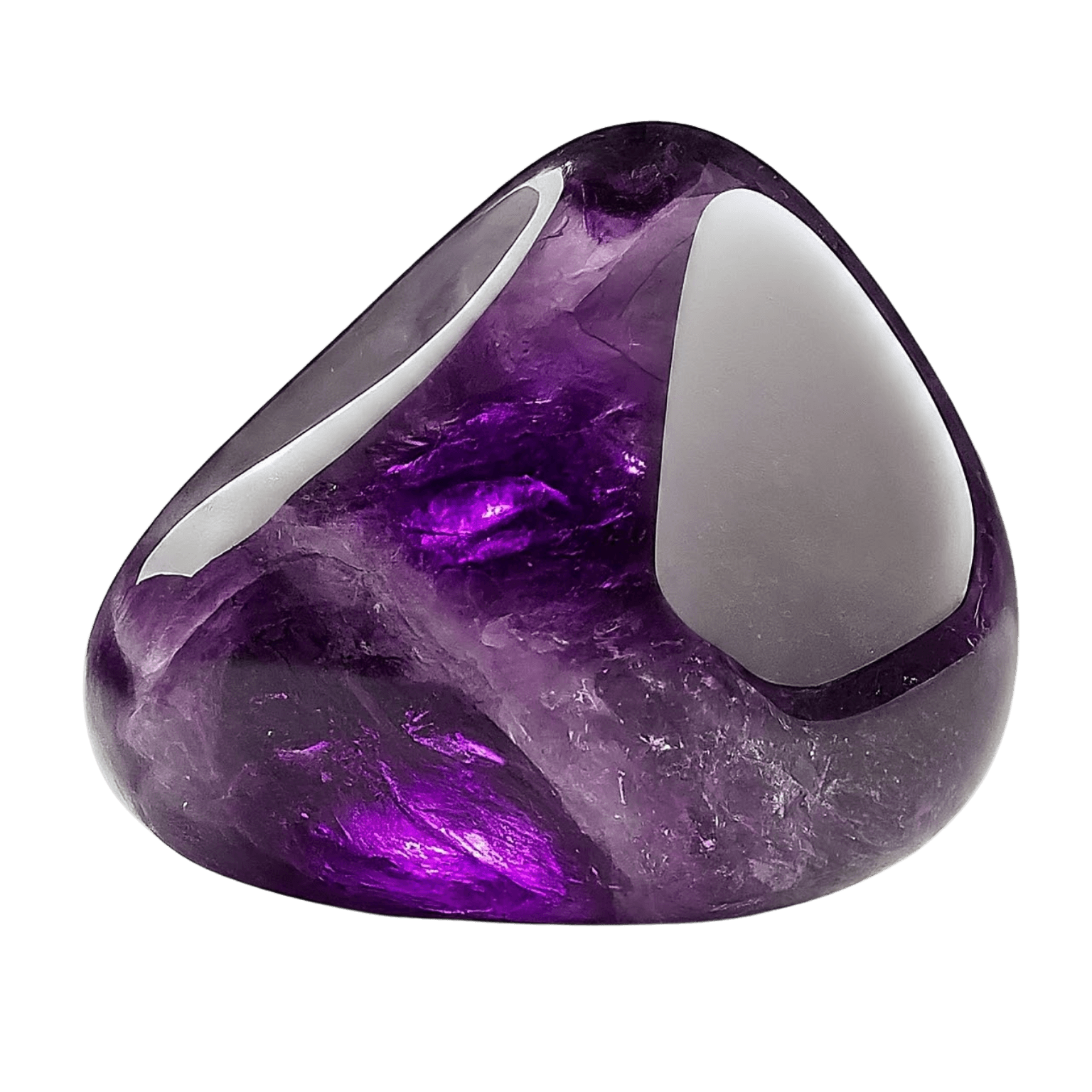
Color and pattern: natural Charoite runs purple, violet with white swirls, or lavender, with variation from piece to piece; perfectly uniform color across a whole tray is the classic mark of dye or synthetics.
Price reality: quality Charoite runs roughly $25 to $55 for palm-sized pieces from reputable sellers; a price far below that range is usually answering a question you should have asked.
Trust your source: a seller who knows where a purple stone like this came from and says so plainly is worth more than every test on this list; CrystalStones.com publishes provenance for each Charoite piece for exactly that reason.
Frequently Asked Questions
What is Charoite good for?
Charoite is traditionally associated with transformation, spiritual awakening, release, and healing. Many people find it supportive for transformation and for working with the Crown and Heart chakras.
Can Charoite go in water?
Yes, Charoite tolerates water; at Mohs 5, a one to two minute rinse is fine. Towel the stone off afterward and treat soaking as off the menu; brief contact is the whole agreement.
Can Charoite be in the sun?
Yes, Charoite can sit in sunlight safely; its purple coloring holds up, and thirty minutes of morning sun is the traditional charge.
What chakra is Charoite?
Charoite is primarily associated with the Crown (Sahasrara) and Heart (Anahata) chakras. Edge placement is the rule here: the stone stays off the body rather than on it, whether seated or lying down, in keeping with crown-center transformation practice.
What zodiac sign is Charoite for?
Charoite is traditionally connected to Sagittarius and Scorpio. If your signs differ, work with Charoite anyway; resonance in the hand outranks resonance on paper in every practical tradition.
How do I cleanse Charoite?
The best methods for Charoite are Moonlight, Selenite, and Sage. Moderate hardness. Avoid salt. The patterns are natural, no two pieces are alike.
Is Charoite real or fake, how can I tell?
Genuine Charoite warms quickly in the hand at Mohs 5, while glass imitations stay cold longer and feel slick rather than satiny. Natural purple material varies piece to piece and runs about $25 to $55 tumbled, so perfectly matched stones at a suspicious discount deserve a second look.
What’s Next?
A few thoughtful next steps if Charoite is calling to you.
The Crystal Starter Library
A free guide from Crystal Cassandra: the twelve stones that cover almost everything, a one page care matrix for water, sun and salt, and how to build a first intention practice.
We respect your inbox. Unsubscribe anytime.
Explore More Tools
Crystal Quiz
Discover which crystal matches your energy right now.
Open →Chakra Test
Find which chakras need attention and the crystals to balance them.
Open →Crystal Cleansing Guide
Learn how to safely cleanse and charge your crystals.
Open →Crystals by Intention
Find the perfect crystal for what you need right now.
Open →