Quick Answer
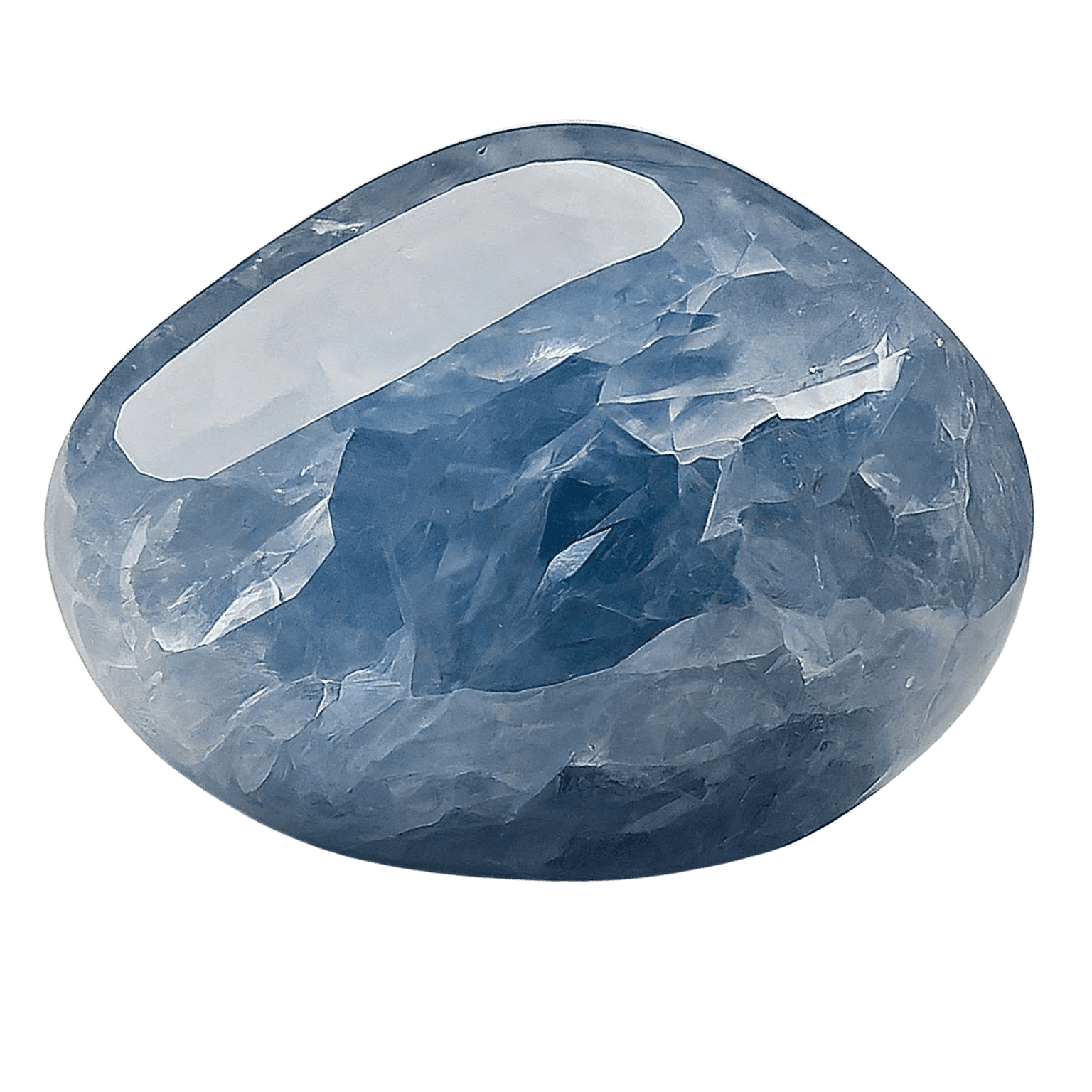
Celestite is a pale blue crystal used in modern crystal healing for meditation, calm, and spiritual awakening. It measures 3 on the Mohs hardness scale and typically costs $20 to $45 for a tumbled stone. In the chakra tradition, Celestite is associated with the Throat and Crown chakras.
Worth knowing: The largest known geode on Earth is a celestite cavity under an Ohio winery, struck while digging a well in 1897, and its tour tickets helped the winery survive Prohibition.
“A heavenly blue crystal of meditation, angelic connection, and serene peace.”
- Chakra
- Throat (Vishuddha), Crown (Sahasrara)
- Zodiac
- Gemini ♊
- Element
- Air 💨
- Planet
- Neptune ♆
- Hardness
- 3 / 10 (Mohs)
- Colors
- Pale blue, Sky blue, White-blue
- Origin
- Madagascar, Mexico, USA
- Price Range
- 20 to 45
Care + Safety
Celestite at a glance
- Water: avoid, may damage or leach
- Sun: fades in prolonged direct sun
- Mohs hardness: 3 (display + meditation only)
What is Celestite?
Celestite, formally celestine, is strontium sulfate, named from the Latin caelestis, heavenly, for its sky blue color. It is the world's principal ore of strontium and grows its glassy blue crystals inside geodes, most famously the egg-shaped pockets dug at Sakoany on Madagascar's Betsiboka River.
Celestite measures 3 on the Mohs scale and shows pale blue, sky blue, or white-blue coloring. It keeps company with the contemplative stones, worked mainly in stillness for meditation, calm, and spiritual awakening.
The stone connects primarily to the Throat (Vishuddha) and Crown (Sahasrara) chakras, carrying Air energy. Commercial material comes from Madagascar, Mexico, and USA, and provenance shows: pieces from different deposits vary in saturation, veining, and clarity, which is why no two specimens of Celestite read quite alike.
Celestite's pale blue clusters look like fragments of frozen sky. Place one on your nightstand for peaceful sleep, or use it as a meditation focal point. This crystal's gentle, high-frequency energy is traditionally associated with connecting to celestial realms.
Also catalogued as Celestine and Stone of Heaven, Celestite earns its place in a working collection by being usable: start with meditation, the job it is best known for, and let the stone widen its own brief from there.
History and Mythology
Celestite leads a double life: half cathedral, half munitions plant. As celestine it is the chief ore of strontium, the element that burns crimson, and for generations crystals below collector grade were crushed for red signal flares and fireworks. The stone's grandest address is American. In 1897, workers digging a well beneath Heineman's Winery on South Bass Island, Ohio broke into a cavity lined with tabular celestite crystals up to three feet across; the family rigged it for tours as Crystal Cave, the largest known geode on Earth, and ticket sales famously carried the winery through Prohibition while neighboring vineyards failed. The market's blue standard arrived later: the Sakoany deposit on the banks of Madagascar's Betsiboka River, worked since its discovery in 1967, ships the luminous geodes that now define the species, hollow eggs up to two feet wide producing roughly 15 tons a year. Set a cluster by a window and watch the late light pool in it; the sky the Latin name promised is genuinely in there.
Celestite Meaning and Metaphysical Properties
What the Hand Learns First
The hand learns Celestite fast: a Mohs 3 stone whose pale blue face warms readily and carries a soft luster that invites the thumb to keep circling it. Let the eyes rest shut while you make first contact; contemplative stones tend to speak in pictures and half-formed thoughts, and those need stillness to surface.
Primary Properties
Stillness is the condition for everything on the Celestite list: meditation, calm, spiritual awakening, and sleep. These qualities belong to the contemplative family and surface where attention is unpressed, the morning sit, the dream journal, the silence before the house wakes. Give the stone a seat in that part of your life, not a place in your rush.
How Crystal Energy Works
Tradition stations Celestite at the Throat, the narrow bridge where what you know becomes what you say, and meditation is the load assigned to it. The classic session is small: hold the stone, speak one true thing about meditation, calm, and spiritual awakening, and stop there. Hall files the contemplative stones under the third eye and crown centers, and the instruction she attaches to the whole family does not vary, seated practice, brief sessions, nothing forced.
Amplification Through Intention
As an Air-element stone, Celestite is worked where thinking happens, the desk, the journal, the conversation where meditation is on the line. Keep it in view rather than in a drawer, and let each glance quietly reset the meditation intention.
Healing Benefits
Emotional Support
Emotionally, Celestite is associated with meditation, calm, and spiritual awakening, the states that need quiet to surface. It suits the processing hours, journaling, sitting, walking without headphones, when feelings need room rather than fixing. Tradition, not treatment: meditation work with a stone sits beside professional support, never in place of it.
Spiritual Connection
Tradition reserves Celestite for the practices built around listening, sitting meditation, the morning dream log, silence held long enough for inner counsel to become audible. Expect no answers from the stone itself; expect it to keep you seated while the forming ones finish.
Physical Presence
Tradition reads Air stones like Celestite through the breath: hold it whenever the pace of meditation work gets ahead of you, and let a few long exhales go by uncounted. The stone's role is to make you notice breathing at all; the noticing is the benefit, and no mineral substitutes for medical care.
Chakra Connection
Celestite resonates most strongly with the Throat (Vishuddha), the energy center traditionally drawn in blue and the traditional seat of this stone's meditation work. When this center runs clear, the classical markers are words that match what you mean and a voice you recognize as your own; meditation, calm, and spiritual awakening are what Celestite is most often asked to bring to it.
Worn short at the throat, or touched once before you speak, Celestite works the bridge between knowing and saying; small repeated contact serves meditation better than one long session.
Because Celestite is also associated with the Crown (Sahasrara), it moves well in multi-stone layouts: one stone, two stations, worked on different days.
Zodiac and Astrological Connection
In the modern correspondence tables Celestite is assigned to Gemini ♊ (May 21 to Jun 20); a Sun, Moon, or rising placement there is read as a head start with this stone, nothing more.
None of this is exclusionary. If Celestite keeps catching your eye, that interest counts for more than whether Gemini appears anywhere in your chart.
The assigned ruler is Neptune ♆; in practice that means Celestite comes out when that planet is prominent in the sky or in your chart, and meditation is the work it is handed.
How to Use Celestite
Five practices suit Celestite especially well. Pick the one that fits the day you are actually having rather than the routine you think you should have.
- 1
Meditation Hold
Hold Celestite for the length of your sit and notice the moment it stops feeling like an object and starts feeling like part of the hand; for a Mohs 3 stone, that shift comes early.
- 2
Body Placement
Throat-center work keeps Celestite close by while the jaw stays soft. Lie back, make no attempt to time the sit, and notice how long the stone keeps its coolness there before your warmth reaches it. The tradition ties this station to meditation.
- 3
Sleep Companion
Keep Celestite at the bedside or under the pillow's edge; sleep is one of its traditional assignments, and placing it there each night becomes the quiet end of the day's meditation practice.
- 4
Carry With You
Carry Celestite on the deciding days and touch it when you catch yourself rehearsing other people's opinions; the contact is a prompt to consult your own meditation first.
- 5
Crystal Grid Anchor
For grid work, give Celestite the anchor position and run Angelite and Selenite on the outer points, all matched to a single meditation intention. Rebuild it when it goes stale; a meditation grid you have stopped seeing has stopped working.
How to Cleanse and Charge
Celestite works best when it is cleansed on a rhythm; tradition pictures a stone absorbing what it meets, and a saturated stone has nothing left to give. The complete water, sun, and salt safety profile, plus the storage instructions I give my clients, lives in the dedicated Celestite care guide.
- 1
Moonlight
Set Celestite on a windowsill or ledge under the full moon and collect it in the morning. Moonlight is the gentlest cleanse in the tradition, safe for every stone in the collection and impossible to overdo.
- 2
Selenite
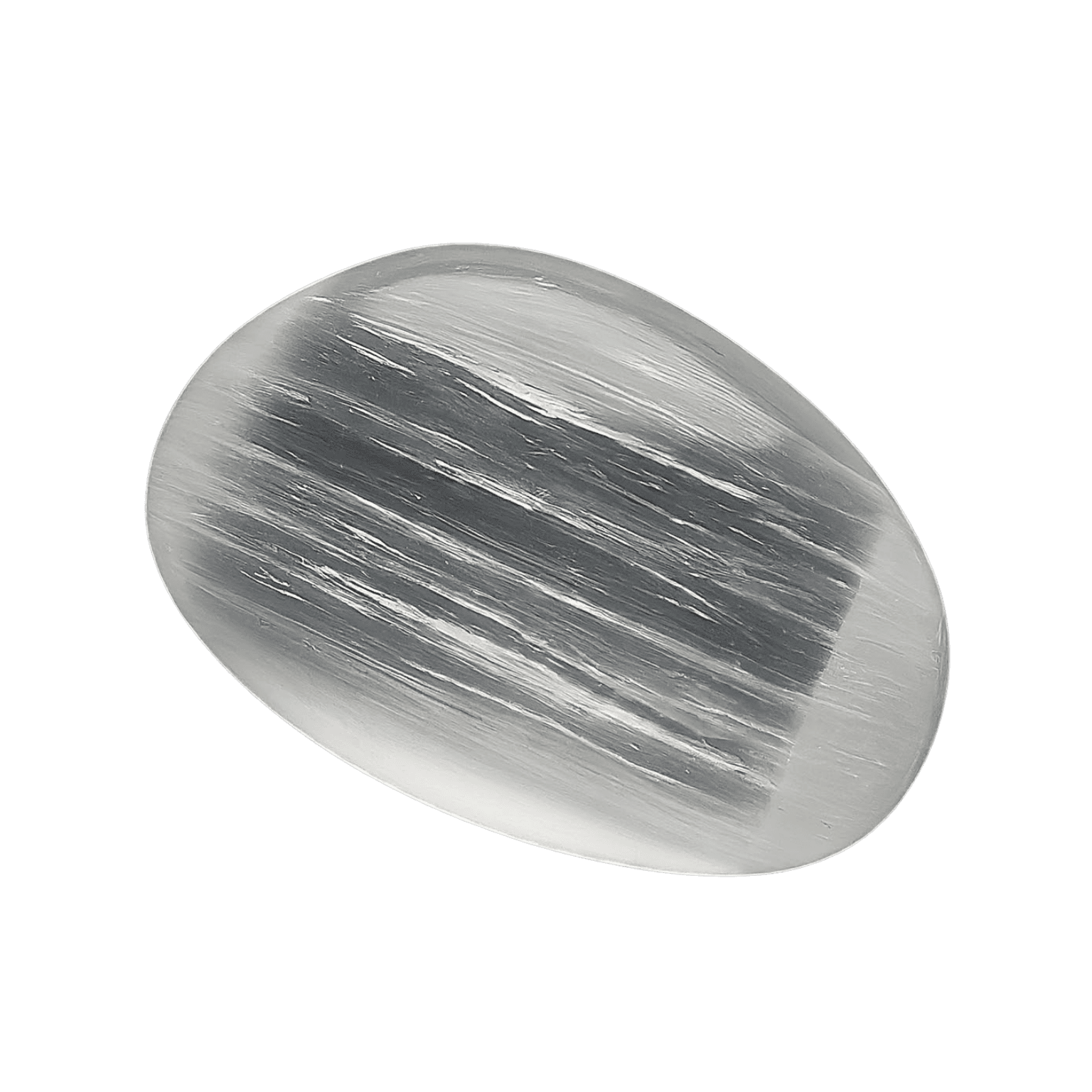
Keep a selenite dish where you empty your pockets and drop Celestite there at day's end; the resting place does the cleansing while you sleep.
- 3
Sound
Sound-cleanse Celestite by striking a bowl or bell, letting each tone fade completely before the next; the vibration does the clearing, and no contact is needed.
- 4
Sage
Smoke-cleanse Celestite: light the sage, let it settle to a smolder, and move the stone through the rising smoke until your sense of it lightens, usually under a minute.
How often to cleanse
I recommend cleansing Celestite at least once a month, more frequently if you're using it daily or during emotionally intense periods. You'll also learn to feel when a stone needs cleansing; it may feel heavier, duller, or simply “off.”
Charging after cleansing
After cleansing, charge Celestite by setting it on a selenite plate overnight or bathing it in full moonlight. This restores its energetic vitality.
Crystal Pairings
Keep the company around Celestite subtle: its traditional partners are the ones that thicken quiet instead of breaking it. These combinations belong to the meditation room, where stillness and meditation set the agenda. One new stone per week is plenty, and your own sits are the judges.

Buying Celestite: Price, Quality, and Jewelry
Madagascar's Sakoany geodes anchor the market, so the celestite meaning of serene, heavenly calm comes mostly in cluster form: expect $15 to $40 for a fist-size geode section, $50 to $150 for large display eggs, and modest prices for the rarer tumbled stones. Grade on color and luster; pale silvery blue is normal, while saturated sky blue with water-clear crystal faces commands the premium. Handle honesty first: celestite is only Mohs 3 to 3.5 and its crystals cleave easily, so clusters shed points with rough handling, and anything sold as a celestite bracelet that survives daily wear is more often dyed quartz or glass. The color is also light-shy, slowly bleaching in a sunny window, so display it in soft light. Keep it dry, skip the ultrasonic cleaner, and let it be what it is: a shelf and altar stone, not jewelry.
How to Spot Real vs Fake Celestite
The market in Celestite has grown faster than its honesty, and pale blue pieces are easy to imitate on a screen. Here is how to check one before you pay for it:
Temperature: at Mohs 3, genuine Celestite warms in the hand noticeably faster than glass; an imitation in glass stays cold and slick well past the first minute.
Weight and density: resin fakes run light for their size, while genuine Celestite at Mohs 3 carries honest mineral density; weigh it in the palm against any real tumbled stone you own.
Color and pattern: the real range is pale blue, sky blue, or white-blue; treat neon saturation or flawless uniformity as a question for the seller, because nature rarely manages either.
Price reality: the fair range for Celestite sits near $20 to $45 at palm size; below that, assume treatment or imitation until the seller proves otherwise.
Trust your source: provenance beats any hands-on check; ask where the Celestite was mined, whether the pale blue material is treated, and expect straight answers. That standard is why CrystalStones.com ships every piece with its provenance.
Bring it home
Shop Celestite
Ethically sourced, hand-selected Celestite starting from $20.
Shop CelestiteFrequently Asked Questions
What is Celestite good for?
Celestite is traditionally associated with meditation, calm, spiritual awakening, and sleep. Many people find it supportive for meditation and for working with the Throat and Crown chakras.
Can Celestite go in water?
No. Celestite should stay dry; cleanse it with Moonlight, Selenite, and Sound instead, and keep every wet method off the table.
Can Celestite be in the sun?
Treat sun as a risk for Celestite: short incidental light does no harm, but hours of direct exposure will cost the pale blue tones their depth. Default to moonlight.
What chakra is Celestite?
Celestite is primarily associated with the Throat (Vishuddha) and Crown (Sahasrara) chakras. Lying down, settle it at the throat, or wear it short on a chain; that placement serves its traditional meditation role.
What zodiac sign is Celestite for?
Celestite is traditionally connected to Gemini. That said, the zodiac correspondence is an invitation rather than a requirement; any chart can work with Celestite, and attraction to the stone matters more than the calendar.
How do I cleanse Celestite?
Stick to Moonlight, Selenite, and Sound for Celestite; those are the methods its care profile recommends. Notice that the whole list runs dry; for this stone's chemistry, that is a feature rather than a limitation.
Is Celestite real or fake, how can I tell?
Genuine Celestite warms quickly in the hand at Mohs 3, while glass imitations stay cold longer and feel slick rather than satiny. Natural pale blue material varies piece to piece and runs about $20 to $45 tumbled, so perfectly matched stones at a suspicious discount deserve a second look.
Sources and further reading
What’s Next?
A few thoughtful next steps if Celestite is calling to you.
The Crystal Starter Library
A free guide from Crystal Cassandra: the twelve stones that cover almost everything, a one page care matrix for water, sun and salt, and how to build a first intention practice.
We respect your inbox. Unsubscribe anytime.
Explore More Tools
Crystal Quiz
Discover which crystal matches your energy right now.
Open →Chakra Test
Find which chakras need attention and the crystals to balance them.
Open →Crystal Cleansing Guide
Learn how to safely cleanse and charge your crystals.
Open →Crystals by Intention
Find the perfect crystal for what you need right now.
Open →