Quick Answer
Anhydrite is a pale blue crystal used in modern crystal healing for calm, communication, and spiritual awakening. It measures 3.5 on the Mohs hardness scale and typically costs $10 to $28 for a tumbled stone. In the chakra tradition, Anhydrite is associated with the Throat and Crown chakras.
Worth knowing: Abraham Gottlob Werner named it in 1804 for the water it lacks, and when groundwater finally reaches buried anhydrite it swells into gypsum forcefully enough to buckle tunnel floors.
“A soft sky-blue calcium sulfate close in family to Angelite, of gentle expansive presence.”
- Chakra
- Throat (Vishuddha), Crown (Sahasrara)
- Zodiac
- Aquarius ♒, Pisces ♓
- Element
- Air 💨
- Planet
- Neptune ♆
- Hardness
- 3.5 / 10 (Mohs)
- Colors
- Pale blue, Violet-blue, Lavender, White
- Origin
- Mexico, Peru, Germany
- Price Range
- 10 to 28
Care + Safety
Anhydrite at a glance
- Water: avoid, may damage or leach
- Sun: fades in prolonged direct sun
- Mohs hardness: 3.5 (display + meditation only)
What is Anhydrite?
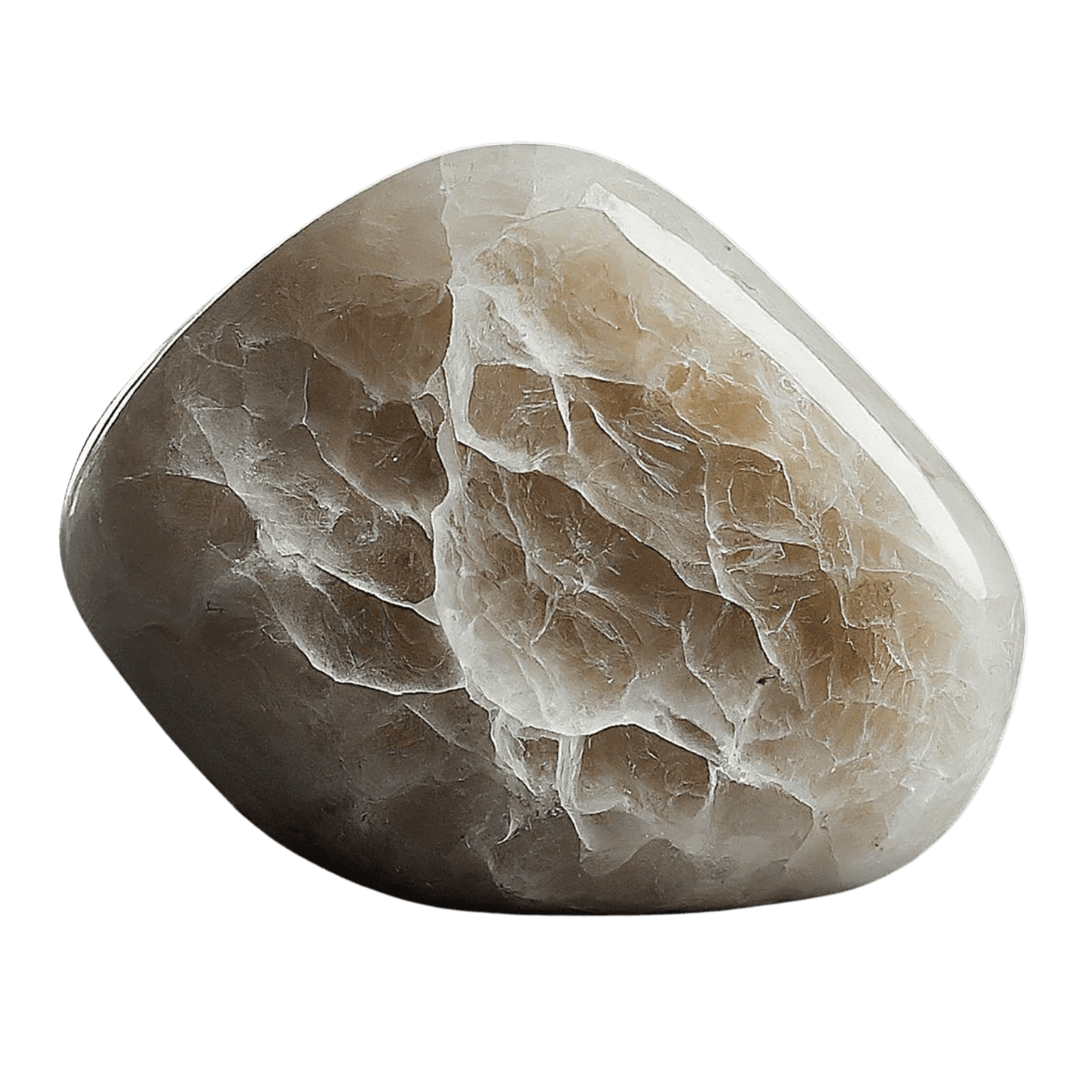
Anhydrite is calcium sulfate that crystallized with no water in its structure, the dehydrated sibling of gypsum, soft at 3.5. The sky-blue form sold as angelite, mostly from Peru, is this same mineral in trade dress.
Anhydrite measures 3.5 on the Mohs scale and shows pale blue, violet-blue, or lavender coloring. It belongs to the quieting shelf of the catalog, the stones reached for around calm, communication, and spiritual awakening.
The stone connects primarily to the Throat (Vishuddha) and Crown (Sahasrara) chakras, carrying Air energy. Today the material is drawn from Mexico, Peru, and Germany. Hold pieces from two different sources side by side and the differences in the pale blue material, tone, translucency, pattern, become obvious fast.
Anhydrite is the dehydrated cousin of gypsum, often forming pale sky-blue nodules sometimes sold as Angelite once tumbled. Hold this stone and notice how soft and chalk-pale it stays even once tumbled, an expansiveness the tradition read upward. The classical sources describe it as a stone of acceptance and angelic contact, and like all sulfates it dissolves slowly in water, so dry-cleanse only.
Also catalogued as Angelite's Sister and Anhydrous Gypsum, this is a stone that rewards regular handling more than display. Give Anhydrite a week of calm duty in the pocket before deciding what it is for.
History and Mythology
Anhydrite entered the record through mineralogy rather than mythology: the species was identified and named in the modern era, and its healing use begins with the 20th and 21st century crystal literature rather than any ancient source. That recency is worth stating plainly, because honest provenance is rarer than it should be in this field. The material itself is sourced today from Mexico, Peru, and Germany.
The correspondence tables used by today's practitioners assign Anhydrite to Aquarius and Pisces under the rulership of Neptune ♆. In that system, work centered on calm is said to land best while those signs are in season.
However young or old the human story, the stone outruns it: Anhydrite formed over deep time, and the Mohs 3.5 piece on your shelf is the newest chapter of a very old book.
Anhydrite Meaning and Metaphysical Properties
What the Hand Learns First
In the hand Anhydrite reads as gentle before you know anything else about it. Mohs 3.5 hardness means it gives up its coolness quickly, and the pale blue polish carries a waxy, candle-like glow. Watch the breath for the first half minute, before any thought about the stone has formed; the quieting stones are traditionally met at the breath rather than in the hand.
Primary Properties
The core associations of Anhydrite are quieting ones: calm, communication, spiritual awakening, and meditation. This family does downshift work, the hour before bed, the pause between tasks, the long exhale after a hard conversation. Expect subtlety; the calming stones whisper rather than announce.
How Crystal Energy Works
Tradition stations Anhydrite at the Throat, the narrow bridge where what you know becomes what you say, and calm is the load assigned to it. The classic session is small: hold the stone, speak one true thing about calm, communication, and spiritual awakening, and stop there. Judy Hall's entries for the calming stones lean on placement rather than promises, the nightstand, the meditation corner, the pocket on a hard day, and that modesty is worth keeping.
Amplification Through Intention
Elementally this is Air. The traditional pairing for Anhydrite is breathwork: hold the stone, lengthen the exhale, and bring the calm intention back to mind on each in-breath.
Healing Benefits
Emotional Support
Anhydrite speaks quietly on the emotional level: calm, communication, and spiritual awakening are its register. It suits the frayed hours best, the late-afternoon overload, the mind that will not stop at midnight, when a steady weight in the hand gives the spinning somewhere to set down. These are traditional calm associations rather than medical claims; for anything heavy or persistent, a qualified professional belongs in the picture alongside any stone.
Spiritual Connection
Spiritually, Anhydrite belongs to the practices of winding down, the before-sleep review, the head-to-toe scan, the gradual unclenching that makes room for subtler knowing. In this family the quiet itself is the devotion, and the stone is simply its anchor on the nightstand.
Physical Presence
Tradition reads Air stones like Anhydrite through the breath: hold it whenever the pace of calm work gets ahead of you, and let a few long exhales go by uncounted. The stone's role is to make you notice breathing at all; the noticing is the benefit, and no mineral substitutes for medical care.
Chakra Connection
Anhydrite resonates most strongly with the Throat (Vishuddha), the energy center traditionally drawn in blue and the traditional seat of this stone's calm work. When this center runs clear, the classical markers are clear communication and authentic self-expression; calm, communication, and spiritual awakening are what Anhydrite is most often asked to bring to it.
Worn short at the throat, or touched once before you speak, Anhydrite works the bridge between knowing and saying; small repeated contact serves calm better than one long session.
Because Anhydrite is also associated with the Crown (Sahasrara), it moves well in multi-stone layouts: one stone, two stations, worked on different days.
Zodiac and Astrological Connection
Astrological tradition links Anhydrite with Aquarius ♒ (Jan 20 to Feb 18) and Pisces ♓ (Feb 19 to Mar 20), and practitioners often suggest the stone meets Aquarius placements with the least friction.
Correspondence is a suggestion, not a bouncer; plenty of devoted Anhydrite keepers have no Aquarius in their chart at all, and being drawn to the stone is the credential that matters.
In the planetary layer of the system, Neptune ♆ holds the rulership, and that planet's prominent transits are the traditional windows for deeper calm work with Anhydrite.
How to Use Anhydrite
Five practices suit Anhydrite especially well. Pick the one that fits the day you are actually having rather than the routine you think you should have.
- 1
Meditation Hold
Hold Anhydrite for the length of your sit and notice the moment it stops feeling like an object and starts feeling like part of the hand; for a Mohs 3.5 stone, that shift comes early.
- 2
Body Placement
Throat-center work keeps Anhydrite close by while the jaw stays soft. Lie back, make no attempt to time the sit, and notice how long the stone keeps its coolness there before your warmth reaches it. The tradition ties this station to calm.
- 3
Sleep Companion
Anhydrite can still earn the nightstand even though its brief is calm rather than rest: setting the stone down as you set the day down marks the switch from doing to sleeping.
- 4
Carry With You
On the days that will not let up, give Anhydrite a spot within arm's reach and touch it slowly once an hour or so; each contact is a thirty-second stand-in for the break that is not coming, and that is how calm travels.
- 5
Crystal Grid Anchor
Use Anhydrite as the heart of a small grid for calm, with Angelite and Celestite alternating on the spokes. Place the stones slowly and set the last one down with the calm intention named out loud.
How to Cleanse and Charge
A worked stone needs clearing, and Anhydrite is no exception; practitioners describe an uncleansed crystal as muffled, present but quieter than it should be. For the full safety profile and the cadence I recommend, see the dedicated Anhydrite care guide.
- 1
Moonlight
Once a month, let Anhydrite sit overnight in moonlight, on the full moon if you can manage it. Nothing in the cabinet is harmed by this method, which is why it anchors most cleansing routines.
- 2
Selenite
Lay Anhydrite on a selenite plate or alongside a selenite wand overnight; selenite is the tradition's self-cleaning shelf, no effort, no risk to the stone.
- 3
Sage
For a deeper reset, hold Anhydrite in sage smoke and name out loud what the stone has been carrying; the naming is half the cleanse.
- 4
Sound
Hold Anhydrite near a singing bowl, bell, or tuning fork and let a full minute of tone wash over it; sound reaches stones that water, salt, and sun cannot safely touch.
How often to cleanse
Monthly is the floor for Anhydrite; step the cadence up whenever the stone is in daily rotation or the season is emotionally loud. With practice you will feel the tell yourself, a worked stone reads heavier and flatter in the palm.
Charging after cleansing
Follow every cleansing with a charge: for Anhydrite that means setting it on a selenite plate overnight or bathing it in full moonlight. A cleared stone is neutral, a charged one is ready.
Crystal Pairings
Anhydrite pairs best with stones that respect its quiet; loud amplifiers defeat the point. The traditional combinations keep the register low and slow, which is where this stone does its calm work. If a pairing feels busy rather than restful, trust that and separate them.

How to Spot Real vs Fake Anhydrite
The market in Anhydrite has grown faster than its honesty, and pale blue pieces are easy to imitate on a screen. Here is how to check one before you pay for it:
Temperature: at Mohs 3.5, genuine Anhydrite warms in the hand noticeably faster than glass; an imitation in glass stays cold and slick well past the first minute.
Weight and density: resin fakes run light for their size, while genuine Anhydrite at Mohs 3.5 carries honest mineral density; weigh it in the palm against any real tumbled stone you own.
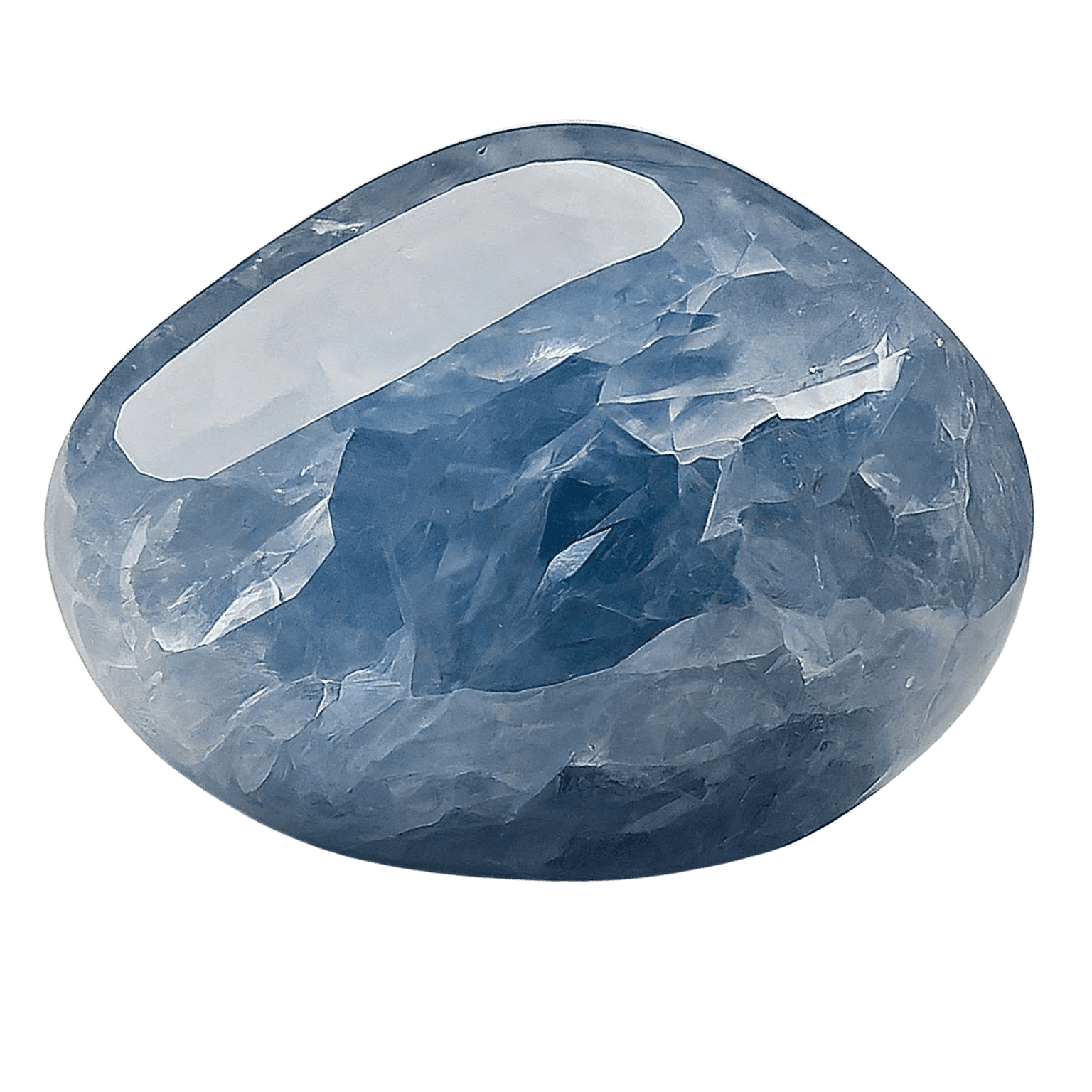
Color and pattern: the real range is pale blue, violet-blue, or lavender; treat neon saturation or flawless uniformity as a question for the seller, because nature rarely manages either.
Price reality: quality Anhydrite runs roughly $10 to $28 for palm-sized pieces from reputable sellers; a price far below that range is usually answering a question you should have asked.
Trust your source: a seller who knows where a pale blue stone like this came from and says so plainly is worth more than every test on this list; CrystalStones.com publishes provenance for each Anhydrite piece for exactly that reason.
Bring it home
Shop Anhydrite
Ethically sourced, hand-selected Anhydrite starting from $10.
Shop AnhydriteFrequently Asked Questions
What is Anhydrite good for?
Anhydrite is traditionally associated with calm, communication, spiritual awakening, and meditation. Many people find it supportive for calm and for working with the Throat and Crown chakras.
Can Anhydrite go in water?
Avoid it. Water can damage Anhydrite, so stay with the dry methods its care profile lists, Moonlight, Selenite, and Sage, which cover everything this stone needs. Sulfate mineral, slowly soluble in water. Dry cleanse only. Soft (Mohs 3.5), handle gently.
Can Anhydrite be in the sun?
Not for long. Anhydrite holds delicate pale blue color that extended sun exposure can bleach; charge it overnight in moonlight or on selenite instead.
What chakra is Anhydrite?
Anhydrite is primarily associated with the Throat (Vishuddha) and Crown (Sahasrara) chakras. Lying down, settle it at the throat, or wear it short on a chain; that placement serves its traditional calm role.
What zodiac sign is Anhydrite for?
Anhydrite is traditionally connected to Aquarius and Pisces. Astrological correspondence is one tradition among several, and nothing about your chart disqualifies you; people without a Aquarius placement work with Anhydrite all the time.
How do I cleanse Anhydrite?
Stick to Moonlight, Selenite, and Sage for Anhydrite; those are the methods its care profile recommends. Every method on that list is dry by design, which suits this stone's chemistry exactly.
Is Anhydrite real or fake, how can I tell?
Genuine Anhydrite warms quickly in the hand at Mohs 3.5, while glass imitations stay cold longer and feel slick rather than satiny. A fair tumbled piece sits near $10 to $28 and shows honest variation across the pale blue range; flawless uniformity at a bargain price is the tell worth trusting.
What’s Next?
A few thoughtful next steps if Anhydrite is calling to you.
The Crystal Starter Library
A free guide from Crystal Cassandra: the twelve stones that cover almost everything, a one page care matrix for water, sun and salt, and how to build a first intention practice.
We respect your inbox. Unsubscribe anytime.
Explore More Tools
Crystal Quiz
Discover which crystal matches your energy right now.
Open →Chakra Test
Find which chakras need attention and the crystals to balance them.
Open →Crystal Cleansing Guide
Learn how to safely cleanse and charge your crystals.
Open →Crystals by Intention
Find the perfect crystal for what you need right now.
Open →