By Crystal Cassandra · Updated August 3, 2026
Crystal Healing Expert
Blue Apatite vs Sodalite: which should you choose?
Blue Apatite and Sodalite are both focus stones in the crystal-healing tradition. Choose Blue Apatite when blank-page paralysis on a new project; reach for Sodalite when a standing desk focus stone for daily deep work.
Put Blue Apatite and Sodalite on the desk where you actually work and watch which one your hand drifts toward. Apatite is glassy, teal, and bright, and it tends to get picked up at the start of things, when the page is blank. Sodalite is inky, white-veined, and matte, and it gets reached for in the middle, when the draft is a mess and the deadline is real. Both are blue stones of the mind in traditional practice; they simply clock in at different hours of the same project.
Quick Comparison
| Property | Blue Apatite | Sodalite |
|---|---|---|
| Chakra | Throat, Third Eye | Throat, Third Eye |
| Element | Air, Water | Air |
| Primary Color | blue, teal | deep blue, blue with white veining |
| Hardness (Mohs) | 5 | 5.5 |
| Key Intentions | inspiration, communication, clarity | clarity, communication, focus |
About Blue Apatite
Blue Apatite is the showpiece of a mineral you carry in your own mouth: apatite is calcium phosphate, the family your teeth and bones are built from, and Friedrich Mohs made it the definition of hardness 5 when he assembled his scale in 1812. The teal variety, mostly from Brazil and Madagascar, has an almost electric clarity. Judy Hall's The Crystal Bible calls Apatite a stone of manifestation, and its older folk reading is simpler: appetite, the waking up of hunger for a goal.
In my practice, Blue Apatite is the blank-page stone. Keep it on the desk before brainstorming and notice which of the two arrives first, the idea or the judgment of it, which is the whole trick of a good first draft. Treat it gently: at Mohs 5 and brittle besides, it chips in pockets full of keys, and it dislikes long soaks and strong sun.
For a deeper profile of this stone, see the full Blue Apatite page.
About Sodalite
Sodalite is a feldspathoid, born in magmas too silica-poor to make ordinary feldspar, described in 1811 from Greenland and famous twice over: once when Ontario stone admired by the future Queen Mary in 1901 was shipped to London to panel Marlborough House, and once for its rare variety hackmanite, which fades in sunlight and recharges its color in the dark. Judy Hall's line about Sodalite is the one every student should hear: it unites logic with intuition.
In my practice, Sodalite is the revision stone, the one for outlines, arguments, and the discipline of saying one thing clearly. Where Apatite opens the floodgate, Sodalite builds the channel. It is also the budget winner of the blue stones, with quality tumbled pieces under $10, and at Mohs 5.5 to 6 it survives a desk drawer better than the brittle apatites do.
For a deeper profile of this stone, see the full Sodalite page.
Key Differences
- 1Blue Apatite generates (ideas, appetite, fresh starts); Sodalite organizes (structure, arguments, finished drafts).
- 2Blue Apatite is a brittle phosphate that defines hardness 5 on the Mohs scale; Sodalite is a slightly harder feldspathoid at 5.5 to 6 and takes desk life better.
- 3Sodalite is the budget stone, with quality tumbled pieces under $10; vivid teal Apatite runs $8 to $32 and climbs with saturation.
- 4Sodalite reads inky blue with white calcite veins and almost never glitters; Apatite reads glassy teal, and confusing the two is hard once you have seen both.
When to Use Them Together
Blue Apatite and Sodalite split a project the way morning and afternoon split a workday. Open the session with Apatite in hand and capture everything, badly and fast. When the capturing slows, swap to Sodalite for the sorting hour: outline, cut, sequence. Students preparing for exams often keep Sodalite as the standing desk stone and bring Apatite out only for essay planning and problems that need fresh angles. One generates, one edits, and the swap itself becomes a useful ritual boundary.
Many people working with these stones also explore the Third Eye Chakra page, which gathers traditional pairings and balancing practices in one place.
Which One Is Right for You?
In my practice, the right stone is almost always the one that matches your current need. Many people find that one of these scenarios maps closely to where they are right now:
Blank-page paralysis on a new project
Blue Apatite is the idea-waker, traditionally used to stir appetite for the goal.
A standing desk focus stone for daily deep work
Sodalite brings calm order, costs little, and physically survives desk life.
Exam season with a mountain of material to structure
Sodalite's gift is organization, exactly what revision demands.
A writing retreat from first draft to final edit
Apatite for the generative mornings, Sodalite for the structural afternoons.
Add These Stones to Your Practice
Blue Apatite
The vivid blue-green form of apatite, used for inspiration, communication, and clear goals.
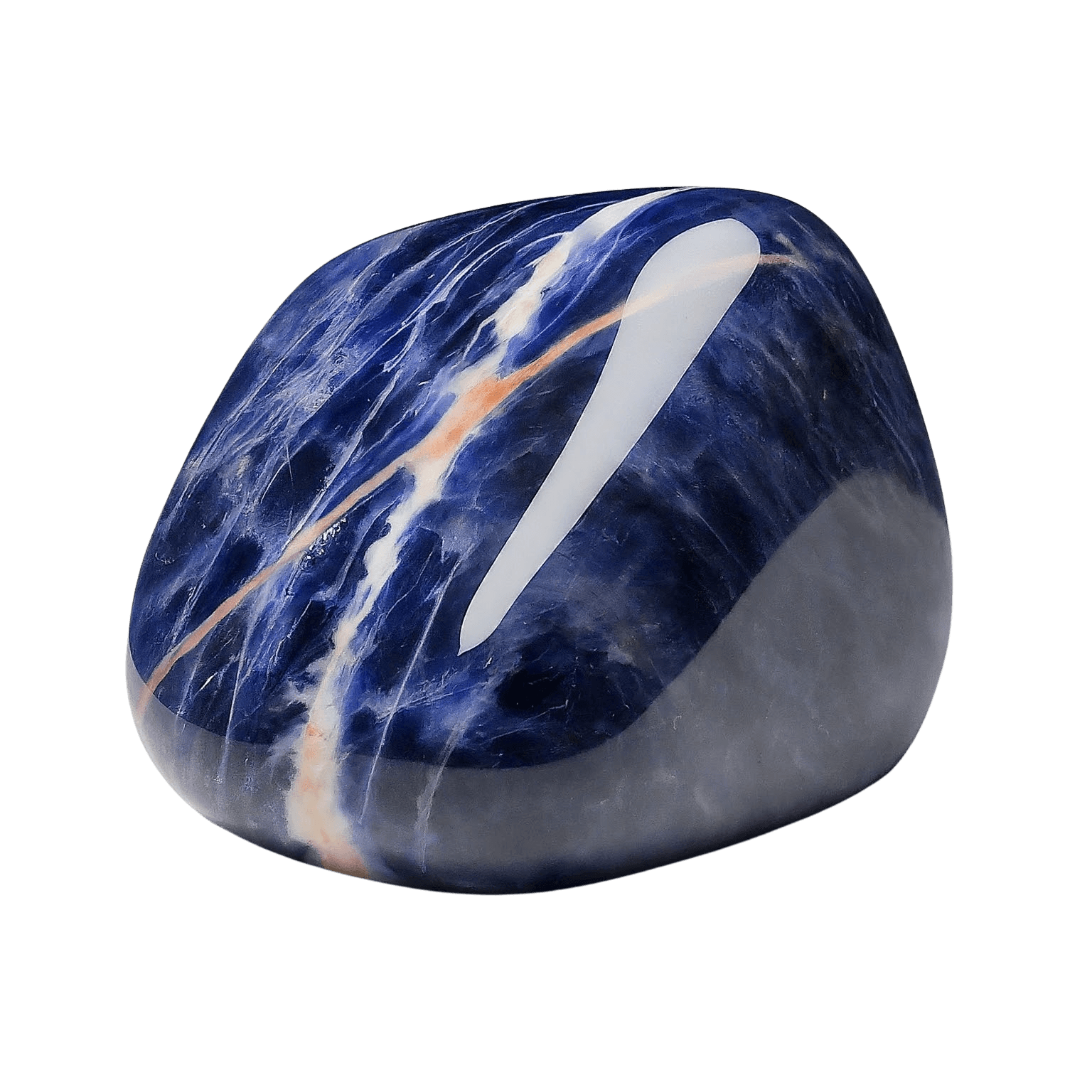
Sodalite
A deep blue stone of mental clarity, logic, and authentic communication.
Still not sure which is right for you? Try the free Crystal Quiz for a personalized recommendation, or explore the crystal healing guide for foundational practice.
Frequently Asked Questions
Which is better for studying, Blue Apatite or Sodalite?
Sodalite is the better everyday study stone, traditionally used for logical order, calm focus, and structured revision. Blue Apatite earns its desk time when the work needs fresh ideas rather than discipline.
Are Blue Apatite and Sodalite the same mineral?
No, Blue Apatite and Sodalite are unrelated: Apatite is a calcium phosphate, the same chemical family as teeth and bone, while Sodalite is a sodium aluminum silicate feldspathoid. They share only the color.
Is Blue Apatite fragile?
Blue Apatite is moderately fragile: it defines hardness 5 on the Mohs scale and is brittle besides, so it chips against keys and coins. Carry it in a pouch and keep any rinse brief.
Why is Sodalite so cheap?
Sodalite is inexpensive because large carvable deposits in Canada, Brazil, and Namibia keep supply generous; quality tumbled stones generally run under $10. The low price reflects abundance, not low regard in the tradition.
Can Blue Apatite or Sodalite replace Lapis Lazuli?
Sodalite is the classic budget stand-in for Lapis Lazuli, sharing the deep blue and the throat-and-mind associations, though it lacks the pyrite glitter. Blue Apatite is no substitute; its teal energy and uses are its own.
More Crystal Comparisons
Share Your Result
Vertical 9:16 format, perfect for Instagram Stories or TikTok. Opens in a new tab; long-press or right-click to save.
The Crystal Starter Library, free
Crystal Cassandra on choosing your first stones, keeping them safe, and building a practice around one intention rather than a shelf of good intentions.
We respect your inbox. Unsubscribe anytime.
Explore More Tools
Crystal Quiz
Find the perfect crystal for your current needs and intentions.
Open →Crystal Encyclopedia
Browse our complete library of 50+ healing crystals.
Open →Chakra Test
Discover which of your chakras are open, balanced, or blocked.
Open →Crystals by Intention
Find crystals matched to specific intentions and goals.
Open →Crystal Cleansing Guide
Learn how to cleanse and recharge your healing crystals.
Open →