Quick Answer
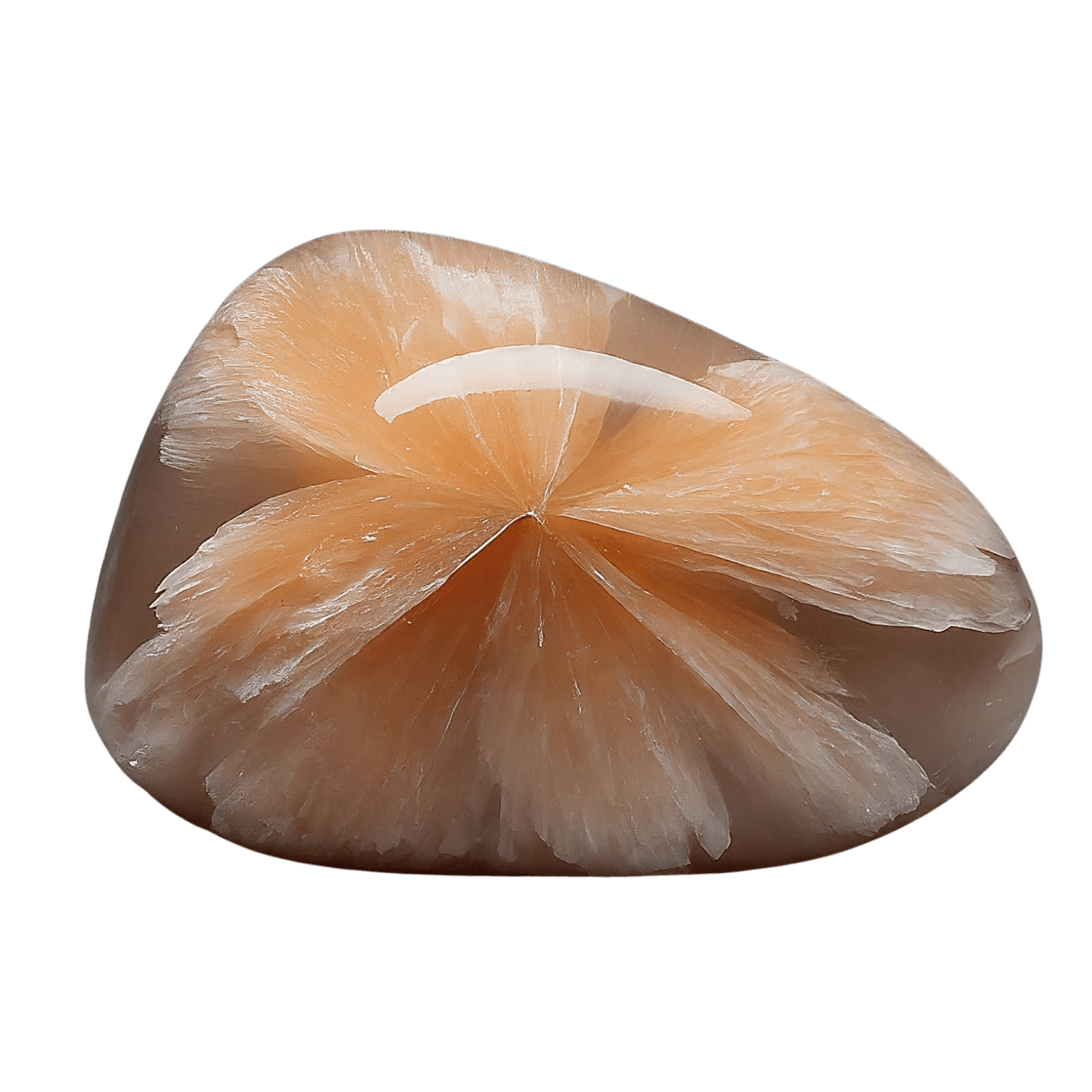
Stilbite is a peach crystal used in modern crystal healing for self-love, calm, and intuition. It measures 4 on the Mohs hardness scale and typically costs $18 to $40 for a tumbled stone. In the chakra tradition, Stilbite is associated with the Heart and Crown chakras.
Worth knowing: The world's stilbite standard-bearers are salmon-pink crystals from quarries in India's Deccan Traps, flood basalts erupted about 66 million years ago, at the same geological moment the dinosaurs disappeared.
“A peach-pink zeolite of gentle heart opening, dreamwork, and emotional softening.”
- Chakra
- Heart (Anahata), Crown (Sahasrara)
- Zodiac
- Aries ♈
- Element
- Water 💧, Air 💨
- Planet
- Venus ♀
- Hardness
- 4 / 10 (Mohs)
- Colors
- Peach, Pink, Cream, Pearly white
- Origin
- India, Iceland
- Price Range
- 18 to 40
Care + Safety
Stilbite at a glance
- Water: avoid, may damage or leach
- Sun: tolerates sunlight charging
- Mohs hardness: 4 (display + meditation only)
What is Stilbite?
Stilbite is a hydrated calcium sodium aluminosilicate of the zeolite family, soft at Mohs 3.5 to 4, its crystals stacked by twinning into gently curved aggregates. The name comes from the Greek stilbein, to gleam, a nod by French crystallographer Rene Just Hauy to the mineral's pearly luster.
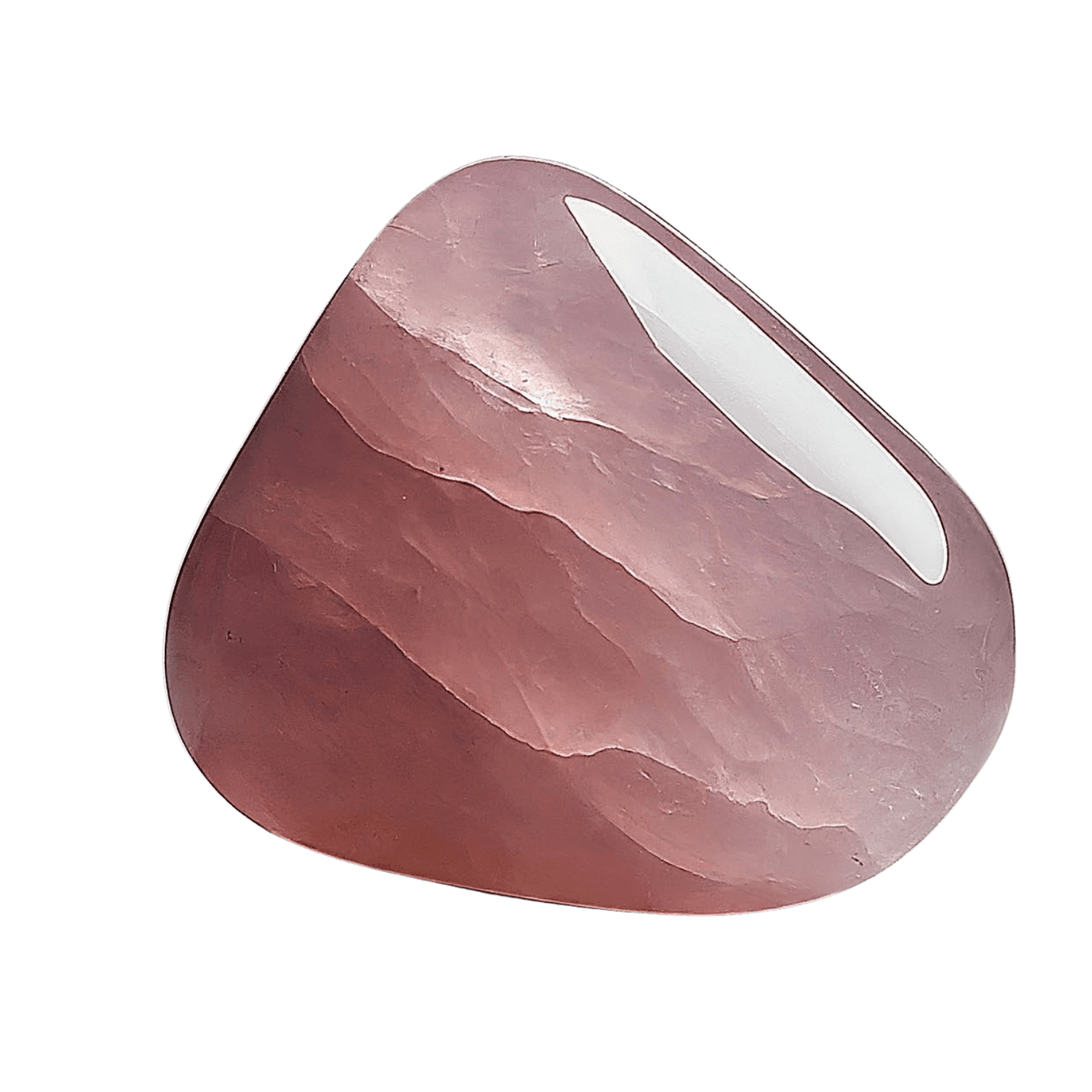
Stilbite measures 4 on the Mohs scale and shows peach, pink, or cream coloring. Catalogs place it among the heart stones, where the assignments are relational ones, self-love, calm, and intuition chief among them.
The stone connects primarily to the Heart (Anahata) and Crown (Sahasrara) chakras, carrying Water and Air energy. Sources include India and Iceland; deposit matters more than beginners expect, and collectors learn to recognize where a piece of Stilbite was mined by its color depth and pattern.
Stilbite often forms in pearly bow-tie or sheaf-like clusters of peach, pink, or cream. Run your finger along its layered surface and notice the silky texture. This stone has the gentlest entry of any heart-opener, it's the crystal I suggest for people who find rose quartz too sweet. It softens without saccharine.
Also catalogued as Bow-tie Zeolite and Stone of Soft Love, whether it is your first stone or your fiftieth, Stilbite tends to find its role quickly, and self-love is the natural place to begin.
History and Mythology
Stilbite entered the record through mineralogy rather than mythology: the species was identified and named in the modern era, and its healing use begins with the 20th and 21st century crystal literature rather than any ancient source. That recency is worth stating plainly, because honest provenance is rarer than it should be in this field. The material itself is sourced today from India and Iceland.
Astrologically minded practitioners file Stilbite under Aries and give Venus ♀ the rulership. The pairing is a 20th century convention rather than an ancient decree, and it is read as favoring self-love work.
However young or old the human story, the stone outruns it: Stilbite formed over deep time, and the Mohs 4 piece on your shelf is the newest chapter of a very old book.
Stilbite Meaning and Metaphysical Properties
What the Hand Learns First
Pick up Stilbite and warmth is the first report: at Mohs 4 it is a mid-soft mineral that takes body heat within a minute, and its peach surface polishes to a satin sheen rather than a hard glitter. As you hold it, track the chest rather than the head; the heart stones are traditionally listened for there, whatever does or does not arrive.
Primary Properties
Every entry on the Stilbite property sheet points toward connection: self-love, calm, intuition, and heart healing. The heart stones specialize in easing rather than driving, and many people find the first shift shows up in their own self-talk. Hold the list loosely; it is a place to start, not a guarantee.
How Crystal Energy Works
At the center of the chakra map sits the Heart, and that crossroads is where tradition places Stilbite for its self-love work. Practice here follows the breath rather than the clock: the stone at the chest, attention settling on self-love, calm, and intuition, force left at the door. In Judy Hall's The Crystal Bible the heart family is treated as relationship territory, with the recurring note that compassion turned inward comes before compassion shared.
Amplification Through Intention
The Water designation on Stilbite is permission to go slowly; this element does its self-love work through feeling rather than effort. Hold the stone when emotions need room, not fixing.
Healing Benefits
Emotional Support
Stilbite does its emotional work at the tender layer, self-love, calm, and intuition, where connection lives. Keep it in hand for the conversations that invite armor, and let the stone stand for the choice to stay open instead. These are traditional self-love associations rather than medical claims; for anything heavy or persistent, a qualified professional belongs in the picture alongside any stone.
Spiritual Connection
Stilbite serves the devotional side of connection: tradition brings it into loving-kindness style meditation to keep the Heart center engaged while the practice moves person by person. The heart family treats love as something practiced, not awarded.
Physical Presence
Tradition pairs Water stones like Stilbite with the body's tides: rest, hydration, the wind-down hour that makes room for self-love. Let it sit on the night table as a cue for the evening glass of water and the earlier lights-out; gentle cues, never medicine.
Chakra Connection
Stilbite resonates most strongly with the Heart (Anahata), the energy center traditionally drawn in green / pink and the traditional seat of this stone's self-love work. When this center runs clear, the classical markers are love, compassion, and emotional openness; self-love, calm, and intuition are what Stilbite is most often asked to bring to it.
Worn over the heart on a longer chain, or held flat to the chest before hard conversations, Stilbite keeps the heart center company through the day's self-love work.
Because Stilbite is also associated with the Crown (Sahasrara), it moves well in multi-stone layouts: one stone, two stations, worked on different days.
Zodiac and Astrological Connection
In the modern correspondence tables Stilbite is assigned to Aries ♈ (Mar 21 to Apr 19); a Sun, Moon, or rising placement there is read as a head start with this stone, nothing more.
The gate, though, stands open: you do not need a Aries Sun to work with Stilbite, and a genuine pull toward the stone outweighs its paper assignments.
Venus ♀ rules Stilbite in this tradition, so practitioners time their longer sessions to that planet's active periods, especially for self-love.
How to Use Stilbite
Here are five ways I recommend working with Stilbite. Start with whichever feels most natural, there's no wrong entry point.
- 1
Meditation Hold
Hold Stilbite for the length of your sit and notice the moment it stops feeling like an object and starts feeling like part of the hand; for a Mohs 4 stone, that shift comes early.
- 2
Body Placement
Set Stilbite down within reach during a lying-down session and hand the pacing over to the breath. The slow lift and settle is the whole technique; there is nothing to add to it and nothing to measure. Traditional practice offers the position toward self-love and makes no claim about what follows.
- 3
Sleep Companion
Stilbite can still earn the nightstand even though its brief is self-love rather than rest: setting the stone down as you set the day down marks the switch from doing to sleeping.
- 4
Carry With You
Pocket Stilbite for the days that involve other people's hearts: the visit, the apology, the date. One touch before you speak and one after turns the stone into a quiet self-love checkpoint.
- 5
Crystal Grid Anchor
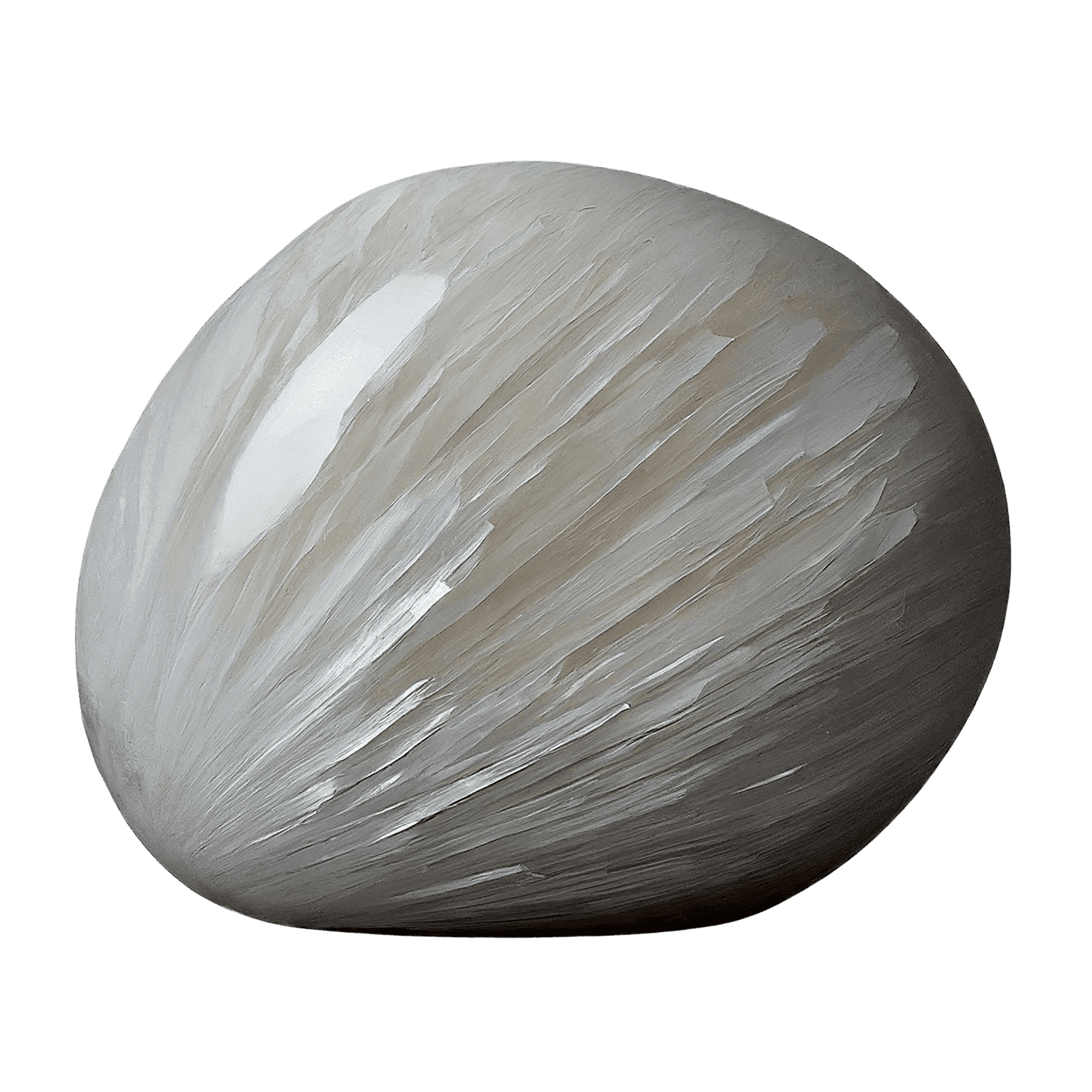
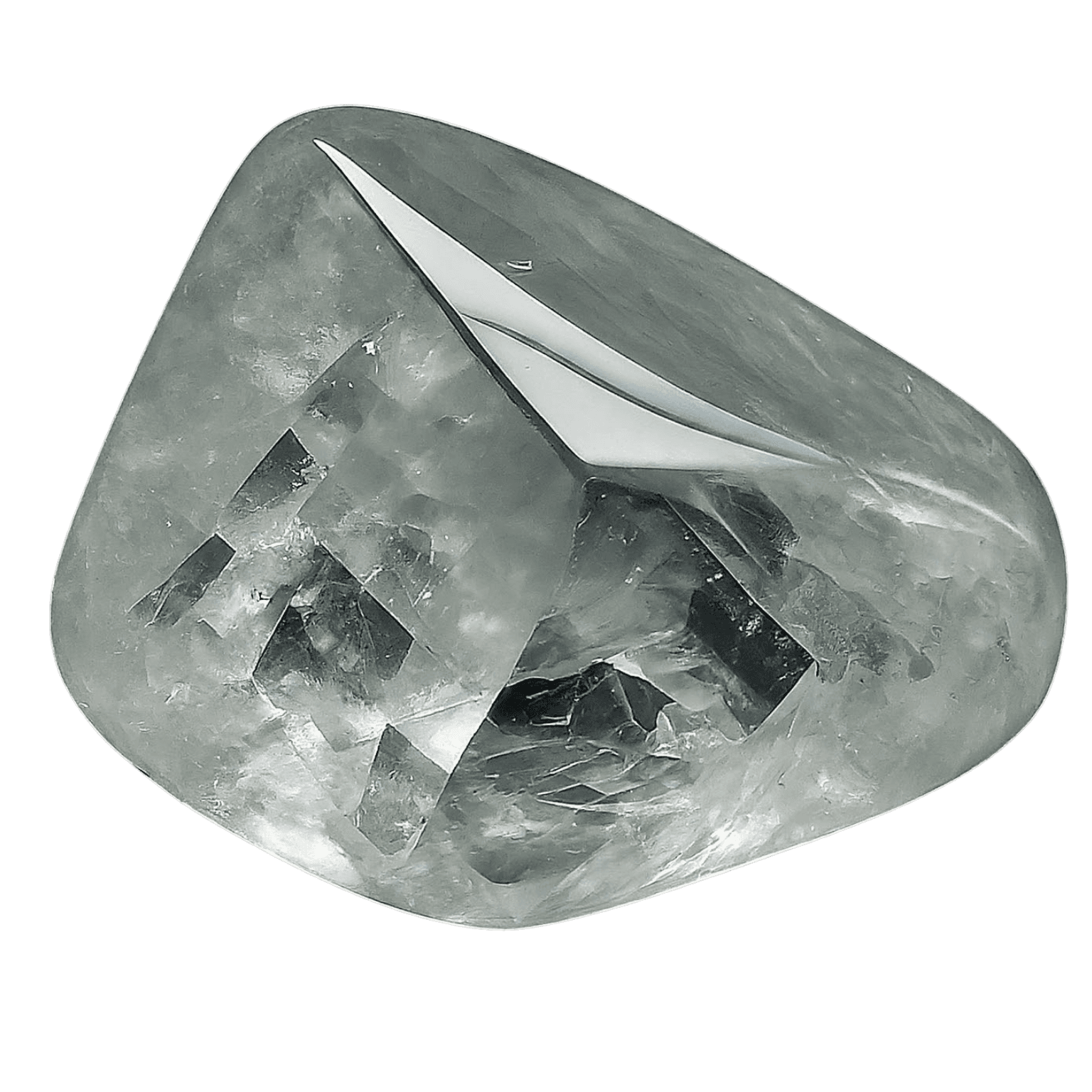
For grid work, give Stilbite the anchor position and run Scolecite and Apophyllite on the outer points, all matched to a single self-love intention. Rebuild it when it goes stale; a self-love grid you have stopped seeing has stopped working.
How to Cleanse and Charge
Stilbite works best when it is cleansed on a rhythm; tradition pictures a stone absorbing what it meets, and a saturated stone has nothing left to give. The complete water, sun, and salt safety profile, plus the storage instructions I give my clients, lives in the dedicated Stilbite care guide.
- 1
Moonlight
Once a month, let Stilbite sit overnight in moonlight, on the full moon if you can manage it. Nothing in the cabinet is harmed by this method, which is why it anchors most cleansing routines.
- 2
Selenite
Keep a selenite dish where you empty your pockets and drop Stilbite there at day's end; the resting place does the cleansing while you sleep.
- 3
Sage
Smoke-cleanse Stilbite: light the sage, let it settle to a smolder, and move the stone through the rising smoke until your sense of it lightens, usually under a minute.
- 4
Sound
A minute inside strong, sustained tone, bowl, chime, even a steady hum, resets Stilbite without physical risk, which makes sound the safest deep cleanse for fragile stones.
How often to cleanse
I recommend cleansing Stilbite at least once a month, more frequently if you're using it daily or during emotionally intense periods. You'll also learn to feel when a stone needs cleansing; it may feel heavier, duller, or simply “off.”
Charging after cleansing
Once it is cleansed, recharge Stilbite by placing it in morning sunlight for 30 minutes; cleansing empties the stone, charging refills it.
Crystal Pairings
Stilbite pairs by temperament: heart stones want company that softens rather than sharpens. Each traditional partner adds what the stone lacks alone, ground under the tenderness or light over it. Test a pair by holding both a while; the pair you keep reaching back for is the one.
How to Spot Real vs Fake Stilbite
The market in Stilbite has grown faster than its honesty, and peach pieces are easy to imitate on a screen. Here is how to check one before you pay for it:
Temperature: at Mohs 4, genuine Stilbite warms in the hand noticeably faster than glass; an imitation in glass stays cold and slick well past the first minute.
Weight and density: resin fakes run light for their size, while genuine Stilbite at Mohs 4 carries honest mineral density; weigh it in the palm against any real tumbled stone you own.
Color and pattern: natural Stilbite runs peach, pink, or cream, with variation from piece to piece; perfectly uniform color across a whole tray is the classic mark of dye or synthetics.
Price: expect $18 to $40 for a decent tumbled or palm piece of Stilbite; dramatic discounts mean dye, resin, or mislabeling more often than they mean luck.
Trust your source: buy Stilbite from sellers who can name the mine or region behind their peach stock and disclose treatments without being chased. At CrystalStones.com every piece is ethically sourced with full provenance.
Frequently Asked Questions
What is Stilbite good for?
Stilbite is traditionally associated with self-love, calm, intuition, and heart healing. Many people find it supportive for self-love and for working with the Heart and Crown chakras.
Can Stilbite go in water?
No. Stilbite should stay dry; cleanse it with Moonlight, Selenite, and Sage instead, and keep every wet method off the table.
Can Stilbite be in the sun?
Sun is fine for Stilbite. A half hour of direct morning light both cleanses and charges it, and the peach tones are stable enough to take it.
What chakra is Stilbite?
Stilbite is primarily associated with the Heart (Anahata) and Crown (Sahasrara) chakras. In placement practice it belongs over the heart center, rocked gently by the breath while you lie still, the station tradition reserves for self-love.
What zodiac sign is Stilbite for?
Stilbite is traditionally connected to Aries. Astrological correspondence is one tradition among several, and nothing about your chart disqualifies you; people without a Aries placement work with Stilbite all the time.
How do I cleanse Stilbite?
Stick to Moonlight, Selenite, and Sage for Stilbite; those are the methods its care profile recommends. Notice that the whole list runs dry; for this stone's chemistry, that is a feature rather than a limitation.
Is Stilbite real or fake, how can I tell?
Genuine Stilbite warms quickly in the hand at Mohs 4, while glass imitations stay cold longer and feel slick rather than satiny. Expect natural variation in its peach coloring and a price near $18 to $40 for tumbled pieces; uniform color at a bargain price is the classic warning sign.
What’s Next?
A few thoughtful next steps if Stilbite is calling to you.
The Crystal Starter Library
A free guide from Crystal Cassandra: the twelve stones that cover almost everything, a one page care matrix for water, sun and salt, and how to build a first intention practice.
We respect your inbox. Unsubscribe anytime.
Explore More Tools
Crystal Quiz
Discover which crystal matches your energy right now.
Open →Chakra Test
Find which chakras need attention and the crystals to balance them.
Open →Crystal Cleansing Guide
Learn how to safely cleanse and charge your crystals.
Open →Crystals by Intention
Find the perfect crystal for what you need right now.
Open →