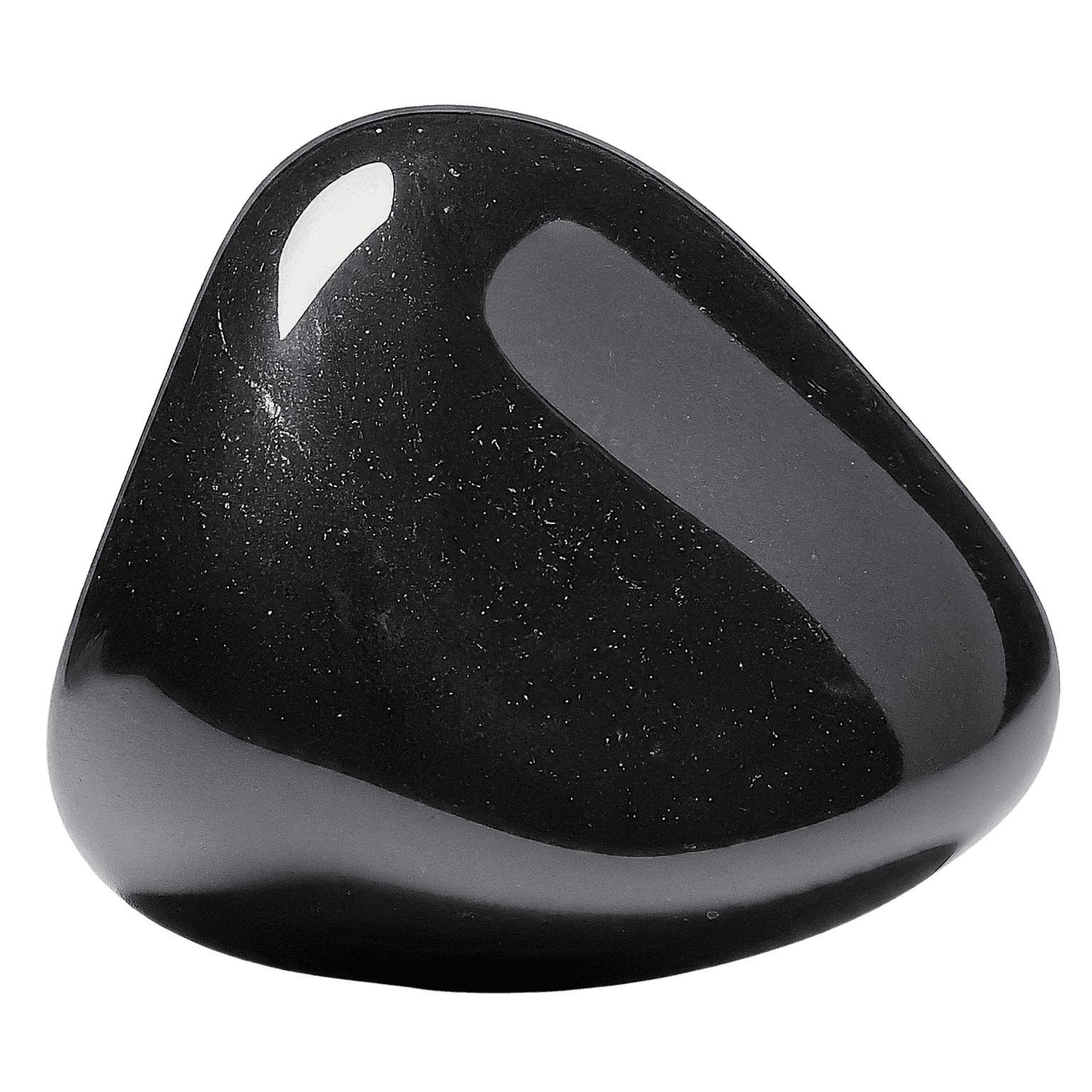

Quick Answer
Psilomelane is a black crystal used in modern crystal healing for shadow work, transformation, and grounding. It measures 5.5 on the Mohs hardness scale and typically costs $14 to $45 for a tumbled stone. In the chakra tradition, Psilomelane is associated with the Root and Third Eye chakras.
Worth knowing: Polished Mexican psilomelane marketed as Crown of Silver alternates jet-black bands with metallic silver-gray layers of pyrolusite, a natural pinstripe that needs no treatment to shine.
“A botryoidal black manganese oxide, of journeying within and grounded shadow integration.”
- Chakra
- Root (Muladhara), Third Eye (Ajna)
- Zodiac
- Scorpio ♏, Capricorn ♑
- Element
- Earth 🌍
- Planet
- Pluto ♇
- Hardness
- 5.5 / 10 (Mohs)
- Colors
- Black, Metallic-grey, Botryoidal
- Origin
- USA, Mexico, Germany
- Price Range
- 14 to 45
Care + Safety
Psilomelane at a glance
- Water: avoid, may damage or leach
- Sun: tolerates sunlight charging
- Mohs hardness: 5.5 (occasional wear only)
What is Psilomelane?
Psilomelane is no longer an approved species name but a field term for hard, botryoidal manganese oxides, most of which prove on analysis to be romanechite, a hydrated barium manganese oxide. The name, Greek for smooth and black, suits the lustrous rounded crusts it forms in weathered manganese deposits.
Psilomelane measures 5.5 on the Mohs scale and shows black, metallic-grey, or botryoidal coloring. It walks with the threshold stones, the companions for shadow work, transformation, and grounding and the seasons that change us.
The stone connects primarily to the Root (Muladhara) and Third Eye (Ajna) chakras, carrying Earth energy. Sources include USA, Mexico, and Germany; deposit matters more than beginners expect, and collectors learn to recognize where a piece of Psilomelane was mined by its color depth and pattern.
Psilomelane is a botryoidal (grape-cluster) black manganese oxide, often the host of Merlinite dendrites. Hold this stone and notice a deep, almost cave-quiet inwardness. The classical sources describe Psilomelane as a stone of grounded shadow integration and inner journey work.
Also catalogued as Black Manganese Oxide and Romanechite Group, Psilomelane earns its place in a working collection by being usable: start with shadow work, the job it is best known for, and let the stone widen its own brief from there.
History and Mythology
Psilomelane entered the record through mineralogy rather than mythology: the species was identified and named in the modern era, and its healing use begins with the 20th and 21st century crystal literature rather than any ancient source. That recency is worth stating plainly, because honest provenance is rarer than it should be in this field. The material itself is sourced today from USA, Mexico, and Germany.
Astrologically minded practitioners file Psilomelane under Scorpio and Capricorn and give Pluto ♇ the rulership. The pairing is a 20th century convention rather than an ancient decree, and it is read as favoring shadow work work.
Whatever the age of the name, the geology is patient: every piece of Psilomelane took shape over geological timescales, arriving at its Mohs 5.5 hardness through slow heat, pressure, and chemistry long before any hand reached for it.
Psilomelane Meaning and Metaphysical Properties
What the Hand Learns First
In the hand Psilomelane reads as gentle before you know anything else about it. Mohs 5.5 hardness means it gives up its coolness quickly, and the black polish carries a waxy, candle-like glow. It is also conspicuously heavy for its size, the honest density of a metal-rich mineral. Mind what surfaces unbidden in the first quiet minute; threshold stones have a way of bringing up exactly what is half-finished, and the visit means something.
Primary Properties
Threshold work is the heading over the Psilomelane property list: shadow work, transformation, grounding, and meditation. Stones of this family sit with what ends and what begins, the habit released, the new season entered. Let the stone witness the process and keep the crossing for yourself.
How Crystal Energy Works
Psilomelane belongs to the Root center in the traditional reading, the body's anchor point, where shadow work is the standing request. Sessions at this center stay low and slow-paced, seated comfortably, and shadow work, transformation, and grounding name the long assignment. Release is the verb Melody keeps returning to in her entries for the transformation family, the carrying out of what is finished so that something new has room to arrive.
Amplification Through Intention
The Earth designation means Psilomelane favors repetition: daily handling, a fixed home on the shelf, the shadow work intention restated in plain words. That steadiness is the whole method.
Healing Benefits
Emotional Support
Emotionally, Psilomelane walks the harder passages: shadow work, transformation, and grounding. Its traditional role is witness rather than fixer, a presence for grief, for endings, for the clear-eyed accounting, the kind of company that does not leave early. Tradition, not treatment: shadow work work with a stone sits beside professional support, never in place of it.
Spiritual Connection
Spiritually, Psilomelane attends the rites of ending well, the released page, the closing inventory, the farewell made deliberately. What the stone marks is the difference between finishing something with attention and simply walking away from it.
Physical Presence
Physically, Psilomelane belongs to the slow systems: steady meals, regular sleep, the unglamorous maintenance that shadow work actually rests on. Keep it where the routines happen as a quiet vote for keeping them; anything clinical belongs with clinicians.
Chakra Connection
Psilomelane resonates most strongly with the Root (Muladhara), the energy center traditionally drawn in red and the traditional seat of this stone's shadow work work. When this center runs clear, the classical markers are rootedness, calm in the body, and trust in your own footing; shadow work, transformation, and grounding are what Psilomelane is most often asked to bring to it.
For placement, go low: lie down with Psilomelane resting at the hip points, or sit on the floor and set it between your feet. Attention on weight and ground, for as long as that stays comfortable, is the classic root session the tradition records for shadow work.
Psilomelane also keeps a working line to the Third Eye (Ajna), which widens its range in layouts; let the primary placement lead, and add the second position once the first feels familiar.
Zodiac and Astrological Connection
In the modern correspondence tables Psilomelane is assigned to Scorpio ♏ (Oct 23 to Nov 21) and Capricorn ♑ (Dec 22 to Jan 19); a Sun, Moon, or rising placement there is read as a head start with this stone, nothing more.
None of this is exclusionary. If Psilomelane keeps catching your eye, that interest counts for more than whether Scorpio appears anywhere in your chart.
In the planetary layer of the system, Pluto ♇ holds the rulership, and that planet's prominent transits are the traditional windows for deeper shadow work work with Psilomelane.
How to Use Psilomelane
Five practices suit Psilomelane especially well. Pick the one that fits the day you are actually having rather than the routine you think you should have.
- 1
Meditation Hold
Take up Psilomelane as you settle in; at Mohs 5.5 it takes on your warmth within a minute or two, and that slow merge is a useful anchor whenever the mind wanders.
- 2
Body Placement
Floor and hip are the two Root stations in the old placement charts, and Psilomelane takes either one: by the feet during seated work, at the hips when lying back. In my practice the interesting part is never the position itself but what you catch yourself noticing once you stop expecting anything from it, which is how the tradition's shadow work work was meant to be entered.
- 3
Sleep Companion
At night, park Psilomelane on the nightstand rather than working it; its job is the day's shadow work, and ending the day cleanly is how tomorrow's session starts well.
- 4
Carry With You
Carry Psilomelane through the seasons that are ending; touch it when the old habit calls, and let the stone mark each small refusal as part of the larger shadow work.
- 5
Crystal Grid Anchor
For grid work, give Psilomelane the anchor position and run Merlinite and Nuummite on the outer points, all matched to a single shadow work intention. Rebuild it when it goes stale; a shadow work grid you have stopped seeing has stopped working.
How to Cleanse and Charge
Keeping Psilomelane energetically clear is essential, a crystal that's holding too much absorbed energy becomes less effective, like a sponge that's full. For the full water-safe / sun-safe / salt-safe profile, the recommended cleansing cadence, and the hands-on storage instructions I give my clients, see the dedicated Psilomelane care guide.
- 1
Sage
Pass Psilomelane through the smoke of white sage or rosemary for about thirty seconds, turning it so the smoke wraps every face, while you hold a clear intention of release.
- 2
Sound
Sound-cleanse Psilomelane by striking a bowl or bell, letting each tone fade completely before the next; the vibration does the clearing, and no contact is needed.
- 3
Moonlight
Give Psilomelane a night outdoors or at the glass under a bright moon; the tradition holds moonlight to be the universal reset, slow, cool, and risk-free.
- 4
Earth
Give Psilomelane twenty-four hours in the ground, with the spot marked so you can find it again; earth burial is the slow, thorough cleanse for stones that feel truly saturated.
How often to cleanse
Give Psilomelane a clearing at least every month, and sooner after hard weeks or heavy daily use. The stone will teach you its own signal in time; most people describe it as dullness, weight, or a sense the stone has gone quiet.
Charging after cleansing
Follow every cleansing with a charge: for Psilomelane that means placing it in morning sunlight for 30 minutes. A cleared stone is neutral, a charged one is ready.
Crystal Pairings
Anchor stones make the best company for Psilomelane; something has to hold still while the moving happens. Tradition supplies partners that bring ground, heart, or light to shadow work, and it expects the lineup to change as the season does. Updating the pair is not a failure of loyalty; it is the practice working.
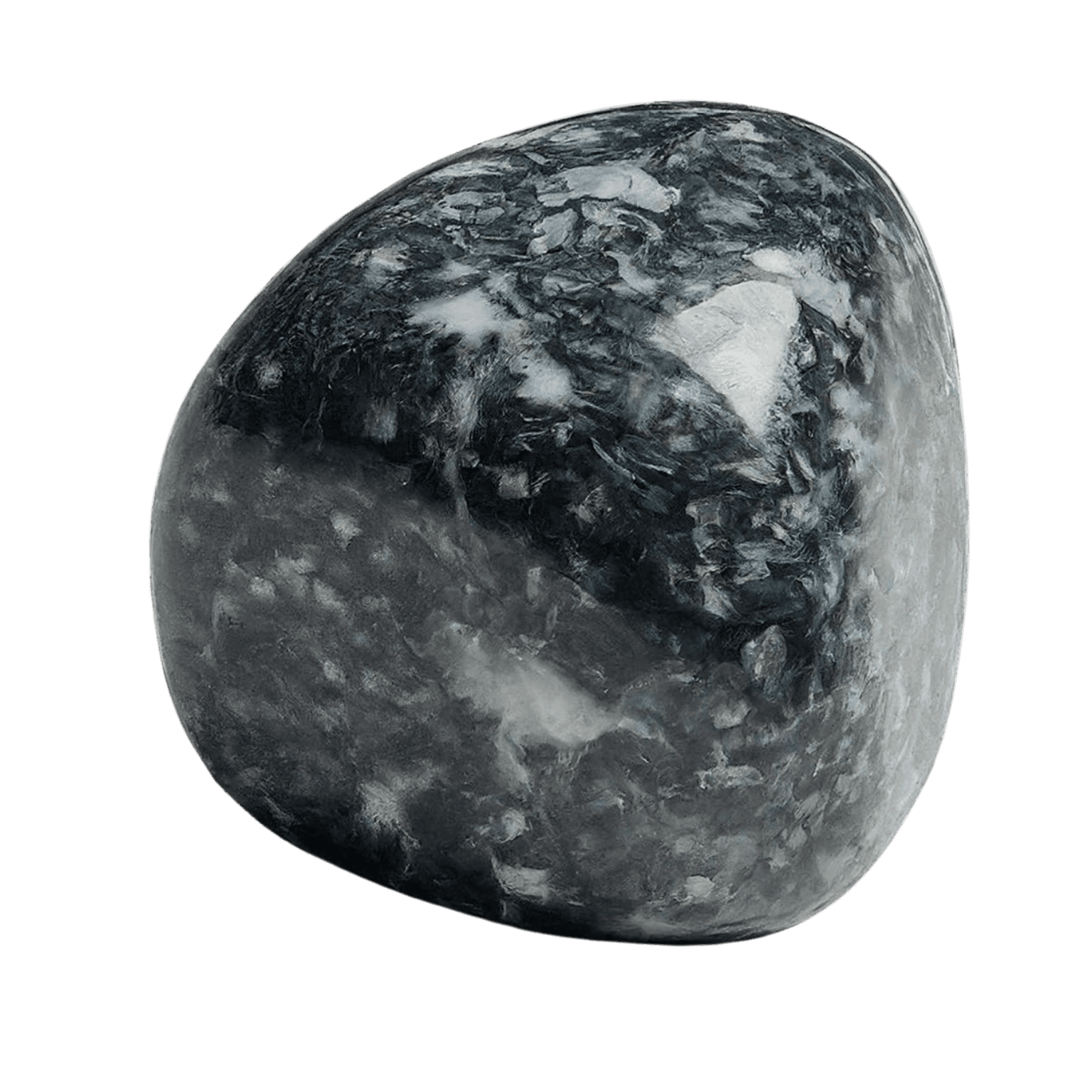
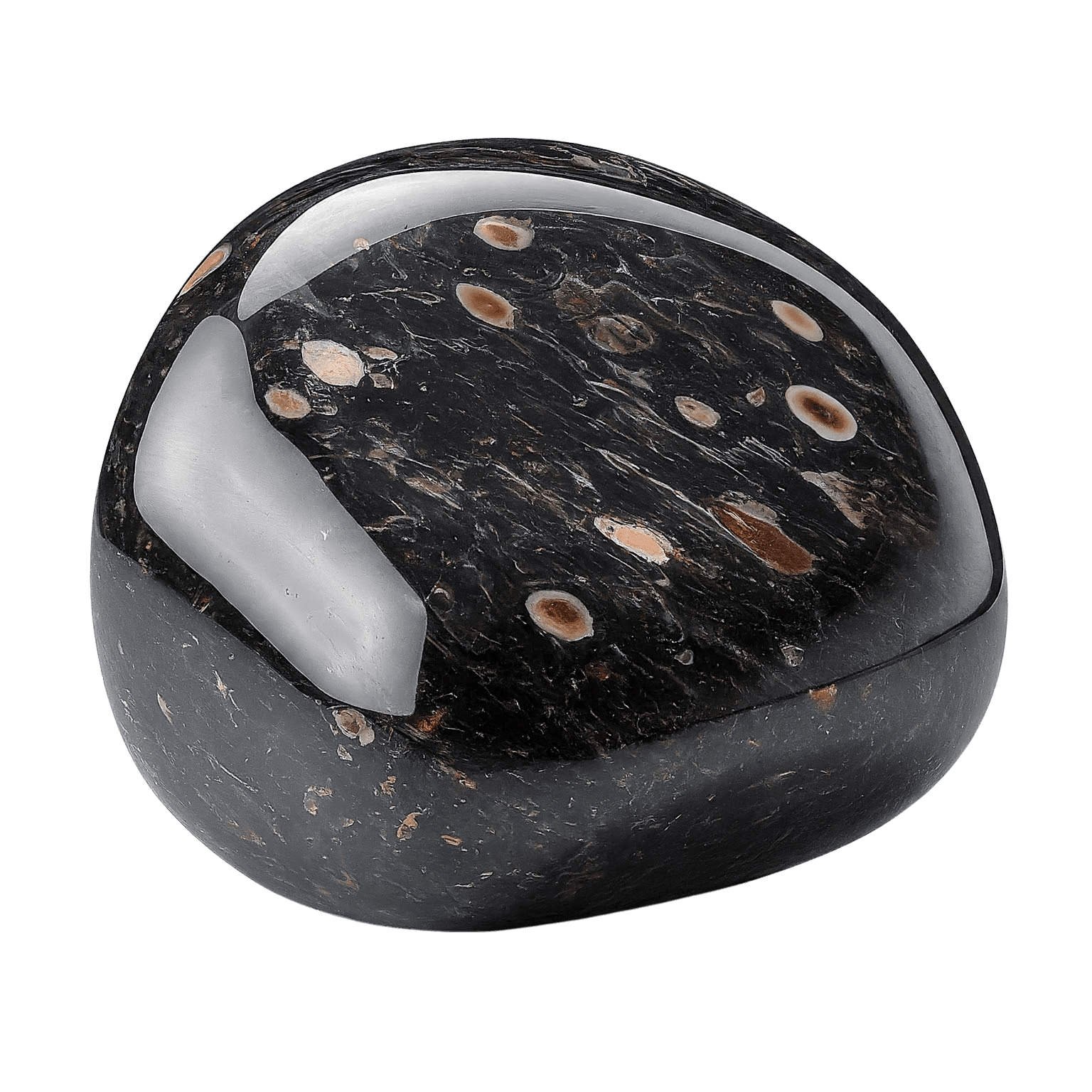
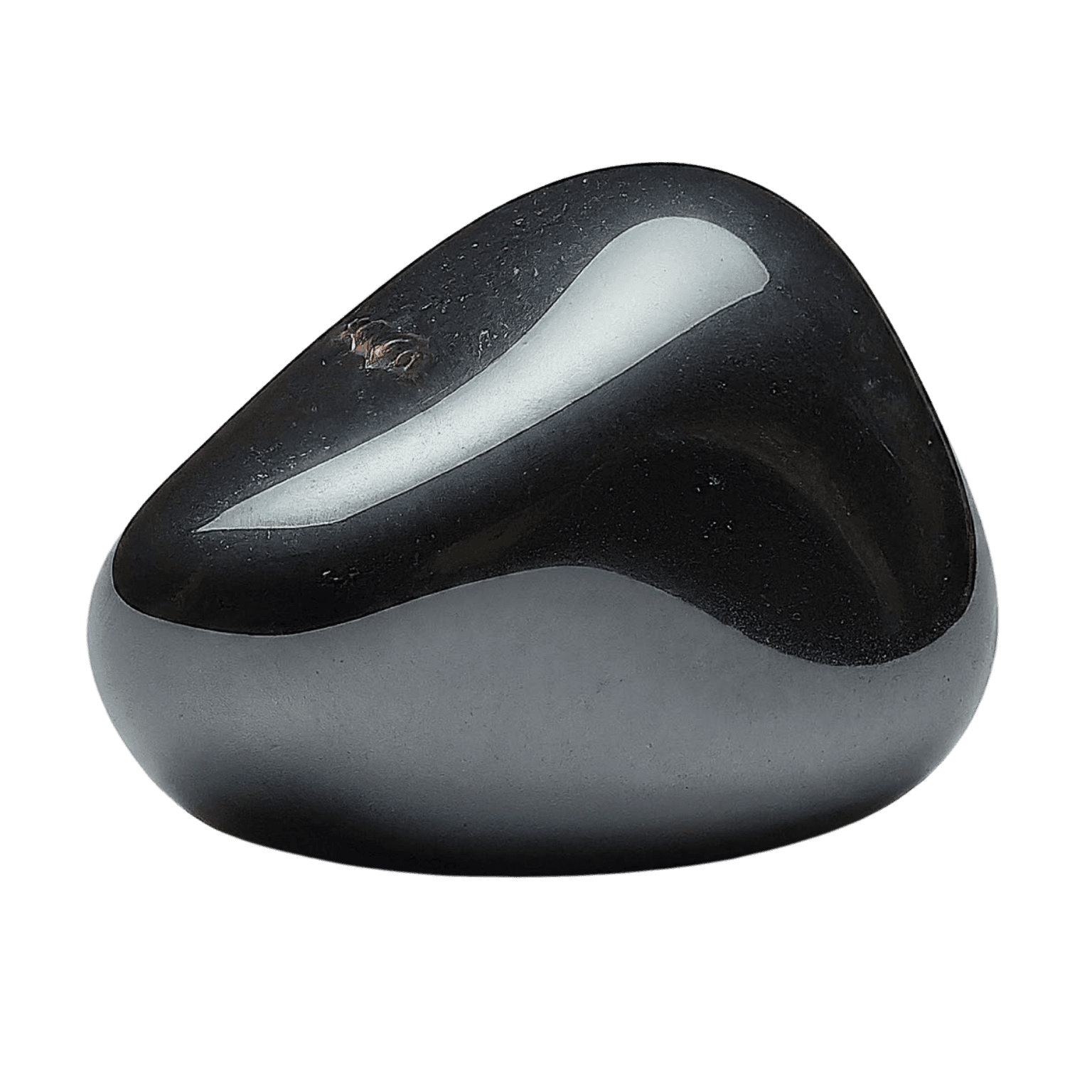
How to Spot Real vs Fake Psilomelane
The market in Psilomelane has grown faster than its honesty, and black pieces are easy to imitate on a screen. Here is how to check one before you pay for it:
Temperature: at Mohs 5.5, genuine Psilomelane warms in the hand noticeably faster than glass; an imitation in glass stays cold and slick well past the first minute.
Weight: heft is non-negotiable with Psilomelane; the real stone carries metal-rich density, and imitations almost always run light.
Color and pattern: natural Psilomelane runs black, metallic-grey, or botryoidal, with variation from piece to piece; perfectly uniform color across a whole tray is the classic mark of dye or synthetics.
Price reality: the fair range for Psilomelane sits near $14 to $45 at palm size; below that, assume treatment or imitation until the seller proves otherwise.
Trust your source: buy Psilomelane from sellers who can name the mine or region behind their black stock and disclose treatments without being chased. At CrystalStones.com every piece is ethically sourced with full provenance.
Bring it home
Shop Psilomelane
Ethically sourced, hand-selected Psilomelane starting from $14.
Shop PsilomelaneFrequently Asked Questions
What is Psilomelane good for?
Psilomelane is traditionally associated with shadow work, transformation, grounding, and meditation. Many people find it supportive for shadow work and for working with the Root and Third Eye chakras.
Can Psilomelane go in water?
No, water and Psilomelane do not mix; moisture can compromise the surface or the structure itself. Manganese oxide. Wash hands after handling raw specimens. Avoid water and salt.
Can Psilomelane be in the sun?
Yes, Psilomelane can sit in sunlight safely; its black coloring holds up, and thirty minutes of morning sun is the traditional charge.
What chakra is Psilomelane?
Psilomelane is primarily associated with the Root (Muladhara) and Third Eye (Ajna) chakras. Work it low, at the hips or on the floor between the feet while seated, which is the traditional station for shadow work.
What zodiac sign is Psilomelane for?
Psilomelane is traditionally connected to Scorpio and Capricorn. If your signs differ, work with Psilomelane anyway; resonance in the hand outranks resonance on paper in every practical tradition.
How do I cleanse Psilomelane?
The best methods for Psilomelane are Sage, Sound, and Moonlight. Manganese oxide. Wash hands after handling raw specimens. Avoid water and salt.
Is Psilomelane real or fake, how can I tell?
Genuine Psilomelane warms quickly in the hand at Mohs 5.5, while glass imitations stay cold longer and feel slick rather than satiny. Expect natural variation in its black coloring and a price near $14 to $45 for tumbled pieces; uniform color at a bargain price is the classic warning sign.
What’s Next?
A few thoughtful next steps if Psilomelane is calling to you.
The Crystal Starter Library
A free guide from Crystal Cassandra: the twelve stones that cover almost everything, a one page care matrix for water, sun and salt, and how to build a first intention practice.
We respect your inbox. Unsubscribe anytime.
Explore More Tools
Crystal Quiz
Discover which crystal matches your energy right now.
Open →Chakra Test
Find which chakras need attention and the crystals to balance them.
Open →Crystal Cleansing Guide
Learn how to safely cleanse and charge your crystals.
Open →Crystals by Intention
Find the perfect crystal for what you need right now.
Open →