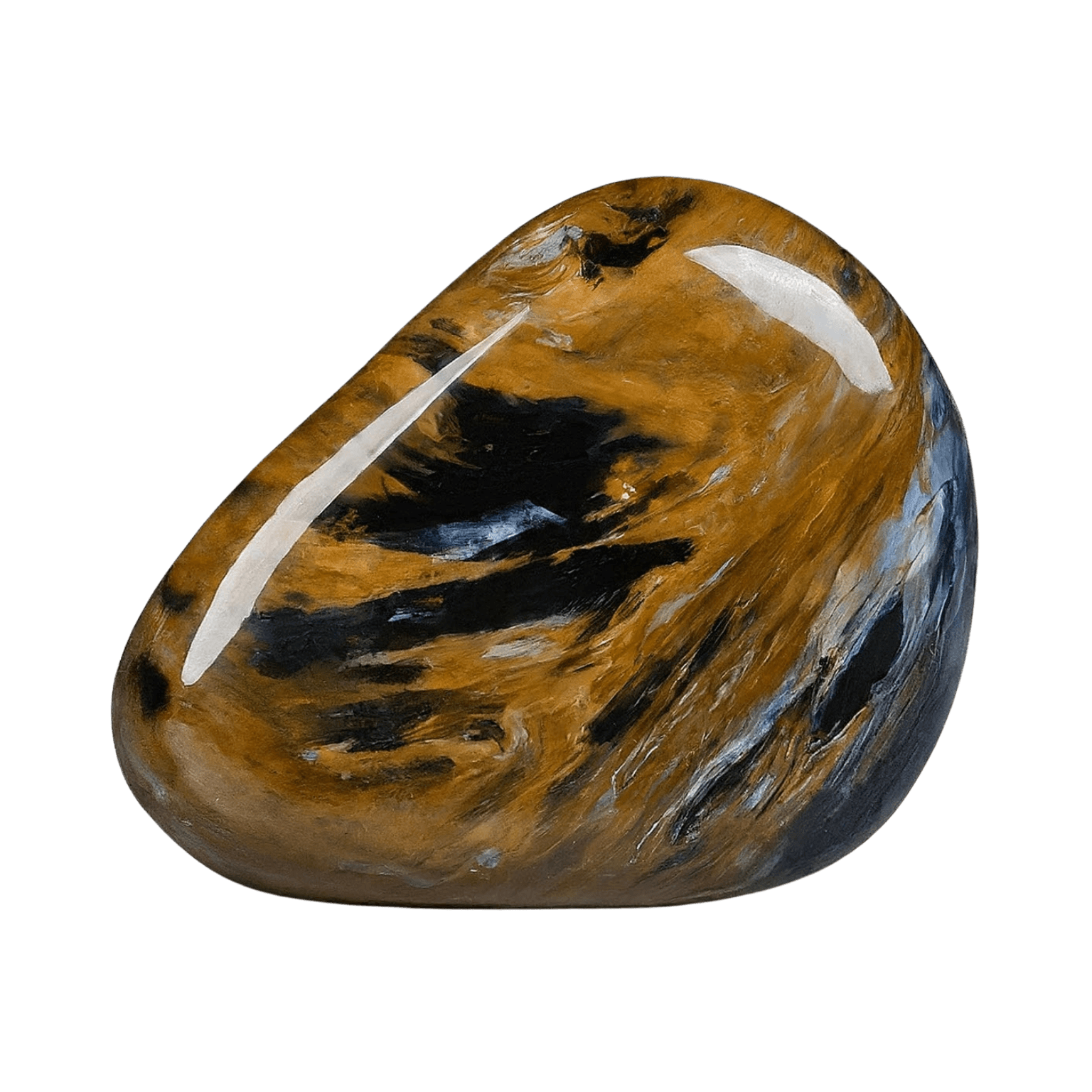

Quick Answer
Pietersite is a blue crystal used in modern crystal healing for transformation, intuition, and courage. It measures 7 on the Mohs hardness scale and typically costs $18 to $65 for a tumbled stone. In the chakra tradition, Pietersite is associated with the Third Eye and Solar Plexus chakras.
Worth knowing: Pietersite was discovered in 1962 by gem dealer Sid Pieters while prospecting farmland in Namibia; he named it for his family, and the find was formally published in 1964.
“A swirling blue-gold storm-stone of breakthrough insight and sudden transformation.”
- Chakra
- Third Eye (Ajna), Solar Plexus (Manipura)
- Zodiac
- Leo ♌, Scorpio ♏
- Element
- Fire 🔥, Air 💨
- Planet
- Uranus ♅
- Hardness
- 7 / 10 (Mohs)
- Colors
- Blue, Gold, Brown, Swirled
- Origin
- Namibia, China
- Price Range
- 18 to 65
Care + Safety
Pietersite at a glance
- Water: avoid, may damage or leach
- Sun: tolerates sunlight charging
- Mohs hardness: 7 (durable for daily-wear jewelry)
What is Pietersite?
Pietersite is a breccia: tiger's eye and hawk's eye that were shattered in the earth, the fragments later cemented by silica into solid stone. Because each chip kept its own fiber orientation, the chatoyant flash rolls in many directions at once instead of lying in tiger's eye's neat parallel bands.
Pietersite measures 7 on the Mohs scale and shows blue, gold, or brown coloring. Keepers count it among the threshold stones, the ones that accompany transformation, intuition, and courage through the seasons that remake a life.
The stone connects primarily to the Third Eye (Ajna) and Solar Plexus (Manipura) chakras, carrying Fire and Air energy. Commercial material comes from Namibia and China, and provenance shows: pieces from different deposits vary in saturation, veining, and clarity, which is why no two specimens of Pietersite read quite alike.
Pietersite is a brecciated blue-and-gold tigers-eye-like stone, with swirling chatoyance suggesting a stormy sky. Hold this stone and notice an unusual quickening of insight. The classical sources describe Pietersite as the Tempest Stone, a catalyst of breakthrough and sudden transformation; use thoughtfully because the energy is brisk.
Also catalogued as Tempest Stone and Eagle's Eye, Pietersite earns its place in a working collection by being usable: start with transformation, the job it is best known for, and let the stone widen its own brief from there.
History and Mythology
There is no credible ancient chapter to tell about Pietersite. The species was described by modern science, and its associations with transformation were assigned by contemporary practitioners reading its color, structure, and feel. What the stone lacks in legend it makes up in geology, which asks for no embellishment; deposits worked today lie in Namibia and China.
Astrologically minded practitioners file Pietersite under Leo and Scorpio and give Uranus ♅ the rulership. The pairing is a 20th century convention rather than an ancient decree, and it is read as favoring transformation work.
Hold the two timescales side by side, centuries of human use at most against epochs of formation behind every Mohs 7 specimen of Pietersite; the deep time is the one part no marketing can inflate.
Pietersite Meaning and Metaphysical Properties
First Touch
Pietersite meets the hand cool and composed: at Mohs 7 it takes a glass-bright polish, and that first chill lingers a while before your warmth wins. Notice which memory arrives first while you hold it; the threshold stones tend to surface whatever is mid-release, and that arrival is information.
Primary Properties
Threshold work is the heading over the Pietersite property list: transformation, intuition, courage, and release. Stones of this family sit with what ends and what begins, the habit released, the new season entered. Let the stone witness the process and keep the crossing for yourself.
How Crystal Energy Works
Tradition assigns Pietersite to the Third Eye, the brow's quiet observatory, with transformation as the standing request. Keep brow sessions short and soft-focus, letting transformation, intuition, and courage surface rather than be summoned. In Melody's catalog the transformation stones share a single center of gravity, release, the old carried out of the system to make space for what comes next.
Amplification Through Intention
Fire-element stones like Pietersite are read as accelerants for an intention such as transformation. The tradition says to give them one clear assignment and to revisit it often rather than setting and forgetting.
Healing Benefits
Emotional Support
Emotionally, Pietersite walks the harder passages: transformation, intuition, and courage. Its traditional role is witness rather than fixer, a presence for grief, for endings, for the clear-eyed accounting, the kind of company that does not leave early. As with all crystal healing, transformation support from a stone is reflective practice rather than medicine; significant emotional concerns deserve qualified human help.
Spiritual Connection
Threshold rituals are where Pietersite earns its spiritual keep: the page written and burned, the inventory taken at season's end, the goodbye said on purpose. Its presence marks a completion handled with care instead of left to trail off.
Physical Presence
On the physical level, tradition reads Fire stones like Pietersite through warmth and appetite: morning energy, circulation of effort, the body's readiness to move toward transformation. Carry it on active days and let it cue the stretch, the walk, the standing up from the desk; the awareness is the genuine benefit, and it is never a substitute for medical care.
Chakra Connection
Pietersite resonates most strongly with the Third Eye (Ajna), the energy center traditionally drawn in indigo and the traditional seat of this stone's transformation work. When this center runs clear, the classical markers are clear seeing, steady intuition, and imagery that arrives unforced; transformation, intuition, and courage are what Pietersite is most often asked to bring to it.
Keep sessions with Pietersite brief and unforced: stone at the brow, eyes closed, attention loose. The third eye responds to invitation rather than pressure, and that is the posture transformation asks for too.
Because Pietersite is also associated with the Solar Plexus (Manipura), it moves well in multi-stone layouts: one stone, two stations, worked on different days.
Zodiac and Astrological Connection
Astrological tradition links Pietersite with Leo ♌ (Jul 23 to Aug 22) and Scorpio ♏ (Oct 23 to Nov 21), and practitioners often suggest the stone meets Leo placements with the least friction.
Correspondence is a suggestion, not a bouncer; plenty of devoted Pietersite keepers have no Leo in their chart at all, and being drawn to the stone is the credential that matters.
The assigned ruler is Uranus ♅; in practice that means Pietersite comes out when that planet is prominent in the sky or in your chart, and transformation is the work it is handed.
How to Use Pietersite
Five practices suit Pietersite especially well. Pick the one that fits the day you are actually having rather than the routine you think you should have.
- 1
Meditation Hold
Begin the sit with Pietersite against the skin and use its coolness as the focus; at Mohs 7 it holds that freshness for a while before giving in to body heat.
- 2
Body Placement
Rest Pietersite at the brow point while lying back, eyes closed, gaze soft, and finish the sit before it turns into concentration. Short is the standing convention here. Practitioners point third-eye work of this kind toward transformation.
- 3
Sleep Companion
Pietersite can still earn the nightstand even though its brief is transformation rather than rest: setting the stone down as you set the day down marks the switch from doing to sleeping.
- 4
Carry With You
Through a season that is closing, Pietersite makes a good pocket companion: each time the old pattern knocks and you touch the stone instead, another small entry gets added to the transformation ledger.
- 5
Crystal Grid Anchor
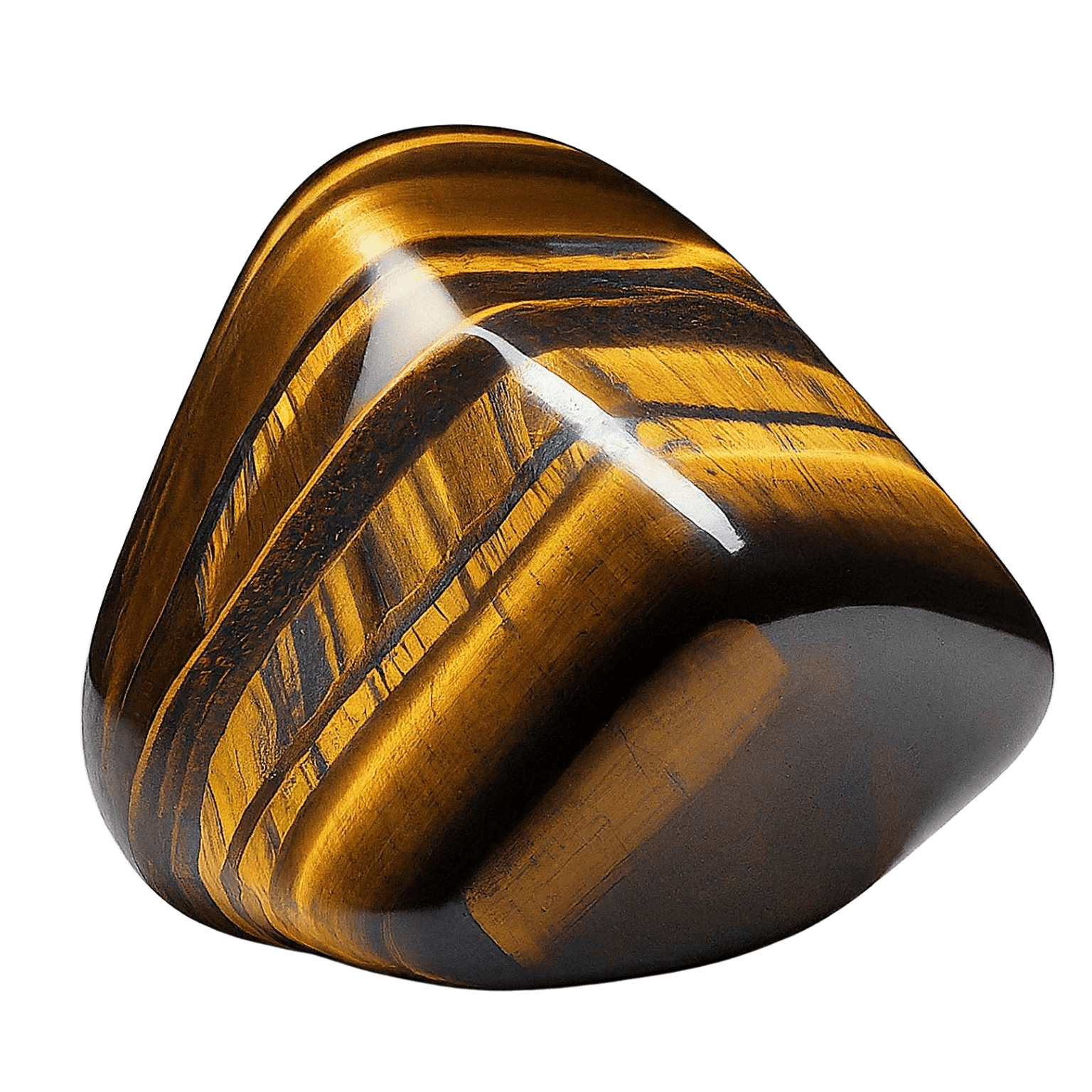
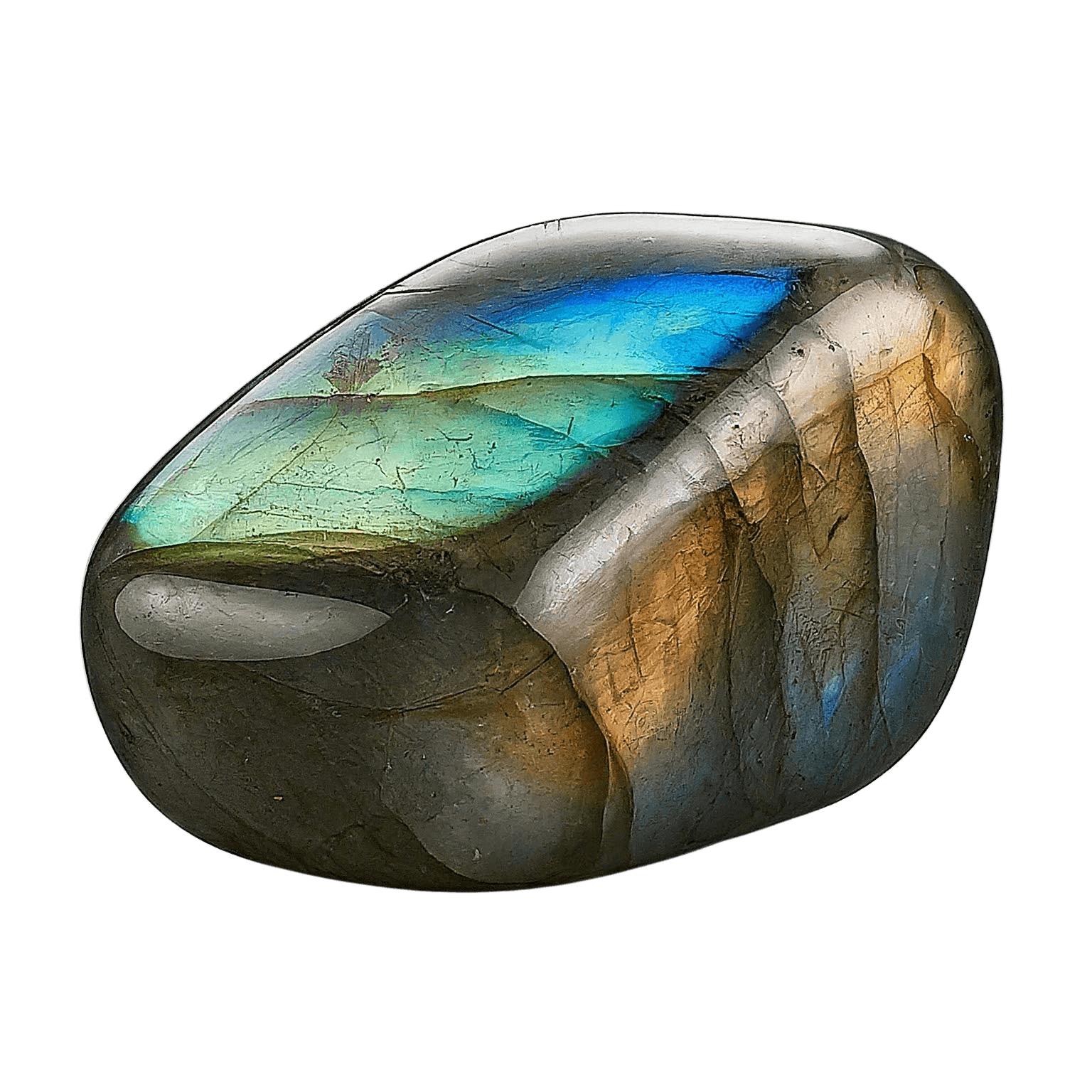
Set Pietersite at the center of a grid built for transformation and ring it with Tigers Eye and Labradorite at the points. Speak the intention once as you place each stone; a grid is a sentence written in minerals, and saying the transformation aloud is the punctuation.
How to Cleanse and Charge
Keeping Pietersite energetically clear is essential, a crystal that's holding too much absorbed energy becomes less effective, like a sponge that's full. For the full water-safe / sun-safe / salt-safe profile, the recommended cleansing cadence, and the hands-on storage instructions I give my clients, see the dedicated Pietersite care guide.
- 1
Sage
For a deeper reset, hold Pietersite in sage smoke and name out loud what the stone has been carrying; the naming is half the cleanse.
- 2
Sound
Hold Pietersite near a singing bowl, bell, or tuning fork and let a full minute of tone wash over it; sound reaches stones that water, salt, and sun cannot safely touch.
- 3
Moonlight
Set Pietersite on a windowsill or ledge under the full moon and collect it in the morning. Moonlight is the gentlest cleanse in the tradition, safe for every stone in the collection and impossible to overdo.
- 4
Selenite
Overnight on selenite is the lowest-maintenance cleanse Pietersite can get: set it down at bedtime, pick it up cleared in the morning.
How often to cleanse
Monthly is the floor for Pietersite; step the cadence up whenever the stone is in daily rotation or the season is emotionally loud. With practice you will feel the tell yourself, a worked stone reads heavier and flatter in the palm.
Charging after cleansing
After cleansing, charge Pietersite by placing it in morning sunlight for 30 minutes. This restores its energetic vitality.
Crystal Pairings
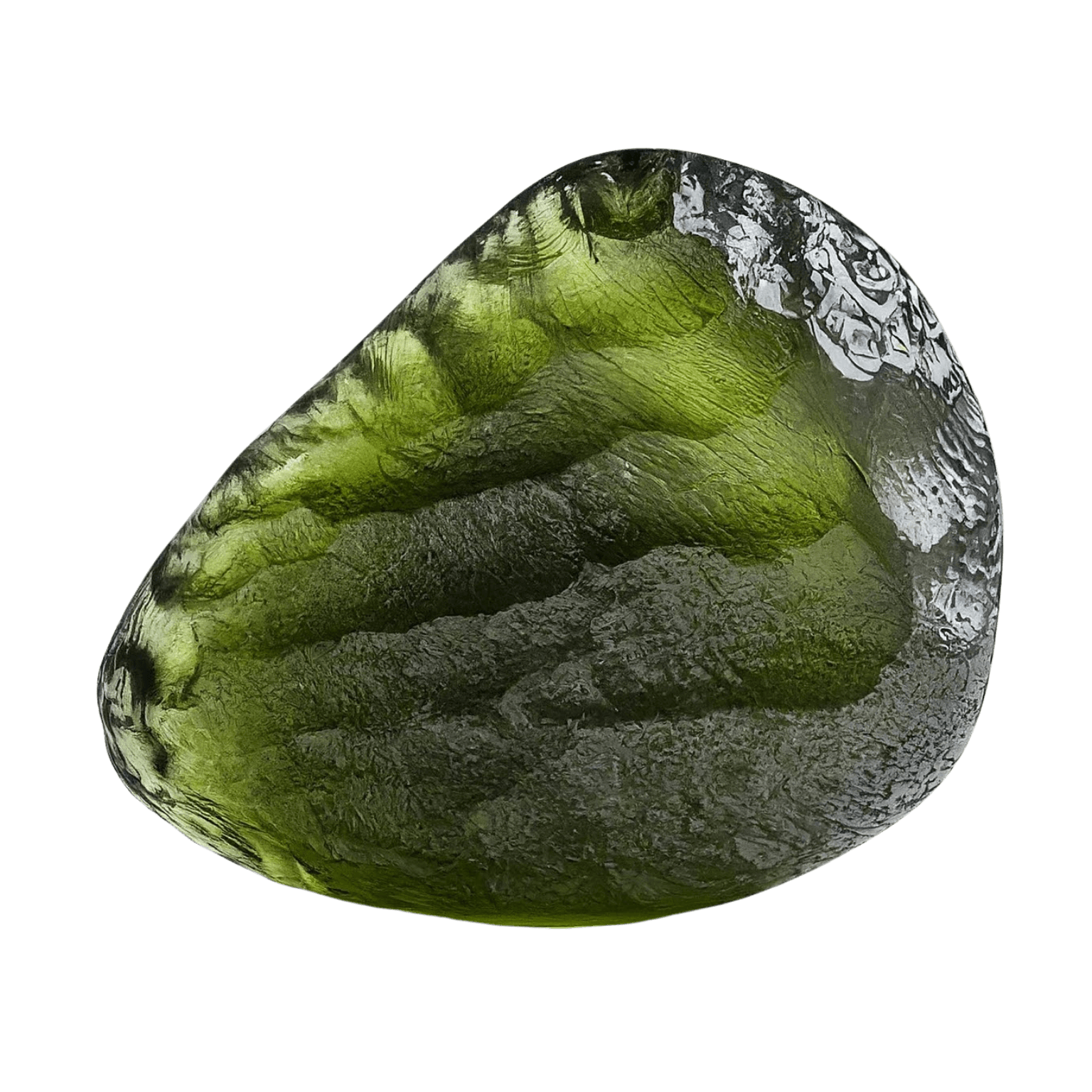
Anchor stones make the best company for Pietersite; something has to hold still while the moving happens. Tradition supplies partners that bring ground, heart, or light to transformation, and it expects the lineup to change as the season does. Updating the pair is not a failure of loyalty; it is the practice working.
How to Spot Real vs Fake Pietersite
Imitations of Pietersite exist because demand does. A few hands-on checks separate genuine blue material from glass, resin, and dye:
Temperature: genuine Pietersite feels distinctly cool at first touch and gives that coolness up slowly; resin copies feel warm almost immediately, which is the quickest tell there is.
Weight and density: resin fakes run light for their size, while genuine Pietersite at Mohs 7 carries honest mineral density; weigh it in the palm against any real tumbled stone you own.
Color: expect blue, gold, or brown with honest variation, banding, zoning, the odd inclusion; a batch where every stone matches exactly came out of a factory, not the ground.
Price: expect $18 to $65 for a decent tumbled or palm piece of Pietersite; dramatic discounts mean dye, resin, or mislabeling more often than they mean luck.
Trust your source: buy Pietersite from sellers who can name the mine or region behind their blue stock and disclose treatments without being chased. At CrystalStones.com every piece is ethically sourced with full provenance.
Bring it home
Shop Pietersite
Ethically sourced, hand-selected Pietersite starting from $18.
Shop PietersiteFrequently Asked Questions
What is Pietersite good for?
Pietersite is traditionally associated with transformation, intuition, courage, and release. Many people find it supportive for transformation and for working with the Third Eye and Solar Plexus chakras.
Can Pietersite go in water?
Avoid it. Water can damage Pietersite, so stay with the dry methods its care profile lists, Sage, Sound, and Moonlight, which cover everything this stone needs. Contains crocidolite-type fibers in its original chatoyant matrix. Polished tumbled forms are silicified and considered safe; raw specimens should be handled minimally and never ground.
Can Pietersite be in the sun?
Yes. Pietersite is one of the sun-tolerant stones, so use morning light freely to charge the blue material; just bring it in rather than leaving it out for whole days at a time.
What chakra is Pietersite?
Pietersite is primarily associated with the Third Eye (Ajna) and Solar Plexus (Manipura) chakras. Brief brow placements are the convention: soft focus at the third eye while lying back, kept short by habit rather than by clock, which is the traditional handling of transformation.
What zodiac sign is Pietersite for?
Pietersite is traditionally connected to Leo and Scorpio. Astrological correspondence is one tradition among several, and nothing about your chart disqualifies you; people without a Leo placement work with Pietersite all the time.
How do I cleanse Pietersite?
Stick to Sage, Sound, and Moonlight for Pietersite; those are the methods its care profile recommends. Every method on that list is dry by design, which suits this stone's chemistry exactly.
Is Pietersite real or fake, how can I tell?
Genuine Pietersite feels cool at first touch and warms slowly; at Mohs 7 it also resists the pocket scratches that mark softer fakes. Natural blue material varies piece to piece and runs about $18 to $65 tumbled, so perfectly matched stones at a suspicious discount deserve a second look.
What’s Next?
A few thoughtful next steps if Pietersite is calling to you.
The Crystal Starter Library
A free guide from Crystal Cassandra: the twelve stones that cover almost everything, a one page care matrix for water, sun and salt, and how to build a first intention practice.
We respect your inbox. Unsubscribe anytime.
Explore More Tools
Crystal Quiz
Discover which crystal matches your energy right now.
Open →Chakra Test
Find which chakras need attention and the crystals to balance them.
Open →Crystal Cleansing Guide
Learn how to safely cleanse and charge your crystals.
Open →Crystals by Intention
Find the perfect crystal for what you need right now.
Open →