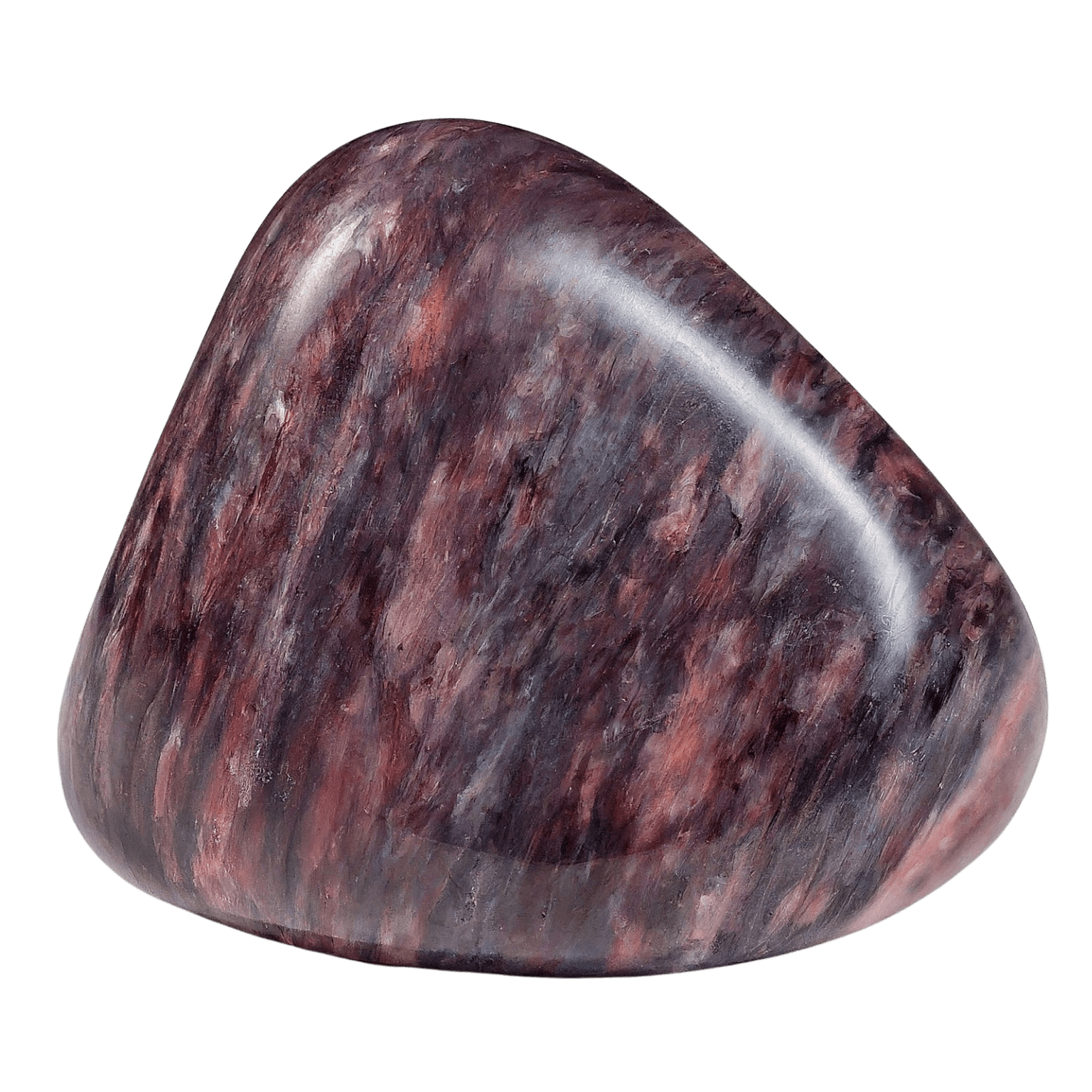

Quick Answer
Piemontite is a red crystal used in modern crystal healing for vitality, creativity, and courage. It measures 6.5 on the Mohs hardness scale and typically costs $14 to $45 for a tumbled stone. In the chakra tradition, Piemontite is associated with the Root and Sacral chakras.
Worth knowing: Piemontite shows some of the most dramatic pleochroism in mineralogy: rotate a thin fragment in polarized light and its color flips from golden yellow through amethyst violet to deep crimson.
“A red-purple manganese epidote of vital creative drive and grounded passion.”
- Chakra
- Root (Muladhara), Sacral (Svadhisthana)
- Zodiac
- Aries ♈, Scorpio ♏
- Element
- Fire 🔥, Earth 🌍
- Planet
- Mars ♂
- Hardness
- 6.5 / 10 (Mohs)
- Colors
- Red, Red-purple, Violet
- Origin
- Italy, USA, Sweden
- Price Range
- 14 to 45
Care + Safety
Piemontite at a glance
- Water: brief rinse safe
- Sun: tolerates sunlight charging
- Mohs hardness: 6.5 (occasional wear only)
What is Piemontite?
Piemontite is the manganese-rich member of the epidote group, a sorosilicate in which trivalent manganese paints the crystals cherry red to violet black. Its type locality is the Praborna manganese mine above Saint-Marcel in Italy's Aosta Valley, a deposit worked long before the mineral was formally characterized in the nineteenth century.
Piemontite measures 6.5 on the Mohs scale and shows red, red-purple, or violet coloring. It sits with the activating stones, the ones brought out for vitality, creativity, and courage when a threshold needs crossing.
The stone connects primarily to the Root (Muladhara) and Sacral (Svadhisthana) chakras, carrying Fire and Earth energy. Today the material is drawn from Italy, USA, and Sweden. Hold pieces from two different sources side by side and the differences in the red material, tone, translucency, pattern, become obvious fast.
Piemontite is the manganese-rich red-violet variety of epidote, named for the Piedmont region of Italy. Hold this stone and notice a steady, almost garnet-warm vital drive. The classical sources describe Piemontite as a stone of vital creative drive and grounded passion.
Also catalogued as Manganese Epidote, this is a stone that rewards regular handling more than display. Give Piemontite a week of vitality duty in the pocket before deciding what it is for.
History and Mythology
Piemontite entered the record through mineralogy rather than mythology: the species was identified and named in the modern era, and its healing use begins with the 20th and 21st century crystal literature rather than any ancient source. That recency is worth stating plainly, because honest provenance is rarer than it should be in this field. The material itself is sourced today from Italy, USA, and Sweden.
In modern astrological correspondence Piemontite is linked with Aries and Scorpio, with Mars ♂ named as its planetary ruler. Practitioners who keep these tables often work the stone hardest during those sun-sign seasons, especially for vitality.
Hold the two timescales side by side, centuries of human use at most against epochs of formation behind every Mohs 6.5 specimen of Piemontite; the deep time is the one part no marketing can inflate.
Piemontite Meaning and Metaphysical Properties
First Touch
The first touch of Piemontite is cooler than you expect, and the red polish is slick as bottle glass. Mohs 6.5 stones hold their temperature, and that slow warming is part of their character. Check in with your spine after a minute of holding. What you find is yours to read; this family is simply worked from that end of the body rather than from the heart.
Primary Properties
Momentum is the family business, and the Piemontite property list reads accordingly: vitality, creativity, courage, and grounding. Tradition says to take the stone in hand just before the moments that ask for your full voltage, the audition, the opening day, the empty page. None of it is a guarantee; all of it is a prompt.
How Crystal Energy Works
Ground is the keyword the tradition gives Piemontite: a Root-center stone, asked above all for vitality. Work it the Root way, seated, slow, soles flat against the floor, holding vitality, creativity, and courage as the quiet agenda. Both of the modern handbooks, Hall's and Melody's, station the activating stones at the lower three centers and describe them in the language of will and creative fire, never luck.
Amplification Through Intention
Elementally this is Fire. Set Piemontite where the work actually happens and let it mark the start of each session aimed at vitality; momentum, in this element, is the method.
Healing Benefits
Emotional Support
Piemontite meets emotion at the confidence layer: vitality, creativity, and courage. It is traditionally handled before the moments that ask you to take up space, and the small ritual of pocketing it steadies more than you might expect. Tradition, not treatment: vitality work with a stone sits beside professional support, never in place of it.
Spiritual Connection
Piemontite attends the spiritual act of beginning. The traditional use is simple, take the stone in hand and say the intention out loud, letting that small rite turn a wish into a promise, and repeat it at the starts, new work, new chapters, new moons.
Physical Presence
On the physical level, tradition reads Fire stones like Piemontite through warmth and appetite: morning energy, circulation of effort, the body's readiness to move toward vitality. Carry it on active days and let it cue the stretch, the walk, the standing up from the desk; the awareness is the genuine benefit, and it is never a substitute for medical care.
Chakra Connection
Piemontite resonates most strongly with the Root (Muladhara), the energy center traditionally drawn in red and the traditional seat of this stone's vitality work. When this center runs clear, the classical markers are rootedness, calm in the body, and trust in your own footing; vitality, creativity, and courage are what Piemontite is most often asked to bring to it.
Work it seated and slow; put Piemontite on the floor where your gaze lands, feet flat, and breathe down toward it. Root work is the least dramatic chakra work there is, which is exactly why vitality grows well in it.
Because Piemontite is also associated with the Sacral (Svadhisthana), it moves well in multi-stone layouts: one stone, two stations, worked on different days.
Zodiac and Astrological Connection
In the modern correspondence tables Piemontite is assigned to Aries ♈ (Mar 21 to Apr 19) and Scorpio ♏ (Oct 23 to Nov 21); a Sun, Moon, or rising placement there is read as a head start with this stone, nothing more.
The gate, though, stands open: you do not need a Aries Sun to work with Piemontite, and a genuine pull toward the stone outweighs its paper assignments.
In the planetary layer of the system, Mars ♂ holds the rulership, and that planet's prominent transits are the traditional windows for deeper vitality work with Piemontite.
How to Use Piemontite
Five practices suit Piemontite especially well. Pick the one that fits the day you are actually having rather than the routine you think you should have.
- 1
Meditation Hold
Begin the sit with Piemontite against the skin and use its coolness as the focus; at Mohs 6.5 it holds that freshness for a while before giving in to body heat.
- 2
Body Placement
Floor and hip are the two Root stations in the old placement charts, and Piemontite takes either one: by the feet during seated work, at the hips when lying back. In my practice the interesting part is never the position itself but what you catch yourself noticing once you stop expecting anything from it, which is how the tradition's vitality work was meant to be entered.
- 3
Sleep Companion
Piemontite can still earn the nightstand even though its brief is vitality rather than rest: setting the stone down as you set the day down marks the switch from doing to sleeping.
- 4
Carry With You
Take Piemontite along to the thresholds, the interview, the first day, the opening night, and give it one deliberate touch at the door; the gesture cues the stance that vitality takes in a body.
- 5
Crystal Grid Anchor
For grid work, give Piemontite the anchor position and run Epidote and Dragon Stone on the outer points, all matched to a single vitality intention. Rebuild it when it goes stale; a vitality grid you have stopped seeing has stopped working.
How to Cleanse and Charge
Keeping Piemontite energetically clear is essential, a crystal that's holding too much absorbed energy becomes less effective, like a sponge that's full. For the full water-safe / sun-safe / salt-safe profile, the recommended cleansing cadence, and the hands-on storage instructions I give my clients, see the dedicated Piemontite care guide.
- 1
Moonlight
Give Piemontite a night outdoors or at the glass under a bright moon; the tradition holds moonlight to be the universal reset, slow, cool, and risk-free.
- 2
Sage
For a deeper reset, hold Piemontite in sage smoke and name out loud what the stone has been carrying; the naming is half the cleanse.
- 3
Sound
Hold Piemontite near a singing bowl, bell, or tuning fork and let a full minute of tone wash over it; sound reaches stones that water, salt, and sun cannot safely touch.
- 4
Earth
Rest Piemontite overnight in a shallow pocket of potting soil when it needs grounding, then brush it clean rather than washing it; the earth does the drawing-out.
How often to cleanse
Monthly is the floor for Piemontite; step the cadence up whenever the stone is in daily rotation or the season is emotionally loud. With practice you will feel the tell yourself, a worked stone reads heavier and flatter in the palm.
Charging after cleansing
Once it is cleansed, recharge Piemontite by placing it in morning sunlight for 30 minutes; cleansing empties the stone, charging refills it.
Crystal Pairings
Pair Piemontite for ignition and steering both: an activator needs a grounding partner or the spark scatters. Its traditional companions act as governor and amplifier in turn. Run a new pair on one small vitality task first and watch what your focus does.
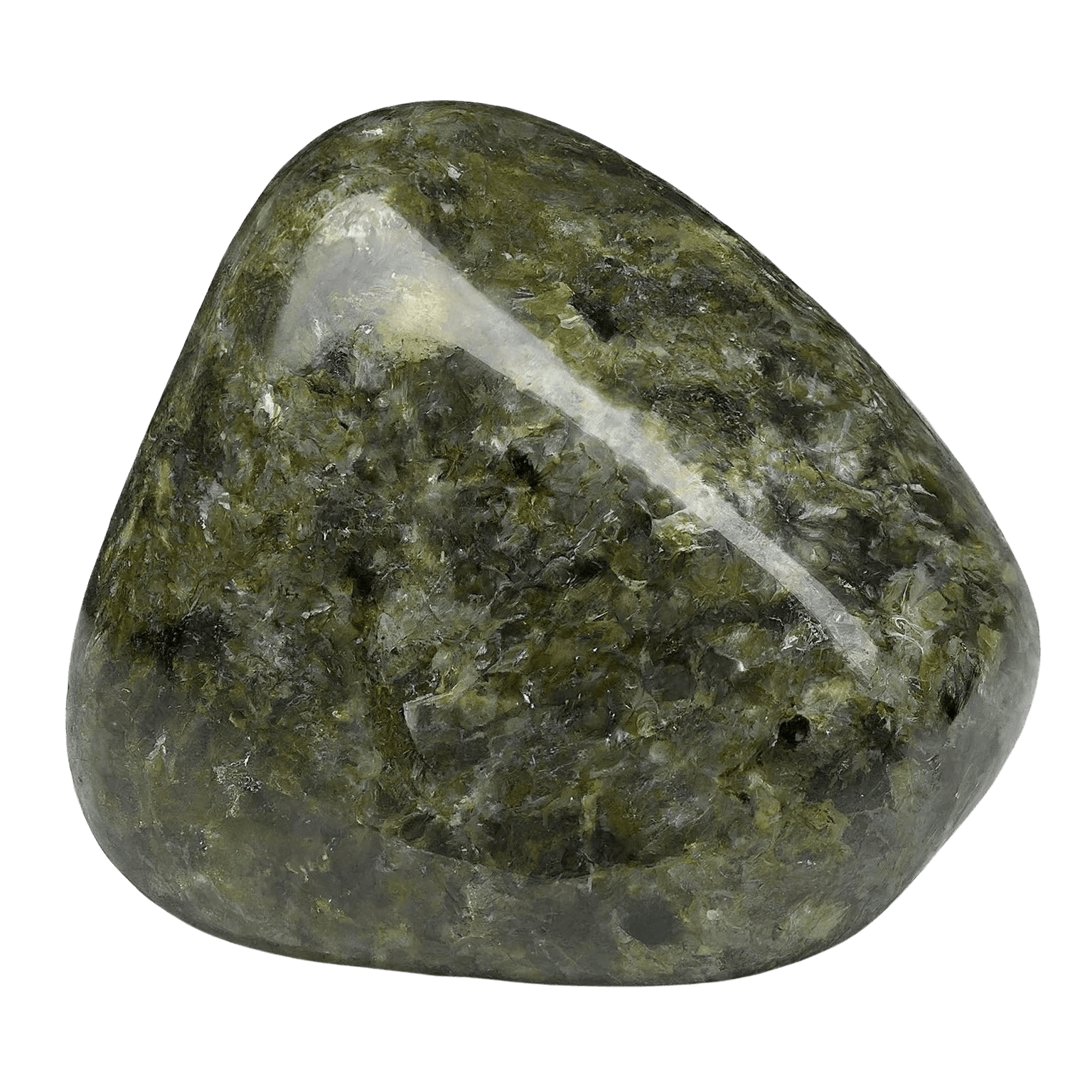
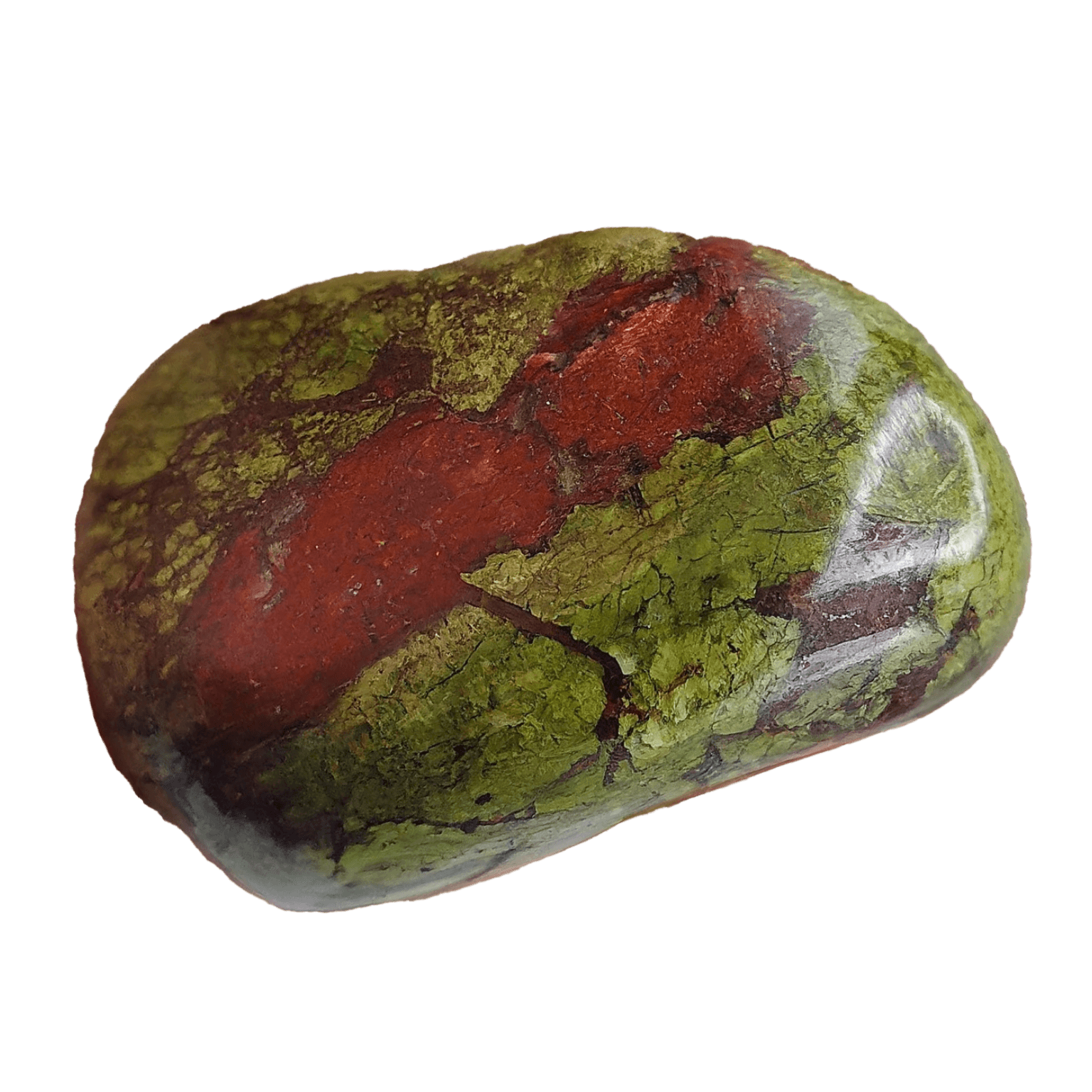
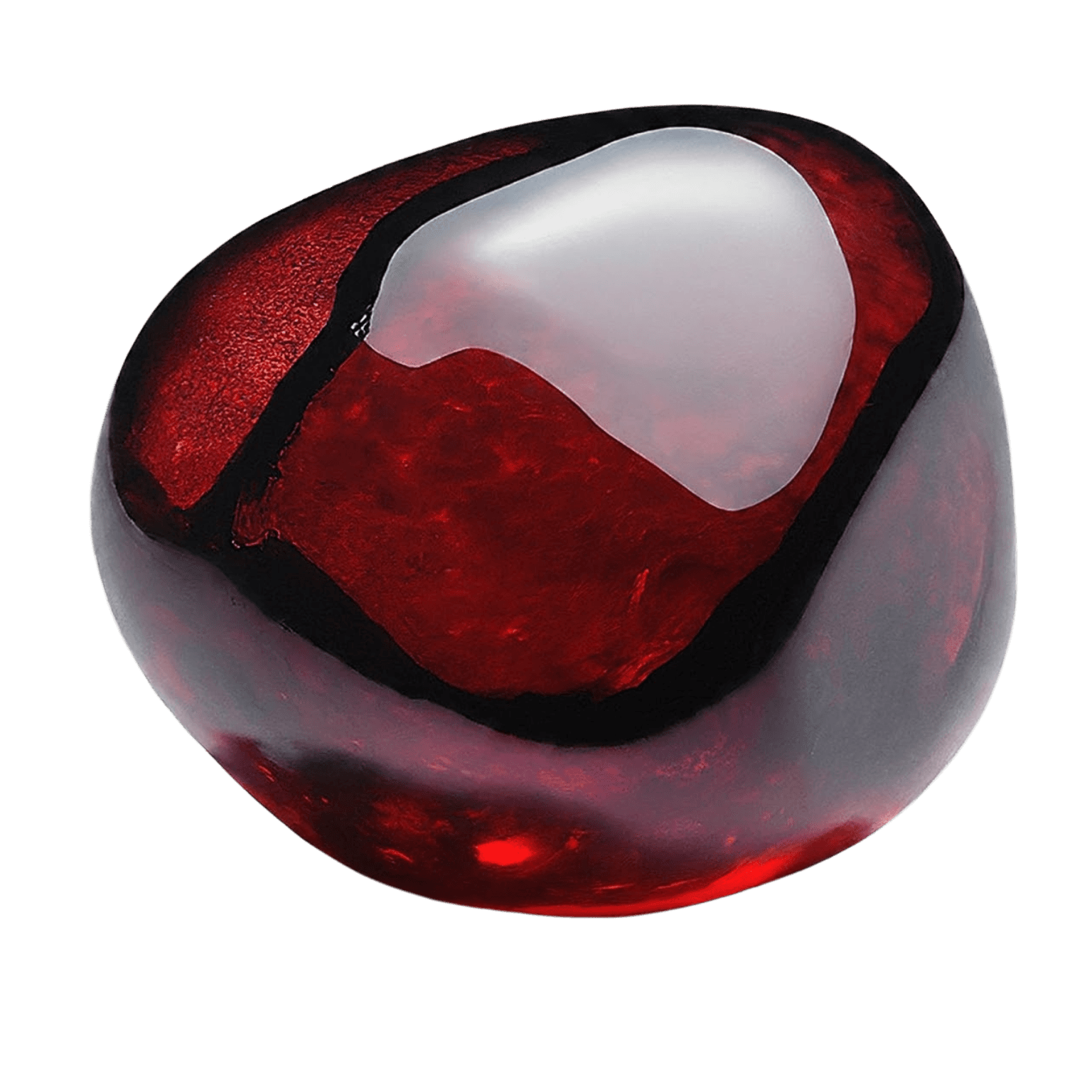
How to Spot Real vs Fake Piemontite
Imitations of Piemontite exist because demand does. A few hands-on checks separate genuine red material from glass, resin, and dye:
Temperature: genuine Piemontite feels distinctly cool at first touch and gives that coolness up slowly; resin copies feel warm almost immediately, which is the quickest tell there is.
Weight and density: resin fakes run light for their size, while genuine Piemontite at Mohs 6.5 carries honest mineral density; weigh it in the palm against any real tumbled stone you own.
Color and pattern: the real range is red, red-purple, or violet; treat neon saturation or flawless uniformity as a question for the seller, because nature rarely manages either.
Price reality: the fair range for Piemontite sits near $14 to $45 at palm size; below that, assume treatment or imitation until the seller proves otherwise.
Trust your source: a seller who knows where a red stone like this came from and says so plainly is worth more than every test on this list; CrystalStones.com publishes provenance for each Piemontite piece for exactly that reason.
Bring it home
Shop Piemontite
Ethically sourced, hand-selected Piemontite starting from $14.
Shop PiemontiteFrequently Asked Questions
What is Piemontite good for?
Piemontite is traditionally associated with vitality, creativity, courage, and grounding. Many people find it supportive for vitality and for working with the Root and Sacral chakras.
Can Piemontite go in water?
Yes, Piemontite tolerates water; at Mohs 6.5, a one to two minute rinse is fine. Pat it dry when you finish and avoid leaving it submerged overnight.
Can Piemontite be in the sun?
Yes, Piemontite can sit in sunlight safely; its red coloring holds up, and thirty minutes of morning sun is the traditional charge.
What chakra is Piemontite?
Piemontite is primarily associated with the Root (Muladhara) and Sacral (Svadhisthana) chakras. Traditional use keeps it near the ground: at the hips, or set between the feet during seated practice, the root station for vitality.
What zodiac sign is Piemontite for?
Piemontite is traditionally connected to Aries and Scorpio. If your signs differ, work with Piemontite anyway; resonance in the hand outranks resonance on paper in every practical tradition.
How do I cleanse Piemontite?
Stick to Moonlight, Sage, and Sound for Piemontite; those are the methods its care profile recommends. A quick rinse remains an option at Mohs 6.5, but the listed methods are the ones that should carry the regular routine.
Is Piemontite real or fake, how can I tell?
Genuine Piemontite feels cool at first touch and warms slowly; at Mohs 6.5 it also resists the pocket scratches that mark softer fakes. A fair tumbled piece sits near $14 to $45 and shows honest variation across the red range; flawless uniformity at a bargain price is the tell worth trusting.
What’s Next?
A few thoughtful next steps if Piemontite is calling to you.
The Crystal Starter Library
A free guide from Crystal Cassandra: the twelve stones that cover almost everything, a one page care matrix for water, sun and salt, and how to build a first intention practice.
We respect your inbox. Unsubscribe anytime.
Explore More Tools
Crystal Quiz
Discover which crystal matches your energy right now.
Open →Chakra Test
Find which chakras need attention and the crystals to balance them.
Open →Crystal Cleansing Guide
Learn how to safely cleanse and charge your crystals.
Open →Crystals by Intention
Find the perfect crystal for what you need right now.
Open →