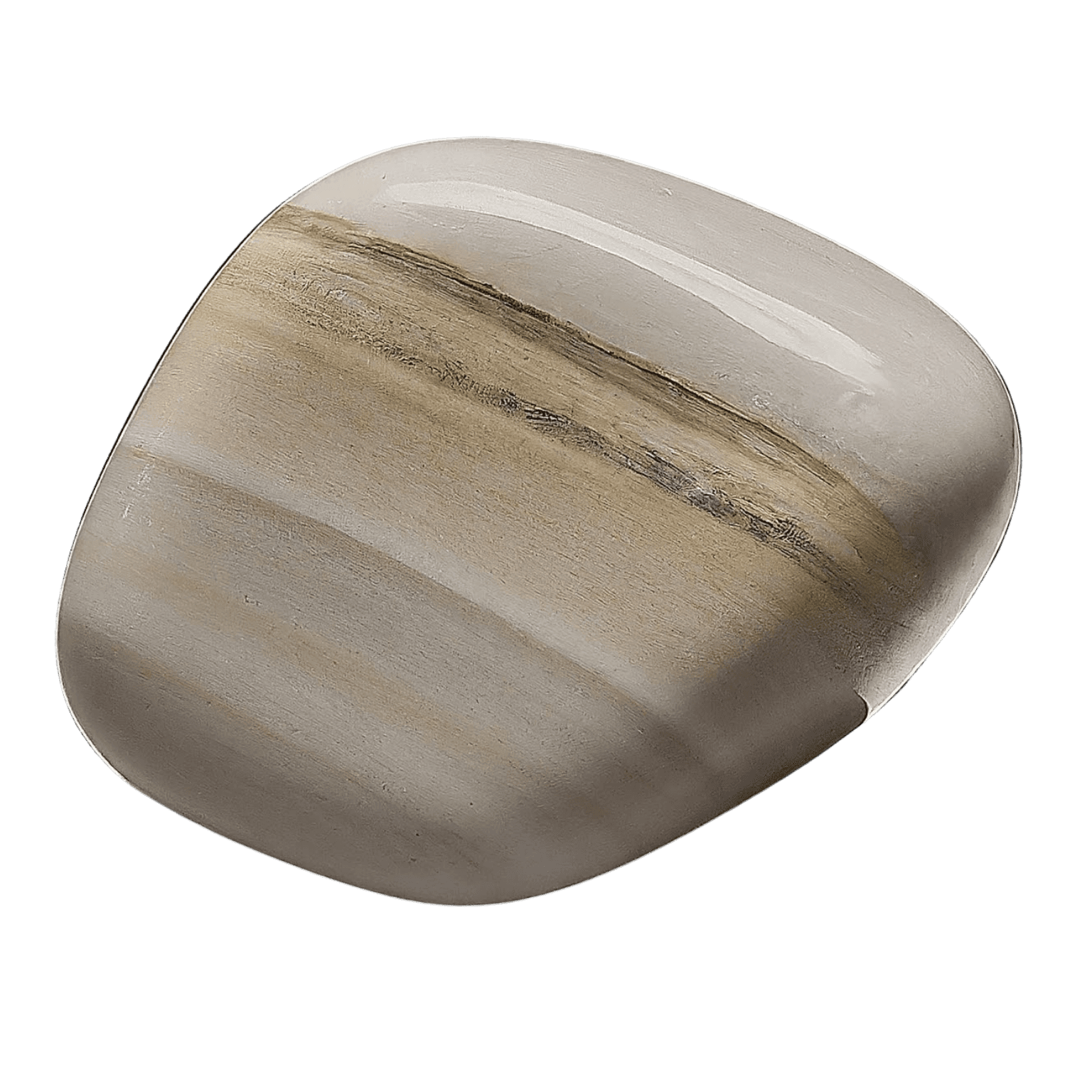
Quick Answer
Flint is a grey crystal used in modern crystal healing for grounding, protection, and focus. It measures 7 on the Mohs hardness scale and typically costs $6 to $18 for a tumbled stone. In the chakra tradition, Flint is associated with the Root and Solar Plexus chakras.
Worth knowing: At Grime's Graves in Norfolk, England, Neolithic miners sank hundreds of shafts up to about 13 meters deep some 4,500 years ago, hauling out high-grade flint with picks made of red deer antler.
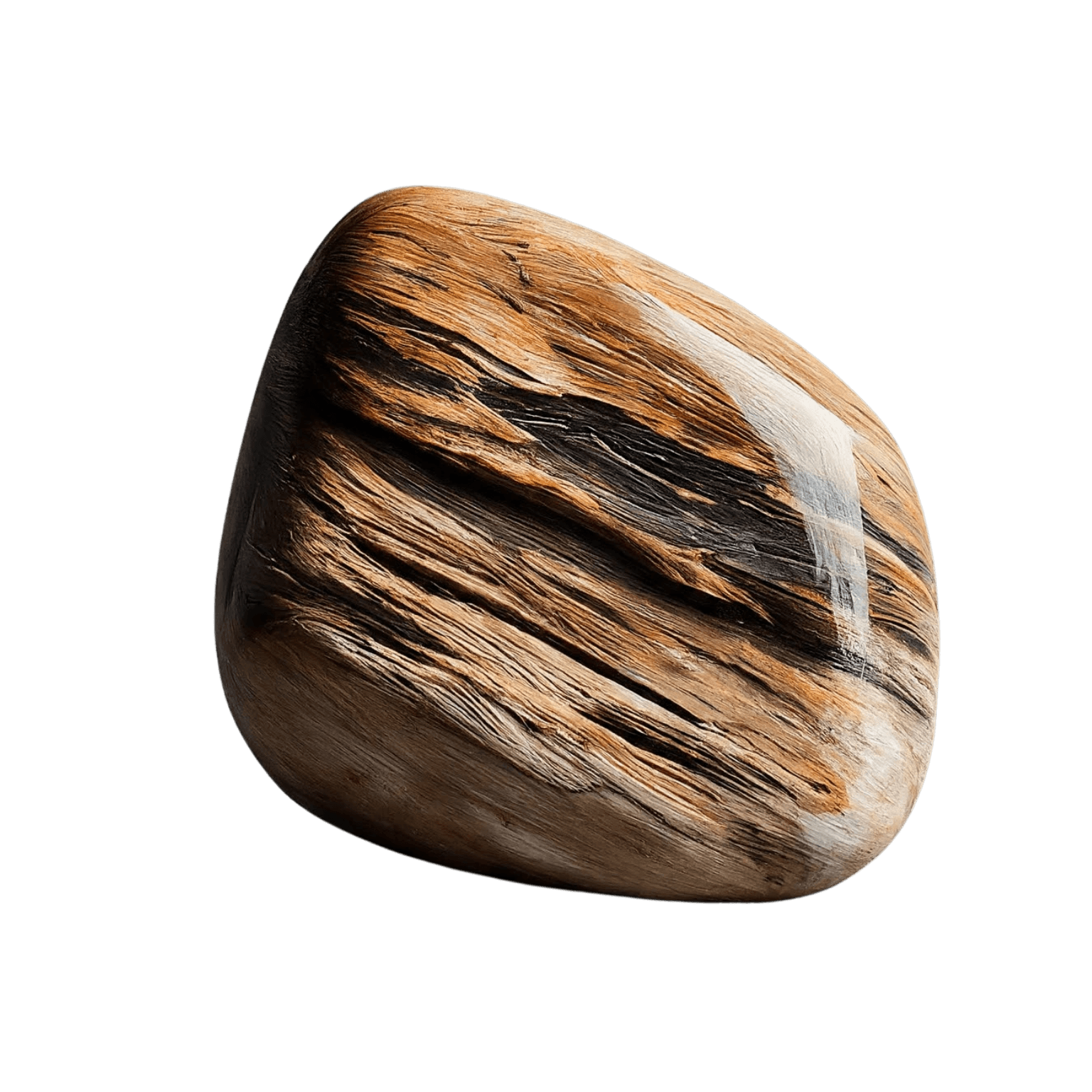
“A dense grey-brown cryptocrystalline quartz of practical groundedness and protection.”
- Chakra
- Root (Muladhara), Solar Plexus (Manipura)
- Zodiac
- Capricorn ♑, Taurus ♉
- Element
- Earth 🌍, Fire 🔥
- Planet
- Saturn ♄
- Hardness
- 7 / 10 (Mohs)
- Colors
- Grey, Brown, Black, Tan
- Origin
- UK, Denmark, USA
- Price Range
- 6 to 18
Care + Safety
Flint at a glance
- Water: brief rinse safe
- Sun: tolerates sunlight charging
- Mohs hardness: 7 (durable for daily-wear jewelry)
What is Flint?
Flint is a nodular variety of chert, cryptocrystalline quartz that grows as irregular gray-black lumps inside chalk and marine limestone. The silica is largely biogenic, dissolved from the skeletons of sponges and microscopic plankton and re-precipitated within the sediment, and its glassy conchoidal fracture is what lets knappers strike off razor-edged flakes.
Flint measures 7 on the Mohs scale and shows grey, brown, or black coloring. By temperament it is a keeper stone, the guarding end of the collection, and grounding, protection, and focus are what it is most often handed.
The stone connects primarily to the Root (Muladhara) and Solar Plexus (Manipura) chakras, carrying Earth and Fire energy. Today the material is drawn from UK, Denmark, and USA. Hold pieces from two different sources side by side and the differences in the grey material, tone, translucency, pattern, become obvious fast.
Flint is dense cryptocrystalline quartz, used by ancient humans for the first stone tools and later for fire-striking against steel. Hold this stone and notice a stable, practical grounding. The classical sources describe Flint as a stone of practical action, sharp judgment, and protection inherited from ancestral tool-makers.
Also catalogued as Strike-Fire Stone and Cryptocrystalline Quartz Variety, Flint earns its place in a working collection by being usable: start with grounding, the job it is best known for, and let the stone widen its own brief from there.
History and Mythology
Flint is a modern entry in the crystal canon. Its mineral identity was established in the scientific era, the healing vocabulary around it dates to recent decades, and any claim of ancient ritual use should be met with a raised eyebrow. The stone itself, formed in deposits now mined in UK, Denmark, and USA, is of course older than every book ever written about it.
Astrologically minded practitioners file Flint under Capricorn and Taurus and give Saturn ♄ the rulership. The pairing is a 20th century convention rather than an ancient decree, and it is read as favoring grounding work.
Hold the two timescales side by side, centuries of human use at most against epochs of formation behind every Mohs 7 specimen of Flint; the deep time is the one part no marketing can inflate.
Flint Meaning and Metaphysical Properties
First Touch
Flint meets the hand cool and composed: at Mohs 7 it takes a glass-bright polish, and that first chill lingers a while before your warmth wins. Attend to heaviness rather than to tingling. Ballast is the quality this family is traditionally read for, so that is the thing worth giving your attention to.
Primary Properties
The working properties of Flint cluster at the protective end: grounding, protection, focus, and courage. This family teaches containment, a settled spine, a slower breath, a clear sense of where you end and the room begins. The list is traditional shorthand; the stone meets whatever version of steadiness you actually need.
How Crystal Energy Works
Flint belongs to the Root center in the traditional reading, the body's anchor point, where grounding is the standing request. Sessions at this center stay low and slow-paced, seated comfortably, and grounding, protection, and focus name the long assignment. In Melody's Love Is in the Earth the grounding family is framed through the root connection, an energetic cord imagined running from the spine's base down into the earth.
Amplification Through Intention
The Earth designation means Flint favors repetition: daily handling, a fixed home on the shelf, the grounding intention restated in plain words. That steadiness is the whole method.
Healing Benefits
Emotional Support
Emotionally, Flint is traditionally associated with grounding, protection, and focus, the felt sense of being defended and rooted. Many people keep it close on the days when other people's weather gets in too easily. Tradition, not treatment: grounding work with a stone sits beside professional support, never in place of it.
Spiritual Connection
In spiritual work Flint plays the doorkeeper: it is the stone tradition assigns to opening and closing practice, the grounding breath before inner work and the deliberate return after. Boundaries, in this family, are a devotion of their own.
Physical Presence
Physically, Flint belongs to the slow systems: steady meals, regular sleep, the unglamorous maintenance that grounding actually rests on. Keep it where the routines happen as a quiet vote for keeping them; anything clinical belongs with clinicians.
Chakra Connection
Flint resonates most strongly with the Root (Muladhara), the energy center traditionally drawn in red and the traditional seat of this stone's grounding work. When this center runs clear, the classical markers are safety, stability, and groundedness; grounding, protection, and focus are what Flint is most often asked to bring to it.
For placement, go low: lie down with Flint resting at the hip points, or sit on the floor and set it between your feet. Attention on weight and ground, for as long as that stays comfortable, is the classic root session the tradition records for grounding.
Flint also keeps a working line to the Solar Plexus (Manipura), which widens its range in layouts; let the primary placement lead, and add the second position once the first feels familiar.
Zodiac and Astrological Connection
Astrological tradition links Flint with Capricorn ♑ (Dec 22 to Jan 19) and Taurus ♉ (Apr 20 to May 20), and practitioners often suggest the stone meets Capricorn placements with the least friction.
Correspondence is a suggestion, not a bouncer; plenty of devoted Flint keepers have no Capricorn in their chart at all, and being drawn to the stone is the credential that matters.
Saturn ♄ rules Flint in this tradition, so practitioners time their longer sessions to that planet's active periods, especially for grounding.
How to Use Flint
Here are five ways I recommend working with Flint. Start with whichever feels most natural, there's no wrong entry point.
- 1
Meditation Hold
Take up Flint and register the first cool touch; a glassy stone at Mohs 7 warms slowly, and tracking that gradual change is a meditation in itself.
- 2
Body Placement
Floor and hip are the two Root stations in the old placement charts, and Flint takes either one: by the feet during seated work, at the hips when lying back. In my practice the interesting part is never the position itself but what you catch yourself noticing once you stop expecting anything from it, which is how the tradition's grounding work was meant to be entered.
- 3
Sleep Companion
At night, park Flint on the nightstand rather than working it; its job is the day's grounding, and ending the day cleanly is how tomorrow's session starts well.
- 4
Carry With You
For the loud days, packed trains, hard meetings, difficult rooms, Flint earns its pocket space. The brief touch becomes a perimeter check, a reminder that grounding is portable.
- 5
Crystal Grid Anchor
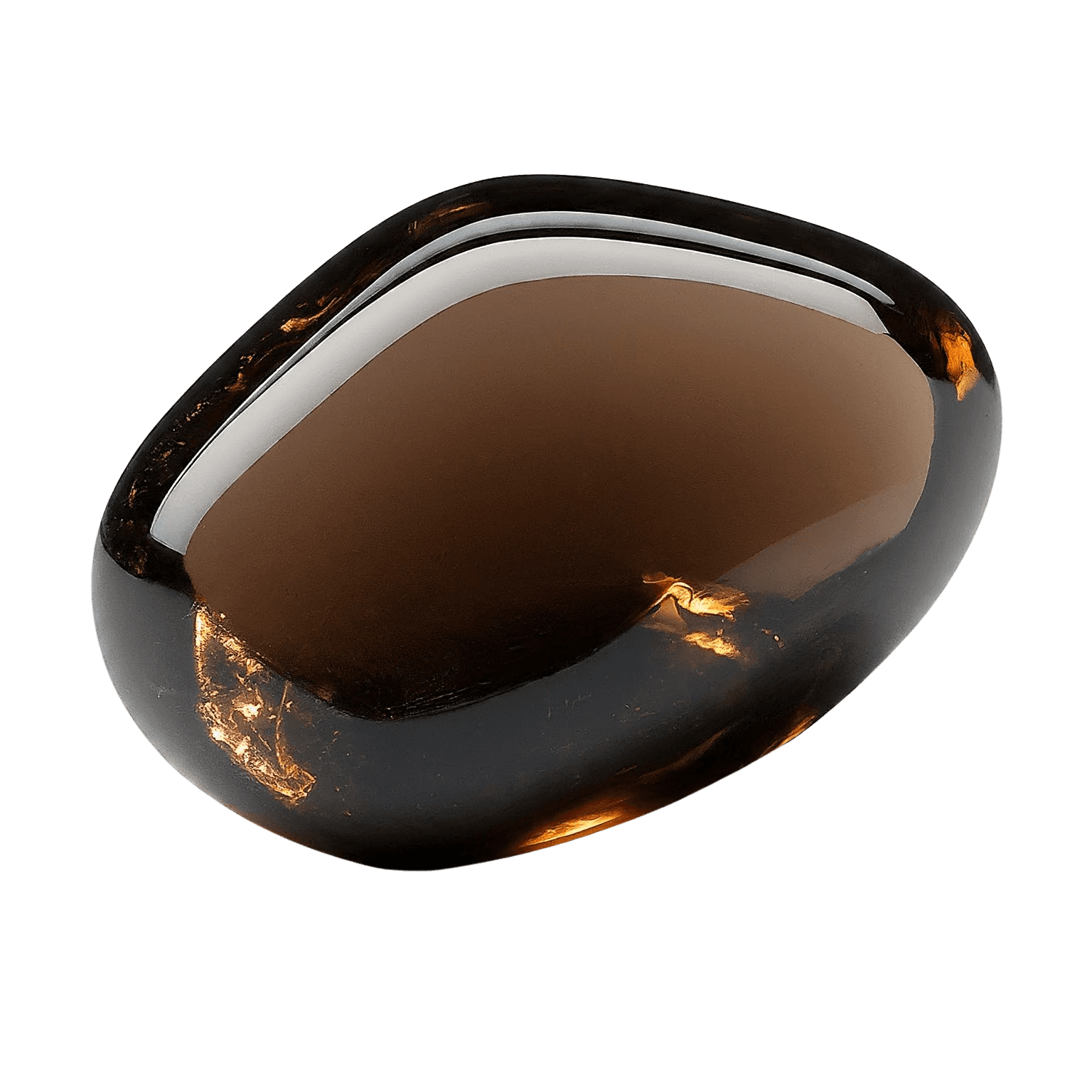
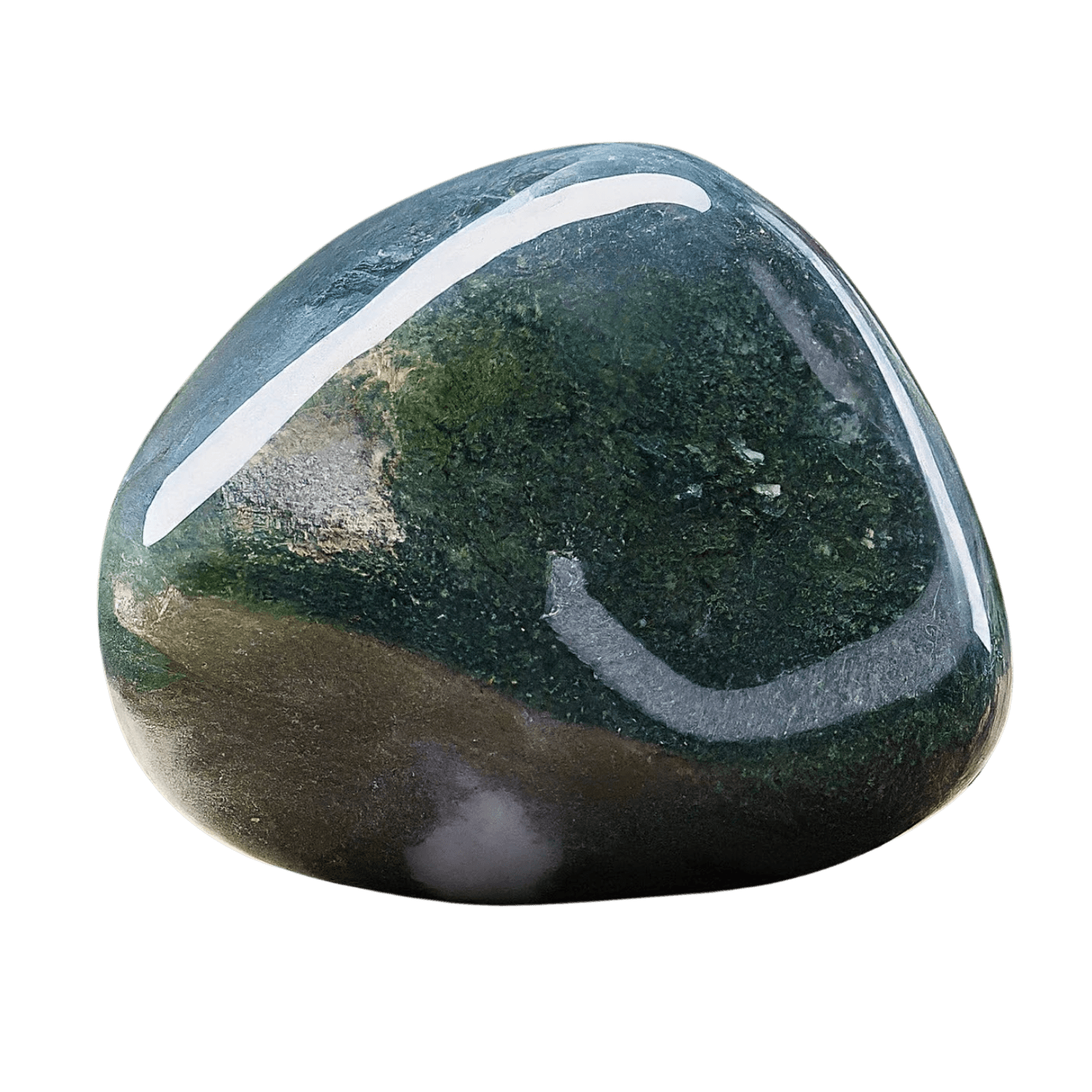
For grid work, give Flint the anchor position and run Smoky Quartz and Agate Moss on the outer points, all matched to a single grounding intention. Rebuild it when it goes stale; a grounding grid you have stopped seeing has stopped working.
How to Cleanse and Charge
Flint works best when it is cleansed on a rhythm; tradition pictures a stone absorbing what it meets, and a saturated stone has nothing left to give. The complete water, sun, and salt safety profile, plus the storage instructions I give my clients, lives in the dedicated Flint care guide.
- 1
Water
Run cool water over Flint while turning it slowly; when the surface feels fresh under the thumb, dry it well and let it rest before its next use.
- 2
Sage
Smoke-cleanse Flint: light the sage, let it settle to a smolder, and move the stone through the rising smoke until your sense of it lightens, usually under a minute.
- 3
Sound
Hold Flint near a singing bowl, bell, or tuning fork and let a full minute of tone wash over it; sound reaches stones that water, salt, and sun cannot safely touch.
- 4
Earth
Bury Flint in clean garden soil or a pot of earth for a full day; the tradition holds burial to be the deepest reset, returning the stone to the element it came from.
- 5
Moonlight
Give Flint a night outdoors or at the glass under a bright moon; the tradition holds moonlight to be the universal reset, slow, cool, and risk-free.
How often to cleanse
I recommend cleansing Flint at least once a month, more frequently if you're using it daily or during emotionally intense periods. You'll also learn to feel when a stone needs cleansing; it may feel heavier, duller, or simply “off.”
Charging after cleansing
Once it is cleansed, recharge Flint by placing it in morning sunlight for 30 minutes; cleansing empties the stone, charging refills it.
Crystal Pairings
Pair Flint the way you would build a wall: one stone for mass, one for watch. Its traditional partners divide that labor, boundary-holding on one side, alertness on the other. Hold any two together briefly before committing; ease in the hand is the green light.
How to Spot Real vs Fake Flint
Before buying Flint, run the piece through these checks; nothing here needs equipment, just your hands, the grey stone in question, and a healthy skepticism:
Temperature: genuine Flint feels distinctly cool at first touch and gives that coolness up slowly; resin copies feel warm almost immediately, which is the quickest tell there is.
Weight: real Flint should feel like stone rather than plastic pretending; if a palm-sized piece feels nearly weightless, walk away from it.
Color and pattern: natural Flint runs grey, brown, or black, with variation from piece to piece; perfectly uniform color across a whole tray is the classic mark of dye or synthetics.
Price reality: quality Flint runs roughly $6 to $18 for palm-sized pieces from reputable sellers; a price far below that range is usually answering a question you should have asked.
Trust your source: provenance beats any hands-on check; ask where the Flint was mined, whether the grey material is treated, and expect straight answers. That standard is why CrystalStones.com ships every piece with its provenance.
Frequently Asked Questions
What is Flint good for?
Flint is traditionally associated with grounding, protection, focus, and courage. Many people find it supportive for grounding and for working with the Root and Solar Plexus chakras.
Can Flint go in water?
It can. Flint handles brief water contact without trouble at Mohs 7, and a short rinse under cool water makes a sound regular cleanse. Dry it afterward and skip long soaks, which no tumbled stone loves.
Can Flint be in the sun?
Yes, Flint can sit in sunlight safely; its grey coloring holds up, and thirty minutes of morning sun is the traditional charge.
What chakra is Flint?
Flint is primarily associated with the Root (Muladhara) and Solar Plexus (Manipura) chakras. Traditional use keeps it near the ground: at the hips, or set between the feet during seated practice, the root station for grounding.
What zodiac sign is Flint for?
Flint is traditionally connected to Capricorn and Taurus. That said, the zodiac correspondence is an invitation rather than a requirement; any chart can work with Flint, and attraction to the stone matters more than the calendar.
How do I cleanse Flint?
The best methods for Flint are Water, Sage, and Sound. Very durable. Safe with all common cleansing methods.
Is Flint real or fake, how can I tell?
Genuine Flint feels cool at first touch and warms slowly; at Mohs 7 it also resists the pocket scratches that mark softer fakes. Expect natural variation in its grey coloring and a price near $6 to $18 for tumbled pieces; uniform color at a bargain price is the classic warning sign.
What’s Next?
A few thoughtful next steps if Flint is calling to you.
The Crystal Starter Library
A free guide from Crystal Cassandra: the twelve stones that cover almost everything, a one page care matrix for water, sun and salt, and how to build a first intention practice.
We respect your inbox. Unsubscribe anytime.
Explore More Tools
Crystal Quiz
Discover which crystal matches your energy right now.
Open →Chakra Test
Find which chakras need attention and the crystals to balance them.
Open →Crystal Cleansing Guide
Learn how to safely cleanse and charge your crystals.
Open →Crystals by Intention
Find the perfect crystal for what you need right now.
Open →