Quick Answer
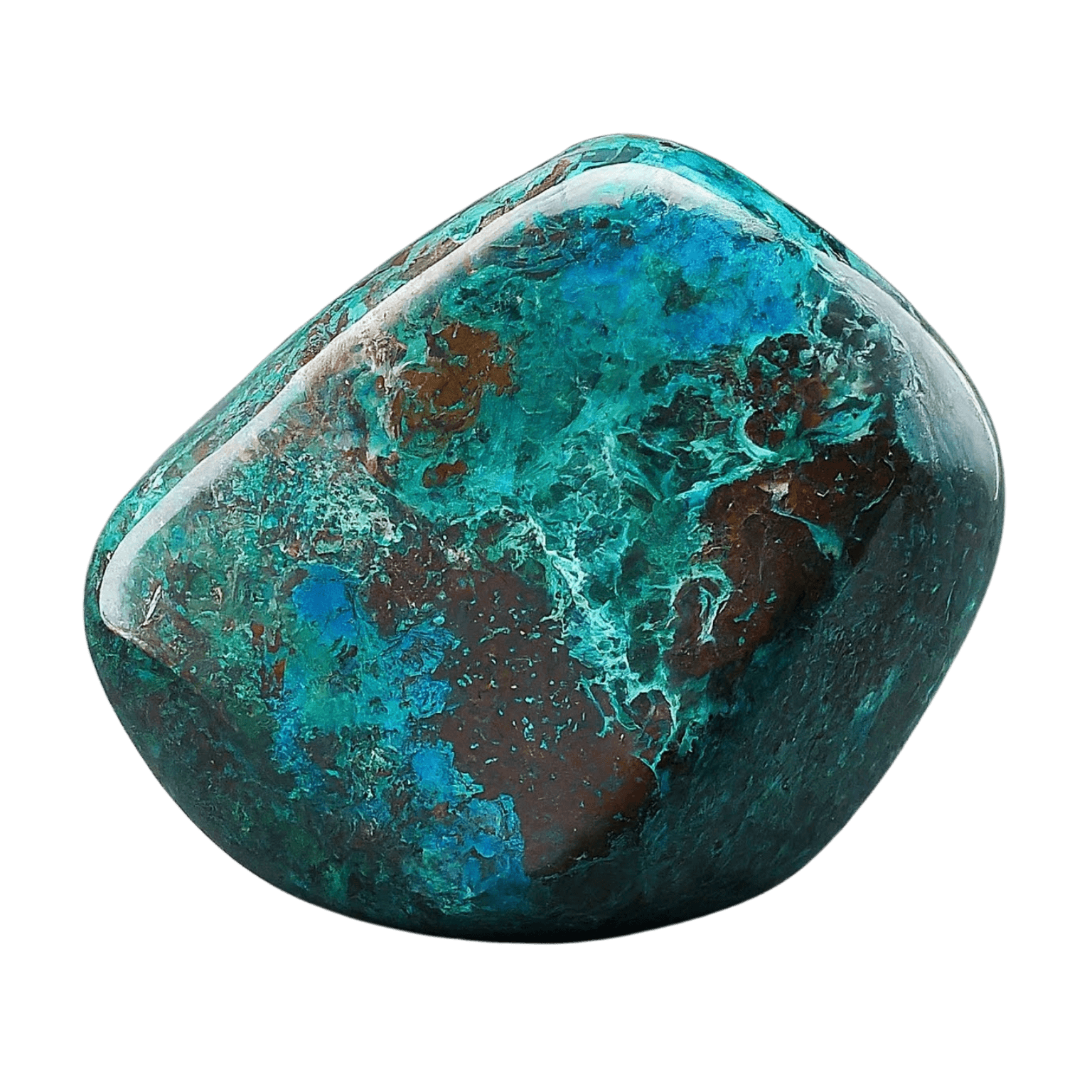
Chrysocolla is a blue-green crystal used in modern crystal healing for communication, expression, and calm. It measures 2.5 on the Mohs hardness scale and typically costs $15 to $30 for a tumbled stone. In the chakra tradition, Chrysocolla is associated with the Throat and Heart chakras.
Worth knowing: Chrysocolla's name is a 2,300 year old receipt: Theophrastus recorded it around 315 BC as chrysokolla, gold glue, the goldsmith's solder gathered from copper mines.
“A vibrant blue-green stone of empowered communication and feminine wisdom.”
- Chakra
- Throat (Vishuddha), Heart (Anahata)
- Zodiac
- Taurus ♉, Gemini ♊
- Element
- Water 💧
- Planet
- Venus ♀
- Hardness
- 2.5 / 10 (Mohs)
- Colors
- Blue-green, Turquoise, Cyan
- Origin
- Peru, Congo, USA
- Price Range
- 15 to 30
Care + Safety
Chrysocolla at a glance
- Water: avoid, may damage or leach
- Sun: tolerates sunlight charging
- Mohs hardness: 2.5 (display + meditation only)
What is Chrysocolla?
Chrysocolla is a hydrated copper silicate that drapes oxidized copper deposits in blue green crusts and botryoidal masses. Soft on its own at Mohs 2.5 to 3.5, it hardens into gem material only when silica saturates it, producing the prized chalcedony blend the trade calls gem silica.
Chrysocolla measures 2.5 on the Mohs scale and shows blue-green, turquoise, or cyan coloring. Most of its assignments happen at desks and in conversations; communication, expression, and calm are its catalog entries, all of them about clearing the air.
The stone connects primarily to the Throat (Vishuddha) and Heart (Anahata) chakras, carrying Water energy. Sources include Peru, Congo, and USA; deposit matters more than beginners expect, and collectors learn to recognize where a piece of Chrysocolla was mined by its color depth and pattern.
Chrysocolla's swirling blue-green reminds me of Earth seen from space, it carries that same sense of wholeness. This is the stone of the empowered communicator, traditionally associated with feminine wisdom and the ability to speak difficult truths with compassion.
Also catalogued as Teaching Stone and Goddess Stone, this is a stone that rewards regular handling more than display. Give Chrysocolla a week of communication duty in the pocket before deciding what it is for.
History and Mythology
Chrysocolla carries the oldest receipt in the mineral aisle. Around 315 BC, Theophrastus, Aristotle's successor and author of the first surviving book on stones, recorded the name chrysokolla, gold glue, for material the goldsmiths used to solder gold, noting that it came from copper mines; Pliny the Elder later gave the substance three chapters of his Natural History, from solder to painter's pigment. Whether every ancient batch was today's mineral hardly matters: the name preserves a Bronze Age workshop practice in two Greek words. The stone's most storied modern form is Eilat stone, the blue green blend of chrysocolla with malachite and turquoise from copper workings near the Gulf of Aqaba, mined in the region tradition links to King Solomon and adopted as Israel's national stone. Pure chrysocolla is nearly too soft to wear, so the gem trade's prize is gem silica, chrysocolla color locked in hard chalcedony, the most valuable chalcedony of all. Rub a raw crust gently and it may squeak chalk-dry under your finger; the color is copper's, start to finish.
Chrysocolla Meaning and Metaphysical Properties
How It Feels in the Hand
At Mohs 2.5, Chrysocolla barely argues with the world. Expect a feather-light coolness that vanishes the moment skin touches the blue-green surface, and handle it like the delicate thing it is. Notice the visual field; people working with the clarity stones often describe the room sharpening slightly, attention gathering to a point.
Primary Properties
Clear thinking is the thread tying the Chrysocolla properties together: communication, expression, calm, and heart healing. The family earns its keep at the desk and in the hard talk, wherever language needs a clean runway. Set the stone out at the start of each session and put it away at the end; the repetition is the method.
How Crystal Energy Works
Chrysocolla is read through the Throat center, the channel between inner knowing and spoken word, and the bridge is asked here to carry communication. Throat practice is brief and honest: one true sentence about communication, expression, and calm, said aloud with the stone in hand. In Judy Hall's grouping the clarity family sits with the throat and brow centers, and her write-ups for it have the flavor of study aids, all focus, articulation, and honest speech.
Amplification Through Intention
Chrysocolla carries Water in the elemental system, feeling, memory, tide, and that current sets the tempo of its communication work. Use the slow hours, journaling, the evening review, the long unwinding, and let communication, expression, and calm arrive at their own pace.
Healing Benefits
Emotional Support
The emotional gift of Chrysocolla is composure: communication, expression, and calm. It is a stone for tangled-thread days, when the feeling is real but the words for it keep slipping out of reach. These are traditional communication associations rather than medical claims; for anything heavy or persistent, a qualified professional belongs in the picture alongside any stone.
Spiritual Connection
In spiritual practice Chrysocolla keeps company with honesty: the journal entry written straight, the talk no longer postponed. The tradition sites this work at the Throat center and treats clear speech as its own discipline.
Physical Presence
Physically, Chrysocolla keeps company with the soft systems, rest and recovery, the long exhale after effort toward communication. Its honest job is reminding you to downshift; anything medical belongs with medical professionals.
Chakra Connection
Chrysocolla resonates most strongly with the Throat (Vishuddha), the energy center traditionally drawn in blue and the traditional seat of this stone's communication work. When this center runs clear, the classical markers are words that match what you mean and a voice you recognize as your own; communication, expression, and calm are what Chrysocolla is most often asked to bring to it.
Lying down, settle Chrysocolla at the throat with the jaw soft, counting nothing; that is the traditional throat station, and the session is aimed at communication.
Chrysocolla also keeps a working line to the Heart (Anahata), which widens its range in layouts; let the primary placement lead, and add the second position once the first feels familiar.
Zodiac and Astrological Connection
Astrological tradition links Chrysocolla with Taurus ♉ (Apr 20 to May 20) and Gemini ♊ (May 21 to Jun 20), and practitioners often suggest the stone meets Taurus placements with the least friction.
The gate, though, stands open: you do not need a Taurus Sun to work with Chrysocolla, and a genuine pull toward the stone outweighs its paper assignments.
Venus ♀ rules Chrysocolla in this tradition, so practitioners time their longer sessions to that planet's active periods, especially for communication.
How to Use Chrysocolla
Five practices suit Chrysocolla especially well. Pick the one that fits the day you are actually having rather than the routine you think you should have.
- 1
Meditation Hold
Keep Chrysocolla loosely to hand during meditation; a stone this soft, Mohs 2.5, warms to skin temperature in moments, and that quick merging makes it easy to forget you are holding anything, which is the point.
- 2
Body Placement
The throat station is where Chrysocolla rests in placement work: lie down, soften the jaw, and give the session no count at all. Practitioners describe it as small and quiet by design. In the tradition's own terms it serves communication.
- 3
Sleep Companion
At night, park Chrysocolla on the nightstand rather than working it; its job is the day's communication, and ending the day cleanly is how tomorrow's session starts well.
- 4
Carry With You
Long meetings and hard drafts are the carry occasions for Chrysocolla. When the line of thought tangles, one intentional touch buys a brief reset, and repetition turns that reset into a reliable communication habit.
- 5
Crystal Grid Anchor
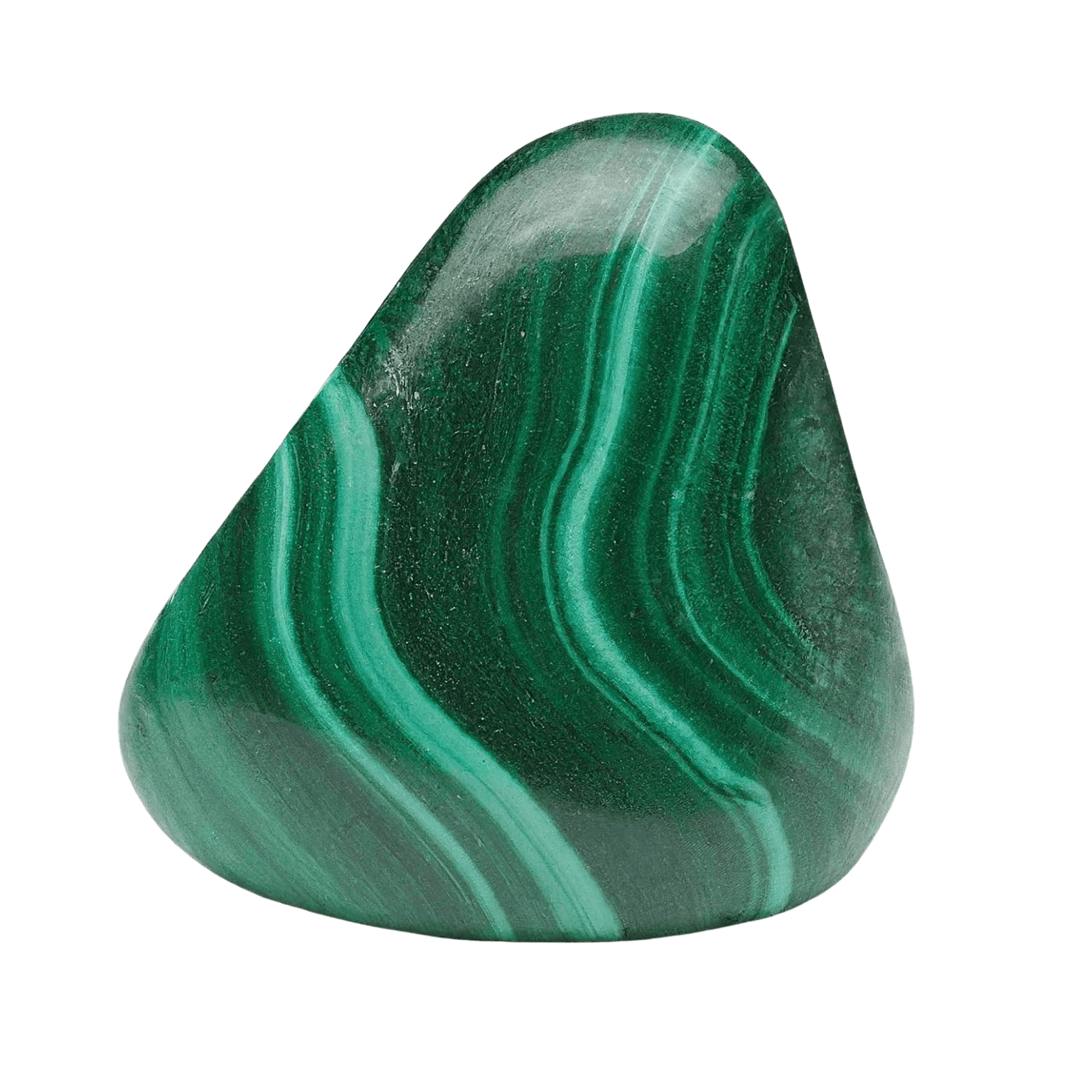
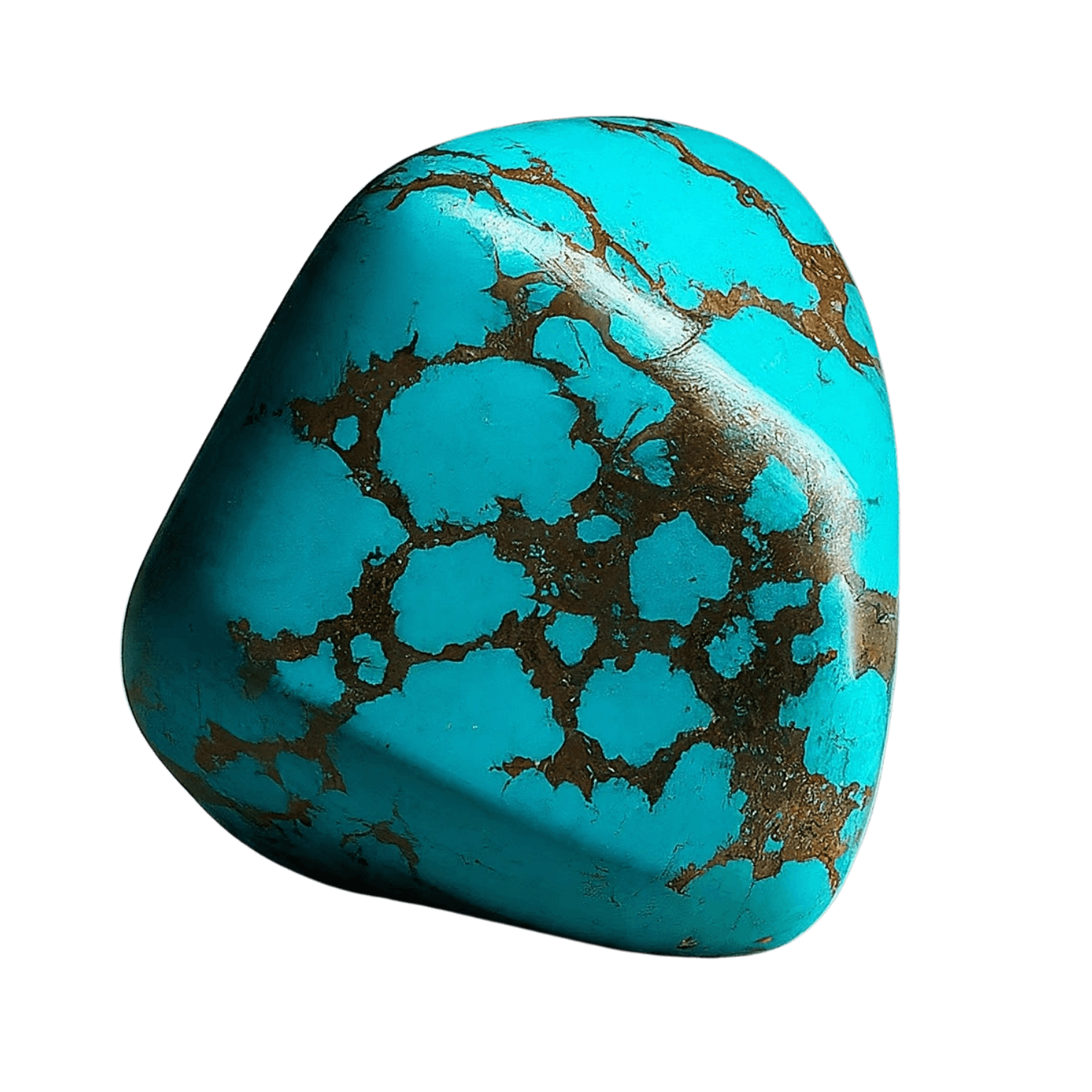
For grid work, give Chrysocolla the anchor position and run Malachite and Turquoise on the outer points, all matched to a single communication intention. Rebuild it when it goes stale; a communication grid you have stopped seeing has stopped working.
How to Cleanse and Charge
Keeping Chrysocolla energetically clear is essential, a crystal that's holding too much absorbed energy becomes less effective, like a sponge that's full. For the full water-safe / sun-safe / salt-safe profile, the recommended cleansing cadence, and the hands-on storage instructions I give my clients, see the dedicated Chrysocolla care guide.
- 1
Sage
Smoke-cleanse Chrysocolla: light the sage, let it settle to a smolder, and move the stone through the rising smoke until your sense of it lightens, usually under a minute.
- 2
Selenite
Overnight on selenite is the lowest-maintenance cleanse Chrysocolla can get: set it down at bedtime, pick it up cleared in the morning.
- 3
Sound
Sound-cleanse Chrysocolla by striking a bowl or bell, letting each tone fade completely before the next; the vibration does the clearing, and no contact is needed.
- 4
Moonlight
Give Chrysocolla a night outdoors or at the glass under a bright moon; the tradition holds moonlight to be the universal reset, slow, cool, and risk-free.
How often to cleanse
Give Chrysocolla a clearing at least every month, and sooner after hard weeks or heavy daily use. The stone will teach you its own signal in time; most people describe it as dullness, weight, or a sense the stone has gone quiet.
Charging after cleansing
Follow every cleansing with a charge: for Chrysocolla that means placing it in morning sunlight for 30 minutes. A cleared stone is neutral, a charged one is ready.
Crystal Pairings
Treat pairing Chrysocolla as outfitting a workbench, not dressing a display. Each traditional partner is a tool with a job, focus, voice, or nerve, and the working limit is two stones per communication task; clutter is the one enemy clarity cannot negotiate with.

Buying Chrysocolla: Price, Quality, and Jewelry
Chrysocolla shops in three tiers, and the chrysocolla meaning of easy, openhearted speech is the same in all of them. Soft raw crusts and rough chunks run $8 to $25 and belong on shelves rather than in jewelry, because the pure mineral is Mohs 2.5 to 3.5 and crumbles. Silicified chrysocolla, hardened by quartz, polishes into the cabochons and spheres most shops sell at $20 to $80. Gem silica, the translucent blue chalcedony grade, is the most valuable chalcedony in the world, passing $100 per carat from famous sources like Arizona's Inspiration mine and Peru's copper belt. Honesty notes: dyed howlite and resin composites impersonate it, exposed by pooled dye and plastic warmth, and chrysocolla often grows intergrown with malachite, whose dust is unsafe to breathe, so buy pieces cut and polished by professionals and never sand them at home. Skip water soaks, since soft zones wick moisture. Match the tier to the price and this copper stone deals honestly.
How to Spot Real vs Fake Chrysocolla
Before buying Chrysocolla, run the piece through these checks; nothing here needs equipment, just your hands, the blue-green stone in question, and a healthy skepticism:
Touch and surface: real Chrysocolla is genuinely soft, Mohs 2.5, so tumbled pieces show gentle rounding and tiny natural imperfections, while molded resin looks suspiciously flawless and feels faintly plastic under a fingernail.
Weight: real Chrysocolla should feel like stone rather than plastic pretending; if a palm-sized piece feels nearly weightless, walk away from it.
Color and pattern: the real range is blue-green, turquoise, or cyan; treat neon saturation or flawless uniformity as a question for the seller, because nature rarely manages either.
Price reality: the fair range for Chrysocolla sits near $15 to $30 at palm size; below that, assume treatment or imitation until the seller proves otherwise.
Trust your source: provenance beats any hands-on check; ask where the Chrysocolla was mined, whether the blue-green material is treated, and expect straight answers. That standard is why CrystalStones.com ships every piece with its provenance.
Bring it home
Shop Chrysocolla
Ethically sourced, hand-selected Chrysocolla starting from $15.
Shop ChrysocollaFrequently Asked Questions
What is Chrysocolla good for?
Chrysocolla is traditionally associated with communication, expression, calm, and heart healing. Many people find it supportive for communication and for working with the Throat and Heart chakras.
Can Chrysocolla go in water?
No. Chrysocolla should stay dry; cleanse it with Sage, Selenite, and Sound instead, and keep every wet method off the table.
Can Chrysocolla be in the sun?
Yes. Chrysocolla is one of the sun-tolerant stones, so use morning light freely to charge the blue-green material; just bring it in rather than leaving it out for whole days at a time.
What chakra is Chrysocolla?
Chrysocolla is primarily associated with the Throat (Vishuddha) and Heart (Anahata) chakras. Either of two stations works: the throat in placement practice, or a short chain that keeps it there all day, each serving its communication role.
What zodiac sign is Chrysocolla for?
Chrysocolla is traditionally connected to Taurus and Gemini. Astrological correspondence is one tradition among several, and nothing about your chart disqualifies you; people without a Taurus placement work with Chrysocolla all the time.
How do I cleanse Chrysocolla?
The best methods for Chrysocolla are Sage, Selenite, and Sound. Very soft (Mohs 2.5). Avoid water and salt. Handle gently.
Is Chrysocolla real or fake, how can I tell?
Genuine Chrysocolla is genuinely soft at Mohs 2.5, so real pieces show gentle wear and tiny imperfections while molded resin looks suspiciously perfect. Natural blue-green material varies piece to piece and runs about $15 to $30 tumbled, so perfectly matched stones at a suspicious discount deserve a second look.
Sources and further reading
What’s Next?
A few thoughtful next steps if Chrysocolla is calling to you.
The Crystal Starter Library
A free guide from Crystal Cassandra: the twelve stones that cover almost everything, a one page care matrix for water, sun and salt, and how to build a first intention practice.
We respect your inbox. Unsubscribe anytime.
Explore More Tools
Crystal Quiz
Discover which crystal matches your energy right now.
Open →Chakra Test
Find which chakras need attention and the crystals to balance them.
Open →Crystal Cleansing Guide
Learn how to safely cleanse and charge your crystals.
Open →Crystals by Intention
Find the perfect crystal for what you need right now.
Open →