
Quick Answer
Biotite is a black crystal used in modern crystal healing for grounding, clarity, and focus. It measures 2.75 on the Mohs hardness scale and typically costs $6 to $22 for a tumbled stone. In the chakra tradition, Biotite is associated with the Root and Third Eye chakras.
Worth knowing: It was named in 1847 for the physicist Jean-Baptiste Biot, who studied the optics of mica, yet in 1998 mineralogy's governing body demoted biotite from species to series name, so strictly speaking no single mineral bears the name anymore.
“A dark, sheet-like mica of grounding, perspective, and seeing patterns clearly.”
- Chakra
- Root (Muladhara), Third Eye (Ajna)
- Zodiac
- Capricorn ♑, Virgo ♍
- Element
- Earth 🌍
- Planet
- Saturn ♄
- Hardness
- 2.75 / 10 (Mohs)
- Colors
- Black, Dark brown, Bronze, Greenish black
- Origin
- USA, Canada, Brazil, Italy
- Price Range
- 6 to 22
Care + Safety
Biotite at a glance
- Water: avoid, may damage or leach
- Sun: tolerates sunlight charging
- Mohs hardness: 2.75 (display + meditation only)
What is Biotite?
The familiar black mica glittering in granite, biotite is an iron-rich sheet silicate so soft, near 2.5 to 3, that a fingernail flexes its flakes. Sheets peel away in elastic, paper-thin layers.
Biotite measures 2.75 on the Mohs scale and shows black, dark brown, or bronze coloring. It is one of the keeper stones, the protective end of the catalog, most often asked for grounding, clarity, and focus.
The stone connects primarily to the Root (Muladhara) and Third Eye (Ajna) chakras, carrying Earth energy. Today the material is drawn from USA, Canada, Brazil, and Italy. Hold pieces from two different sources side by side and the differences in the black material, tone, translucency, pattern, become obvious fast.
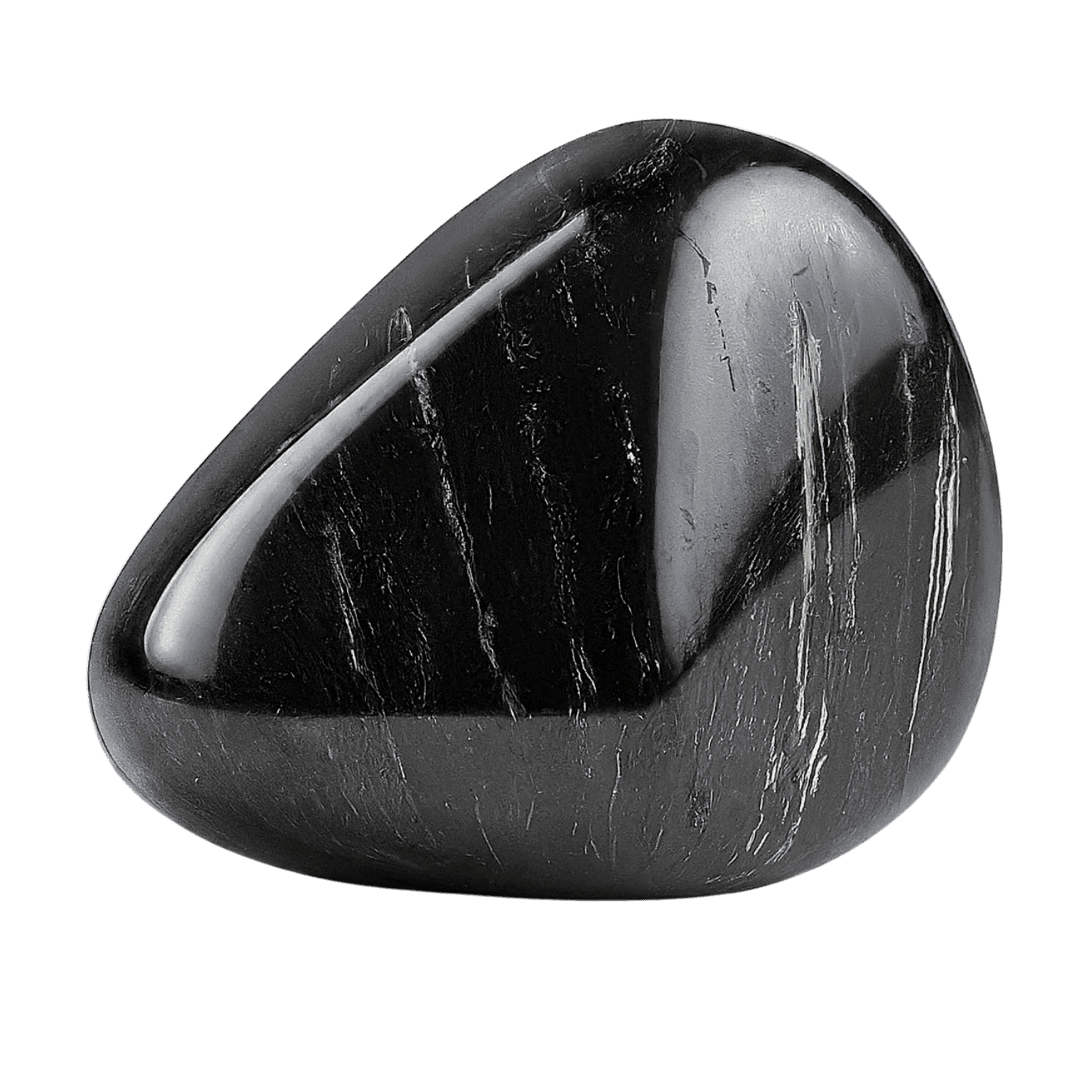
Biotite is a dark iron-and-magnesium mica that splits into thin, flexible, mirror-like sheets, sometimes seen as little books or rosettes. Hold this stone and notice a quiet, layered steadiness, as if you could see one thin layer at a time. In my practice many people find Biotite helpful for grounding scattered thoughts and gaining perspective on a problem. It is very soft and cleaves easily, so I never put it in water and handle the delicate sheets with care.
Also catalogued as Black Mica and Iron Mica, whether it is your first stone or your fiftieth, Biotite tends to find its role quickly, and grounding is the natural place to begin.
History and Mythology
Biotite entered the record through mineralogy rather than mythology: the species was identified and named in the modern era, and its healing use begins with the 20th and 21st century crystal literature rather than any ancient source. That recency is worth stating plainly, because honest provenance is rarer than it should be in this field. The material itself is sourced today from USA, Canada, and Brazil.
In modern astrological correspondence Biotite is linked with Capricorn and Virgo, with Saturn ♄ named as its planetary ruler. Practitioners who keep these tables often work the stone hardest during those sun-sign seasons, especially for grounding.
Whatever the age of the name, the geology is patient: every piece of Biotite took shape over geological timescales, arriving at its Mohs 2.75 hardness through slow heat, pressure, and chemistry long before any hand reached for it.
Biotite Meaning and Metaphysical Properties
How It Feels in the Hand
Biotite is one of the softest stones you will handle, Mohs 2.75, and the hand knows it immediately: it warms to skin temperature in seconds, and its black surface has a silky, almost soapy slip. Notice your weight while you hold it, feet on the floor, seat in the chair; with grounding stones the tradition points attention toward ballast rather than toward tingle.
Primary Properties
Biotite keeps a guard-duty property list: grounding, clarity, focus, and decision making. What the protective family teaches is edges, where you stop, where the room starts, and the settled breath that comes from knowing the difference. Take the list as shorthand from tradition and let your own steadiness define the assignment.
How Crystal Energy Works
Biotite belongs to the Root center in the traditional reading, the body's anchor point, where grounding is the standing request. Sessions at this center stay low and slow-paced, seated comfortably, and grounding, clarity, and focus name the long assignment. The image Melody uses for the grounding family in Love Is in the Earth is a rooted one, an energy cord running from the base of the spine into the earth itself.
Amplification Through Intention
Biotite is classed as an Earth stone, patient, bodily, hard to knock over, which sets the pace of its grounding work. Prefer routines over ceremonies, the same pocket, the same desk corner, and let consistency do for grounding, clarity, and focus what intensity cannot.
Healing Benefits
Emotional Support
Emotionally, Biotite is traditionally associated with grounding, clarity, and focus, the felt sense of being defended and rooted. Many people keep it close on the days when other people's weather gets in too easily. Tradition, not treatment: grounding work with a stone sits beside professional support, never in place of it.
Spiritual Connection
Every practice has a threshold, and Biotite is traditionally stationed at it, marking the grounding breath that begins inner work and the deliberate return that ends it. The protective family treats boundaries as their own quiet liturgy.
Physical Presence
Tradition reads Earth stones like Biotite through the soles of the feet: stance, weight, the felt fact of standing somewhere while you work on grounding. Try standing barefoot with the stone in hand when the day goes abstract; the practice is awareness, not medicine.
Chakra Connection
Biotite resonates most strongly with the Root (Muladhara), the energy center traditionally drawn in red and the traditional seat of this stone's grounding work. When this center runs clear, the classical markers are steadiness, physical security, and a settled sense of ground; grounding, clarity, and focus are what Biotite is most often asked to bring to it.
Work it seated and slow; put Biotite on the floor where your gaze lands, feet flat, and breathe down toward it. Root work is the least dramatic chakra work there is, which is exactly why grounding grows well in it.
Because Biotite is also associated with the Third Eye (Ajna), it moves well in multi-stone layouts: one stone, two stations, worked on different days.
Zodiac and Astrological Connection
Biotite appears under Capricorn ♑ (Dec 22 to Jan 19) and Virgo ♍ (Aug 23 to Sep 22) in the standard correspondence tables; if those signs are loud in your chart, expect the introduction to feel familiar.
None of this is exclusionary. If Biotite keeps catching your eye, that interest counts for more than whether Capricorn appears anywhere in your chart.
Saturn ♄ rules Biotite in this tradition, so practitioners time their longer sessions to that planet's active periods, especially for grounding.
How to Use Biotite
Here are five ways I recommend working with Biotite. Start with whichever feels most natural, there's no wrong entry point.
- 1
Meditation Hold
Hold Biotite with a light grip while you sit. At Mohs 2.75 it reaches body temperature almost instantly, so let the boundary between hand and stone blur and keep your attention on the breath.
- 2
Body Placement
Hip level when reclining, floor level when seated, that is where the chakra charts kept a Root stone like Biotite. Nothing here is meant to be strenuous. Set the stone down, stay a while, and see where your attention keeps going back to. The grounding heading belongs to the tradition, and it stays a tradition rather than a promise.
- 3
Sleep Companion
Biotite can still earn the nightstand even though its brief is grounding rather than rest: setting the stone down as you set the day down marks the switch from doing to sleeping.
- 4
Carry With You
Carry Biotite on the days you expect crowds, noise, or difficult rooms. The touch-check becomes a boundary ritual, a two-second reminder that grounding is something you bring with you.
- 5
Crystal Grid Anchor
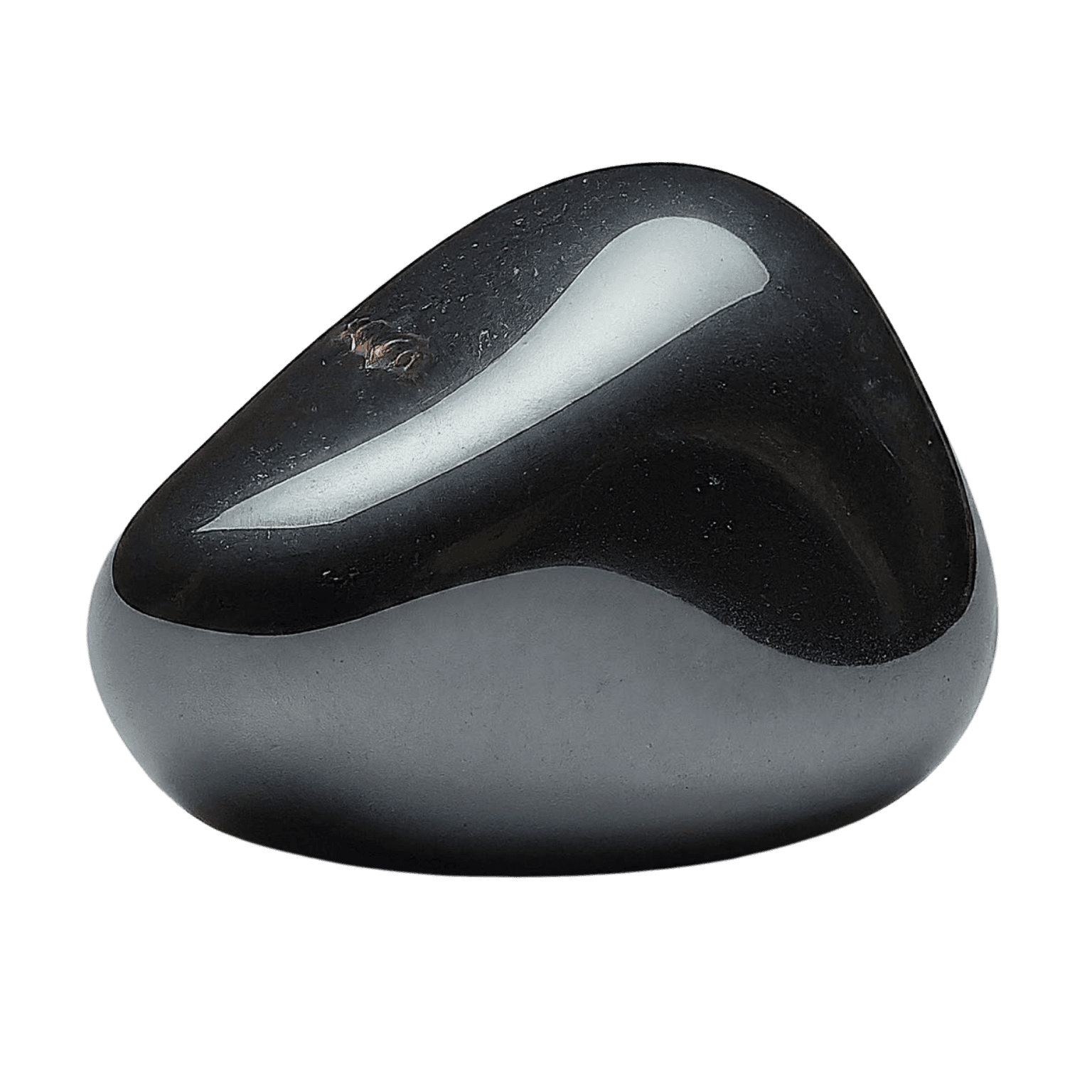
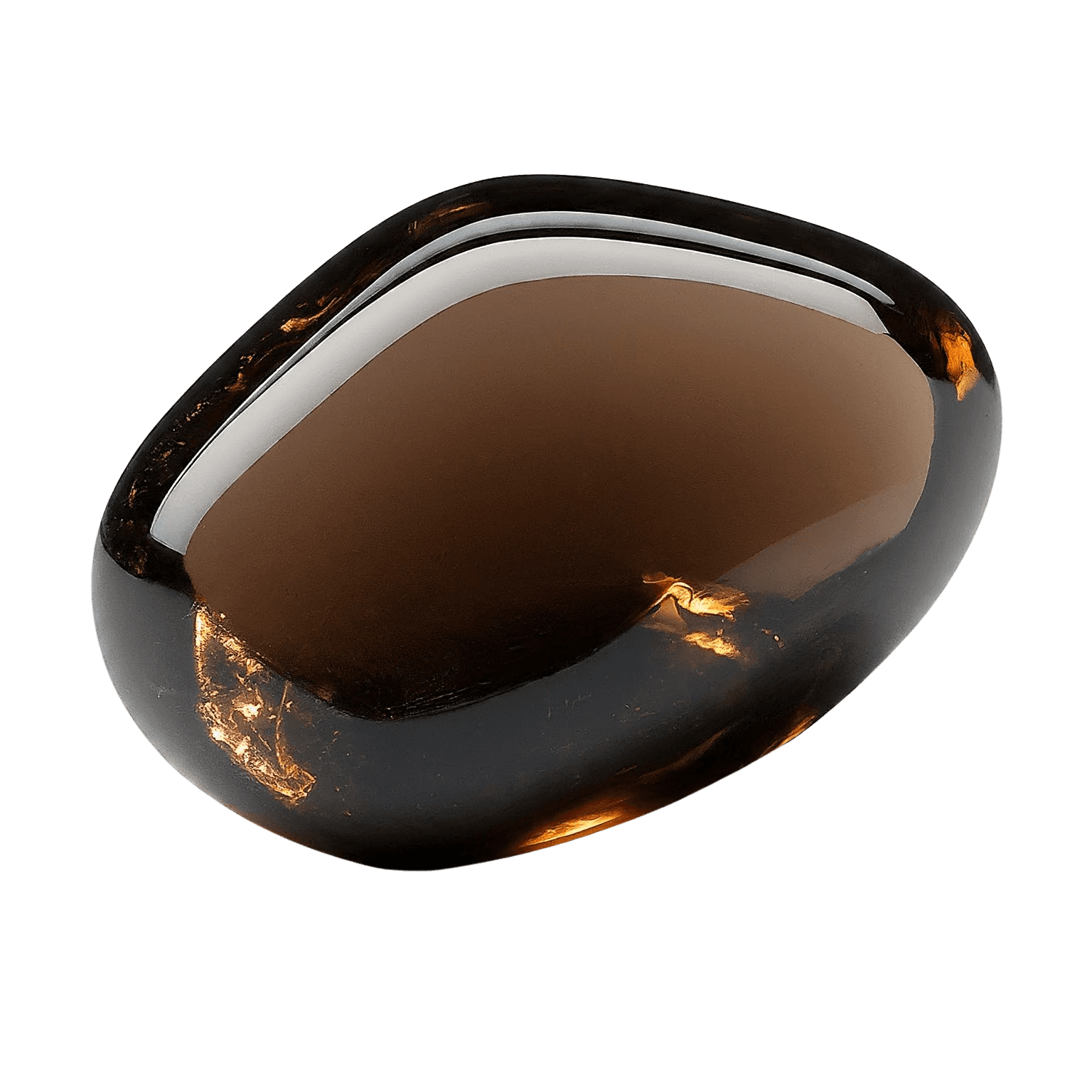
Set Biotite at the center of a grid built for grounding and ring it with Hematite and Smoky Quartz at the points. Speak the intention once as you place each stone; a grid is a sentence written in minerals, and saying the grounding aloud is the punctuation.
How to Cleanse and Charge
Keeping Biotite energetically clear is essential, a crystal that's holding too much absorbed energy becomes less effective, like a sponge that's full. For the full water-safe / sun-safe / salt-safe profile, the recommended cleansing cadence, and the hands-on storage instructions I give my clients, see the dedicated Biotite care guide.
- 1
Sage
For a deeper reset, hold Biotite in sage smoke and name out loud what the stone has been carrying; the naming is half the cleanse.
- 2
Sound
Sound-cleanse Biotite by striking a bowl or bell, letting each tone fade completely before the next; the vibration does the clearing, and no contact is needed.
- 3
Moonlight
Give Biotite a night outdoors or at the glass under a bright moon; the tradition holds moonlight to be the universal reset, slow, cool, and risk-free.
- 4
Selenite
Keep a selenite dish where you empty your pockets and drop Biotite there at day's end; the resting place does the cleansing while you sleep.
How often to cleanse
I recommend cleansing Biotite at least once a month, more frequently if you're using it daily or during emotionally intense periods. You'll also learn to feel when a stone needs cleansing; it may feel heavier, duller, or simply “off.”
Charging after cleansing
Follow every cleansing with a charge: for Biotite that means placing it in morning sunlight for 30 minutes. A cleared stone is neutral, a charged one is ready.
Crystal Pairings
Wall-building is the right metaphor for pairing Biotite: mass in one stone, lookout in the other. Tradition divides its partners along that line, the holders and the watchers. A brief two-stone hold before committing tells you what you need; ease is approval.
How to Spot Real vs Fake Biotite
Before buying Biotite, run the piece through these checks; nothing here needs equipment, just your hands, the black stone in question, and a healthy skepticism:
Touch and surface: real Biotite is genuinely soft, Mohs 2.75, so tumbled pieces show gentle rounding and tiny natural imperfections, while molded resin looks suspiciously flawless and feels faintly plastic under a fingernail.
Weight and density: resin fakes run light for their size, while genuine Biotite at Mohs 2.75 carries honest mineral density; weigh it in the palm against any real tumbled stone you own.
Color and pattern: natural Biotite runs black, dark brown, or bronze, with variation from piece to piece; perfectly uniform color across a whole tray is the classic mark of dye or synthetics.
Price reality: quality Biotite runs roughly $6 to $22 for palm-sized pieces from reputable sellers; a price far below that range is usually answering a question you should have asked.
Trust your source: buy Biotite from sellers who can name the mine or region behind their black stock and disclose treatments without being chased. At CrystalStones.com every piece is ethically sourced with full provenance.
Frequently Asked Questions
What is Biotite good for?
Biotite is traditionally associated with grounding, clarity, focus, and decision making. Many people find it supportive for grounding and for working with the Root and Third Eye chakras.
Can Biotite go in water?
No, water and Biotite do not mix; moisture can compromise the surface or the structure itself. Very soft mica (Mohs 2.5-3), cleaves into sheets. Never water or salt; handle gently and dry-cleanse only.
Can Biotite be in the sun?
Yes, Biotite can sit in sunlight safely; its black coloring holds up, and thirty minutes of morning sun is the traditional charge.
What chakra is Biotite?
Biotite is primarily associated with the Root (Muladhara) and Third Eye (Ajna) chakras. Low placements serve it best, the hips or the floor between seated feet, since that is where root-center grounding work traditionally happens.
What zodiac sign is Biotite for?
Biotite is traditionally connected to Capricorn and Virgo. Astrological correspondence is one tradition among several, and nothing about your chart disqualifies you; people without a Capricorn placement work with Biotite all the time.
How do I cleanse Biotite?
Stick to Sage, Sound, and Moonlight for Biotite; those are the methods its care profile recommends. Dry methods make up the entire list on purpose, since this stone's chemistry asks to be kept away from moisture.
Is Biotite real or fake, how can I tell?
Genuine Biotite is genuinely soft at Mohs 2.75, so real pieces show gentle wear and tiny imperfections while molded resin looks suspiciously perfect. A fair tumbled piece sits near $6 to $22 and shows honest variation across the black range; flawless uniformity at a bargain price is the tell worth trusting.
What’s Next?
A few thoughtful next steps if Biotite is calling to you.
The Crystal Starter Library
A free guide from Crystal Cassandra: the twelve stones that cover almost everything, a one page care matrix for water, sun and salt, and how to build a first intention practice.
We respect your inbox. Unsubscribe anytime.
Explore More Tools
Crystal Quiz
Discover which crystal matches your energy right now.
Open →Chakra Test
Find which chakras need attention and the crystals to balance them.
Open →Crystal Cleansing Guide
Learn how to safely cleanse and charge your crystals.
Open →Crystals by Intention
Find the perfect crystal for what you need right now.
Open →