By Crystal Cassandra · Updated 2026-08-03
Crystal Healing Expert
What is the october birthstone?
The October birthstone is opal, joined officially by tourmaline. Opal can hold up to 20 percent water within its silica spheres, which creates the play of color the gem is famous for. In the modern birthstone tradition the 1952 Jewelry Industry Council update fixed pink tourmaline as October's alternate.
October is the month that cannot decide between gold and rain, and opal is the only gem with the same delicious indecision. Tilt one slowly and the colors actually travel, a patch of red crossing into green, blue surfacing where nothing was a second ago; the trade calls it play of color, and no two stones ever play the same game. An opal is hydrated silica, up to a fifth water, which means you are essentially wearing a held breath of ancient rain. Australian fields like Coober Pedy and Lightning Ridge supply most of the world's finest, including black opals whose colors burn against a dark body like fireworks over water. In my practice, opal chooses people more than people choose opal; someone tilts a stone once, goes quiet, and the sale concludes itself. October babies simply get to call that inheritance a birthright.
Every stone named on this page links to its full profile in the crystal encyclopedia, and if you want your whole birth date read at once, zodiac, birthstone, and life-path number together, the Crystal Birthday Pairing tool does exactly that.
The October Birthstone: Opal
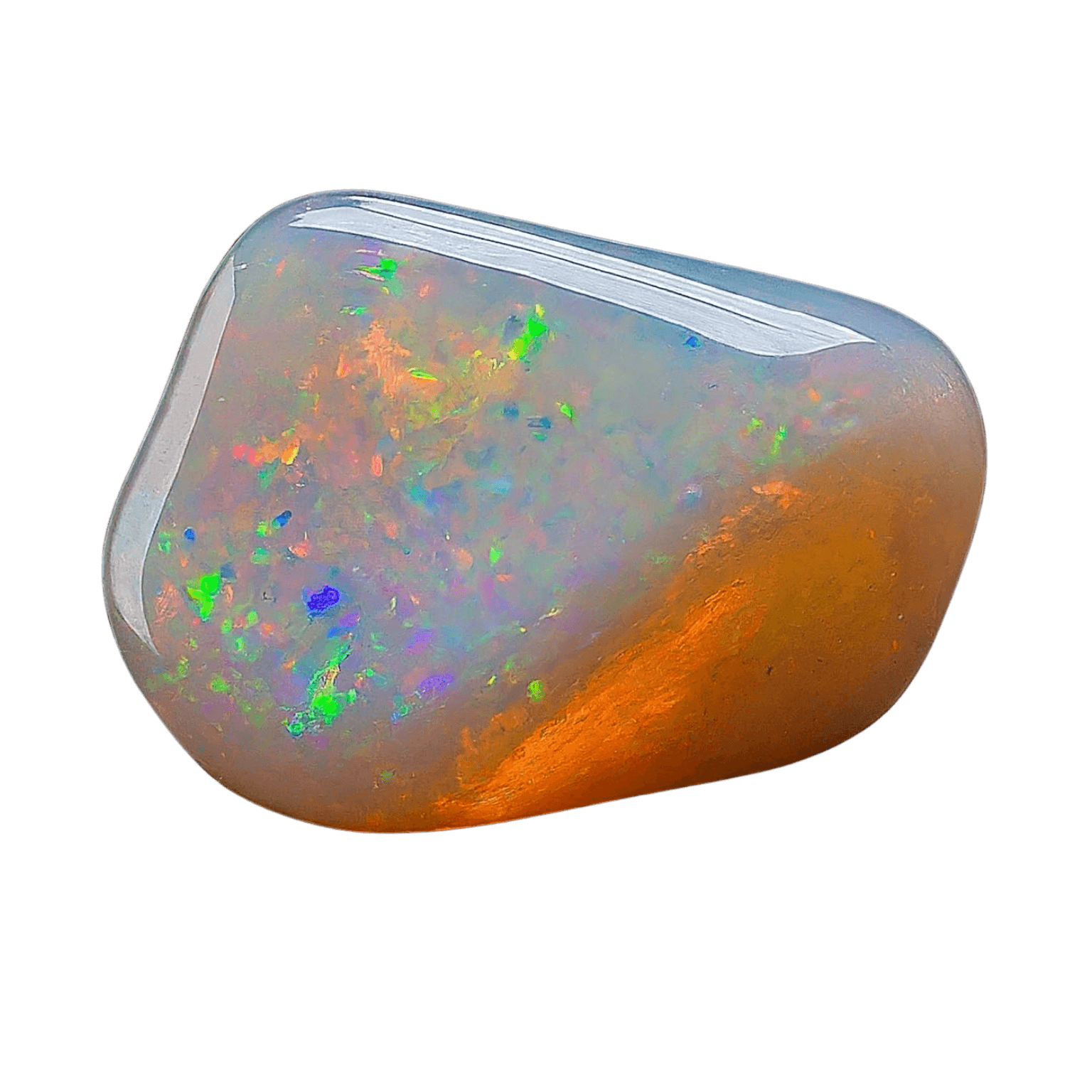
Opal holds October as the calendar's one shapeshifter, a gem that refuses a fixed color in the month the trees do the same. Hydrated silica spheres, stacked just regularly enough, split white light into moving fields of red, green, and blue, so every opal is a private weather system. The 1912 list confirmed what the traditional tables already knew: October was always going to get the stone of turning.
Tourmaline, in its pink form, officially shares October following the mid century list revision.
Other October Stones Across the Traditions
Pink tourmaline took the official October alternate seat in the 1952 Jewelry Industry Council update, a durable, candy bright counterpoint to opal's fragility.
Scorpio begins October 23, and topaz is the sign's most cited stone, so the month's last stretch may borrow November's golden gem early.
Labradorite flashes blue and gold from gray depths, and the crystal tradition leans on it as the tough, affordable cousin of opal's play of color.
Where the October Birthstone Comes From
Opal's October story includes the gem trade's most famous public relations crisis. The stone held the month on the traditional tables and entered the 1912 Kansas City list with tourmaline beside it, but its reputation had taken a strange blow decades earlier: Sir Walter Scott's 1829 novel Anne of Geierstein featured an enchanted opal bound to its heroine's fate, and superstitious readers turned the plot point into a rumor of unlucky stones, with European opal demand reportedly sagging for years afterward. The discovery of Australia's magnificent fields, White Cliffs in the 1880s and then Lightning Ridge and Coober Pedy, restored the stone's standing with sheer beauty, and Queen Victoria's fondness for opals did the rest. The 1952 Jewelry Industry Council revision fixed pink tourmaline as October's official alternate, giving the month a durable second stone. Pliny the Elder, for the record, had ranked opal just below emerald among all gems.
How to Choose Your October Stone
October's pair splits cleanly by lifestyle. Opal is glory with conditions: at 5.5 to 6.5 on the Mohs scale and a fifth water, it dislikes knocks, heat, and long dry storage, so it belongs in pendants, earrings, and occasion rings rather than daily wear. Pink tourmaline at 7 to 7.5 takes ordinary life cheerfully and costs less per carat of joy. Doublets and triplets put real opal faces on backing layers for budget shoppers; ask for solid stones if you want heirlooms. Scorpio birthdays from the twenty third can add topaz, and labradorite gives the play of color temperament in workhorse form. Choose honestly about your own habits.
Frequently Asked Questions
What are the October birthstones?
October has two official birthstones: opal and tourmaline, with pink tourmaline named as the modern alternate in the 1952 Jewelry Industry Council revision. Both have held the month together since the 1912 list.
Is opal actually unlucky?
Opal's unlucky reputation traces mostly to Sir Walter Scott's 1829 novel Anne of Geierstein, whose plot readers turned into superstition. Jewelers and gem historians treat the rumor as fiction; Queen Victoria wore opals devotedly.
Why does opal show so many colors?
Opal's play of color comes from microscopic silica spheres stacked in orderly rows, which diffract white light into shifting reds, greens, and blues. The regularity of the spheres decides which colors appear.
How should opal be worn and stored?
Opal asks for gentle treatment: it measures about 5.5 to 6.5 on the Mohs scale and contains up to roughly 20 percent water, so avoid hard knocks, high heat, and ultrasonic cleaners. Pendants and earrings suit it best.
Is pink tourmaline a good alternative to opal?
Pink tourmaline is October's durable official alternate, harder than opal at 7 to 7.5 on the Mohs scale and suited to everyday rings. It joined the month formally in the 1952 list revision.
Share Your Result
Vertical 9:16 format, perfect for Instagram Stories or TikTok. Opens in a new tab; long-press or right-click to save.
Occasional notes from Crystal Cassandra
No schedule and no newsletter. Cassandra writes when a new free tool or reference ships, or when a stone is worth a closer look. One reply removes you.
We respect your inbox. Unsubscribe anytime.